
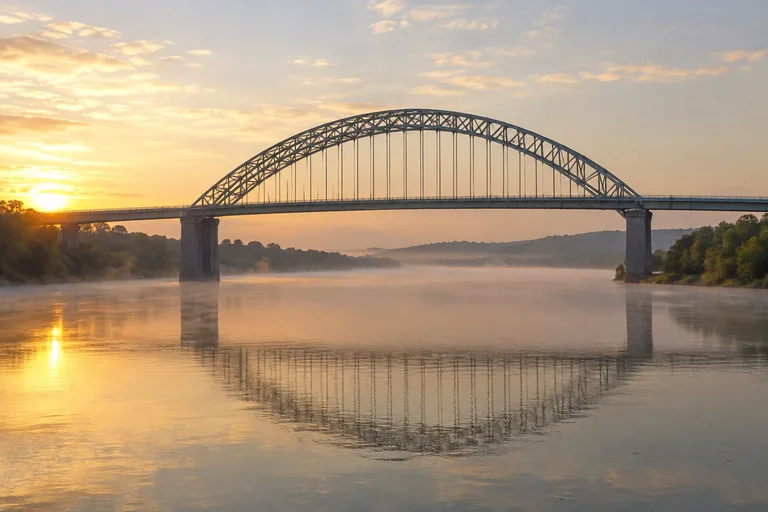
The Alabama Civil Rights Trail links the places where some of the movement's turning points happened. In Montgomery, visitors can see where the 1955 bus boycott began and where the Legacy Sites now tell the history of racial injustice. In Selma, they can walk the Edmund Pettus Bridge, scene of Bloody Sunday in 1965. Between the two runs the 54-mile Selma to Montgomery National Historic Trail, and Birmingham adds the story of 1963. This guide covers each stop with verified contact details, opening days and a 3-day route. For the rest of the state, see the Alabama travel guide.
What Is the Alabama Civil Rights Trail?
The Alabama Civil Rights Trail is the state's part of the U.S. Civil Rights Trail. That national trail is a collection of churches, courthouses, schools, museums and other landmarks where activists challenged segregation in the 1950s and 1960s. Alabama Tourism says it was announced in 2018. Georgia State University identified 60 key sites, and Southern state tourism directors added more than 40 others.
The official trail website lists eight Alabama trail cities:
- Montgomery: the bus boycott, Dr. Martin Luther King Jr.'s church and the Legacy Sites.
- Selma: the Edmund Pettus Bridge and the start of the 1965 marches.
- Birmingham: the 1963 campaign and the 16th Street Baptist Church.
- Anniston: the 1961 attacks on the Freedom Riders.
- Tuskegee: the Tuskegee Airmen National Historic Site.
- Tuscaloosa, Monroeville and Scottsboro: smaller stops for a longer trip.
Four National Park Service sites sit on or near the route. They are the Selma to Montgomery National Historic Trail and the Birmingham Civil Rights National Monument. The others are the Freedom Riders National Monument in Anniston and the Tuskegee Airmen National Historic Site.
A Short Timeline of the Movement in Alabama
Knowing the order of events makes each stop more meaningful. The dates below come from the National Park Service, the Encyclopedia of Alabama and the sites themselves.
| Date | What happened | Where to learn about it |
|---|---|---|
| March 1955 | Claudette Colvin, 15, is arrested for refusing to give up her bus seat | Rosa Parks Museum |
| December 1, 1955 | Rosa Parks is arrested on a Montgomery bus | Rosa Parks Museum |
| December 5, 1955 | The bus boycott begins, and Dr. King is elected to lead the Montgomery Improvement Association | Holt Street Baptist Church, Dexter Avenue church |
| December 21, 1956 | Montgomery buses are desegregated | Rosa Parks Museum |
| May 14, 1961 | Freedom Riders are attacked in Anniston | Freedom Riders National Monument |
| 1961 | Freedom Riders are attacked at the Montgomery Greyhound station | Freedom Rides Museum |
| September 15, 1963 | The bombing of the 16th Street Baptist Church kills four girls | Birmingham Civil Rights District |
| February 1965 | Jimmie Lee Jackson is shot by state troopers in Marion and dies on February 26 | Selma to Montgomery trail |
| March 7, 1965 | Bloody Sunday on the Edmund Pettus Bridge | Selma |
| March 21 to 25, 1965 | The march from Selma to Montgomery | U.S. 80 and the Alabama State Capitol |
| August 6, 1965 | President Johnson signs the Voting Rights Act | National Voting Rights Museum |
| December 1965 | Tent City opens in Lowndes County for evicted families | Lowndes Interpretive Center |
Alabama Civil Rights Sites at a Glance
Use this table to choose stops and plan time. Prices and hours change, so check each official site before going.
| Site | City | Time to allow | Cost |
|---|---|---|---|
| The Legacy Museum | Montgomery | 3 to 5 hours | Ticketed |
| National Memorial for Peace and Justice | Montgomery | 1 to 2 hours | Included in Legacy Sites ticket |
| Rosa Parks Museum | Montgomery | 1 to 2 hours | Ticketed |
| Dexter Avenue church and parsonage | Montgomery | Tour by appointment | Ticketed tours |
| Civil Rights Memorial Center | Montgomery | About 1 hour | Ticketed; outdoor memorial free |
| Freedom Rides Museum | Montgomery | About 1 hour | Ticketed |
| Edmund Pettus Bridge | Selma | 30 minutes | Free |
| National Voting Rights Museum | Selma | About 1 hour | Ticketed |
| Lowndes Interpretive Center | Hayneville area | About 1 hour | Free |
| Birmingham Civil Rights Institute | Birmingham | A full morning | Ticketed |
Times for the Legacy Sites come from the Equal Justice Initiative. The other times are planning estimates, not official figures.
Montgomery Civil Rights Sites
Montgomery, the state capital, holds the most stops on the trail. The bus boycott, Dr. King's first church and the Legacy Sites are all here. Plan at least one full day, and two if the Legacy Museum is a priority.
Rosa Parks Museum
On the evening of December 1, 1955, Rosa Parks refused to give up her seat to a white man on a Montgomery bus. She was arrested, and four days later the Montgomery Bus Boycott began. The boycott lasted about 13 months, until the city's buses were desegregated on December 21, 1956.
Troy University's Rosa Parks Museum tells that story near the site of her arrest. Exhibits cover the arrest, the boycott and the wider movement. Highlights include a 1955 Montgomery city bus and a station wagon from the boycott's carpool system. All tours are self-guided and start on the hour and half hour.
The separate Children's Wing holds the Cleveland Avenue Time Machine, which covers the 1800s and the start of Jim Crow segregation. The museum is closed on Sundays and over the weekday lunch hour. Groups of 10 or more must book a time ahead.
Contact: 252 Montgomery Street, Montgomery, AL 36104. Phone: 334-241-8615. Web: troy.edu.
Dexter Avenue King Memorial Baptist Church
Dr. Martin Luther King Jr. was pastor here from 1954 to 1960. The church hosted mass meetings that organized the bus boycott. It is preserved to look as it did during his years as pastor.
Church tours are by appointment only, and there are no tours on Sundays or Mondays. Call to book a tour for fewer than six people. Larger groups can book online.
Contact: 454 Dexter Avenue, Montgomery, AL 36104. Phone: (334) 261-3270. Web: dexterkingmemorial.org.
Dexter Parsonage Museum
The parsonage was home to Dr. King and his family during his time as pastor. It is furnished to look as it did in those years. The house was bombed several times during the movement, but no one was hurt. The parsonage is open Friday and Saturday, and on other days by appointment.
Contact: 309 South Jackson Street, Montgomery, Alabama. Phone: (334) 261-3270. Web: dexterkingmemorial.org.
The Legacy Sites
The Equal Justice Initiative runs four sites in Montgomery. One ticket covers all of them, and free shuttles run between them about every 15 minutes. The museum ticket is for a set date and time, but the memorial and the sculpture park can be visited on any day with it.
- The Legacy Museum: its full name is The Legacy Museum: From Enslavement to Mass Incarceration. Most visitors spend 3 to 5 hours.
- National Memorial for Peace and Justice: a six-acre hilltop site with more than 800 corten steel monuments, one for each county where a racial terror lynching took place. It remembers more than 4,400 Black people killed in racial terror lynchings between 1877 and 1950.
- Freedom Monument Sculpture Park: an outdoor sculpture park, reached by a 15-minute boat ride on the Alabama River or by shuttle.
- Montgomery Square: a site about a 4-minute walk from the memorial.
The sites are closed on Tuesdays, and on Thanksgiving, Christmas and New Year's Day. Closing time is 5 p.m. for part of the year and 6 p.m. for the rest, so check the hours for the date of the visit. Buying tickets online ahead is recommended.
Phones must be fully off inside the museum, and photos are not allowed there. Respectful still photos are allowed at the memorial. Video and audio recording are not allowed at any site.
Contact: The Legacy Museum, 400 N. Court Street, Montgomery, AL 36104. Phone: (334) 386-9100. Web: legacysites.eji.org. The memorial is at 417 Caroline Street, and the Freedom Monument Sculpture Park is at 831 Walker Street.
Civil Rights Memorial and Center
Across from the Southern Poverty Law Center's office downtown, the Civil Rights Memorial was designed by Maya Lin and dedicated in 1989. It bears the names of 40 men, women and children killed during the struggle. A curved black granite wall carries the words "until justice rolls down like waters and righteousness like a mighty stream." The SPLC notes that this is Dr. King's paraphrase of Amos 5:24, which he used in his "I Have a Dream" speech.
The outdoor memorial is open 24 hours a day. The Civil Rights Memorial Center beside it has a Martyr Room about the 40 people named on the memorial. The center is ticketed, open Tuesday through Saturday and closed on major holidays. Food, drinks and large bags are not allowed inside. The SPLC's memorial page has current visiting details.
Freedom Rides Museum
In 1961, the Freedom Riders rode interstate buses to challenge segregation using nonviolent methods. They were attacked by a mob when they arrived at Montgomery's Greyhound bus station. The Alabama Historical Commission has restored the station to how it looked in 1961, and it now houses the Freedom Rides Museum.
Contact: 210 South Court Street, Montgomery, AL 36104. Phone: 334-414-8647. Web: ahc.alabama.gov.
The Alabama State Capitol and Other Montgomery Stops
The march from Selma ended at the steps of the Alabama State Capitol on March 25, 1965. There, Dr. King and others spoke to a crowd that had grown to nearly 25,000 people. The trail's Montgomery Interpretive Center is open Monday through Saturday, 9 a.m. to 4:30 p.m.
Holt Street Baptist Church is another key stop. On the night of December 5, 1955, an estimated 5,000 people gathered there for the first mass meeting of the boycott. A historical society now runs a small museum in the church.
Selma and the Edmund Pettus Bridge
Selma is a small city with a large place in American history. In the first three months of 1965, the Southern Christian Leadership Conference met at Brown Chapel A.M.E. Church. The marches to Montgomery began there.
Bloody Sunday
On March 7, 1965, about 600 peaceful marchers left Brown Chapel and walked toward the bridge. The National Park Service names Hosea Williams, John Lewis, Albert Turner and Bob Mants as the leaders. On the Edmund Pettus Bridge, state troopers and sheriff's volunteers blocked the way. They attacked the marchers with nightsticks and tear gas, and at least 50 people needed hospital treatment.
Two days later, on March 9, Dr. King led about 2,000 marchers back to the bridge. Troopers blocked them again. After prayer, Dr. King turned the group back to Brown Chapel, a day now called Turnaround Tuesday.
The march finally left Selma on March 21, 1965, under protection from a federal court ruling by Judge Frank M. Johnson Jr. Marchers walked about 12 miles a day and slept in fields. They reached the Capitol in Montgomery on March 25. Less than five months later, President Lyndon Johnson signed the Voting Rights Act of 1965.
Walking the Edmund Pettus Bridge
The bridge carries U.S. Highway 80 out of Selma toward Montgomery, and it is now a National Historic Landmark. Visitors walk across it on foot. The National Park Service's Selma Interpretive Center at the foot of the bridge is closed for major construction until 2028. A temporary location is open at the Selma Welcome Center, Monday through Saturday, 9 a.m. to 4:30 p.m.
Brown Chapel A.M.E. Church, built in 1908, is a National Historic Landmark and still an active church. The Park Service lists it as not open to the public, so visitors view it from outside.
National Voting Rights Museum and Institute
This museum near the bridge tells the story of the voting rights campaign, from the first marches to the end of the fight. Volunteer guides share firsthand accounts. The U.S. Civil Rights Trail site reports that nearly 7,000 African Americans registered to vote in Dallas County after the Voting Rights Act was signed.
The museum is open Monday through Thursday, 10 a.m. to 4 p.m. Friday through Sunday visits are by appointment, and hours can change.
Contact: 6 US Highway 80 East, Selma, AL 36701. Phone: (334) 526-4340. Web: nvrmi.com.
The Bridge Crossing Jubilee
Each year, Selma marks Bloody Sunday with the Bridge Crossing Jubilee in the first week of March. Talks, music and events run through the week, ending with a Sunday walk across the bridge. The Park Service lists the next Jubilee as tentatively set for March 1 to 7, 2027.
Jubilee tips from the Park Service:
- Book early: Selma has few hotels, and they cost more that week.
- Arrive early: crowds gather on Broad Street hours before the Sunday crossing.
- Bring water: there is no seating, and heat has been a concern in past years.
- Expect road closures: the bridge closes to cars early on Jubilee Sunday.
Driving the Selma to Montgomery National Historic Trail
The Selma to Montgomery National Historic Trail follows the 54-mile route of the 1965 march along U.S. Highway 80. It is open 24 hours a day, every day, and trail signs mark the way. The route crosses the Edmund Pettus Bridge, passes through Lowndes County and ends at the steps of the Alabama State Capitol.
For the full story, the Park Service suggests starting in Marion and following the signs to Selma. Jimmie Lee Jackson was shot in Marion in February 1965. The drive from Selma to Montgomery takes about an hour without stops.
Lowndes Interpretive Center
The Lowndes Interpretive Center stands in White Hall, about halfway between Selma and Montgomery, near the site of Tent City. After the Voting Rights Act passed, white landowners evicted tenant farmers who registered or voted. In December 1965, SNCC and local leaders set up Tent City on U.S. 80 to shelter them. Families stayed for nearly two years, despite repeated shootings into the camp.
Exhibits also cover the death of Jonathan Daniels, an Episcopal seminarian killed in Hayneville in August 1965, and the killing of Viola Liuzzo. The center is free and open Monday through Saturday, 9 a.m. to 4:30 p.m.
Contact: 7002 U.S. Highway 80 West, Hayneville, AL 36040 (the trail's mailing address). Phone: 334-877-1983. Web: nps.gov/semo.
Birmingham Civil Rights Sites
Birmingham holds the story of the 1963 campaign. The Birmingham Civil Rights National Monument, established in 2017, covers about four city blocks downtown, so the main sites are close together.
- Birmingham Civil Rights Institute: a Smithsonian-affiliated museum and the anchor of the district.
- 16th Street Baptist Church: on September 15, 1963, a bomb killed Addie Mae Collins, Cynthia Wesley, Denise McNair and Carole Robertson. Guided tours run Tuesday through Saturday.
- Kelly Ingram Park: the park where police turned fire hoses and dogs on demonstrators in 1963, according to Alabama Tourism.
- A.G. Gaston Motel: headquarters of the 1963 campaign. Its 1954 wing is closed for renovations.
Church tour times change around services and events, so book through the church's own site before going.
Contact: Birmingham Civil Rights Institute, 520 16th St N, Birmingham, AL 35203. Phone: (205) 328-9696. Web: bcri.org.
More Stops for a Longer Trip
With an extra day, two National Park Service sites add more of the story. Both sit off the main route, so plan them as add-ons.
Freedom Riders National Monument, Anniston
On May 14, 1961, segregationists attacked Freedom Riders in Anniston. A mob firebombed a disabled Greyhound bus and tried to trap the riders inside. Published images of the attack shocked the country and led the federal government to ban segregation in interstate travel. The monument, established in January 2017, includes the former Greyhound bus depot and the bus burning site.
Opening days for the depot differ between official pages, so call before going. No entrance pass is needed.
Contact: 1031 Gurnee Avenue, Anniston, AL 36201 (Greyhound bus depot). Phone: 205-568-3963. Web: nps.gov/frri.
Tuskegee Airmen National Historic Site
This site honors the Tuskegee Airmen, African American men who were told they were not good enough to serve in the U.S. Army Air Forces. They proved they could succeed despite segregation and Jim Crow laws, and they received many honors for bravery in combat. Tuskegee is one of Alabama's eight trail cities.
Contact: 1616 Chappie James Ave., Tuskegee, AL 36083 (mailing address). Phone: (334) 727-1247. Web: nps.gov/tuai.
A 3-Day Civil Rights Trail Itinerary for Alabama
This route runs in story order where the roads allow it, from Birmingham to Selma and then along the march route to Montgomery. Start on a Wednesday, so that every key site is open on the day it is planned.
- Day 1, Birmingham (Wednesday): the Birmingham Civil Rights Institute in the morning. Walk through Kelly Ingram Park, then take a booked tour of 16th Street Baptist Church.
- Day 1 evening: drive south toward Selma, about 1.5 hours, and stay in Selma or Montgomery.
- Day 2 morning, Selma (Thursday): stop at Brown Chapel from the outside, then walk the Edmund Pettus Bridge.
- Day 2 midday: the National Voting Rights Museum, which opens Monday through Thursday.
- Day 2 afternoon: drive east on U.S. 80 along the march route. Stop at the Lowndes Interpretive Center before it closes at 4:30 p.m.
- Day 2 evening: arrive in Montgomery, as the marchers did. See the Capitol steps and the outdoor Civil Rights Memorial, which is open 24 hours.
- Day 3 morning, Montgomery (Friday): the Rosa Parks Museum when it opens at 9 a.m., then the Dexter Parsonage Museum, open Fridays from 10 a.m.
- Day 3 midday: the Legacy Museum, with a timed ticket booked ahead. Most visitors need 3 to 5 hours.
- Day 3 late afternoon: the shuttle to the National Memorial for Peace and Justice, before its last entry at 4:30 p.m.
With a fourth day, take the river boat to the Freedom Monument Sculpture Park and add the Freedom Rides Museum and Dexter Avenue church. Anniston or Tuskegee can be added as extra stops.
Opening Days at a Glance
Opening days are the biggest planning trap on this trail. This table shows the days posted by each official site in November 2026. They change, so confirm before you go.
| Site | Posted opening days |
|---|---|
| Legacy Sites | Wednesday to Monday, closed Tuesday |
| Rosa Parks Museum | Monday to Saturday, closed Sunday |
| Dexter Parsonage Museum | Friday and Saturday, other days by appointment |
| Dexter Avenue church | By appointment, no tours Sunday or Monday |
| Civil Rights Memorial Center | Tuesday to Saturday |
| National Voting Rights Museum | Monday to Thursday, other days by appointment |
| Trail interpretive centers | Monday to Saturday |
| 16th Street Baptist Church tours | Tuesday to Saturday |
The trail's interpretive centers close on Thanksgiving Day, Christmas Eve, Christmas Day and New Year's Day.
Getting There and Getting Around
A car is the practical way to follow the trail, because the sites are spread across central Alabama. Birmingham and Montgomery are the natural bases.
- Birmingham to Selma: about 1.5 hours, according to the National Park Service.
- Selma to Montgomery: about an hour on U.S. 80, the march route.
- Parking at the Legacy Sites: free at each site.
- Getting between the Legacy Sites: free shuttles every 15 minutes and a river boat to the sculpture park.
- Parking downtown in Montgomery: metered street parking on weekdays. The Rosa Parks Museum has free parking in Troy University's lots.
The Equal Justice Initiative says its Legacy Sites are within walking distance of each other downtown. The shuttle is optional for visitors who prefer to walk.
Best Time to Visit the Alabama Civil Rights Trail
Spring and fall are the most comfortable seasons for walking between sites. Summers are hot, and winters are mild. The averages below are NOAA 1991 to 2020 normals for Montgomery, as listed by Climate Zone.
| Month | Average high | Average low | Good for |
|---|---|---|---|
| March | 72°F | 47°F | The Bridge Crossing Jubilee in Selma |
| April | 79°F | 53°F | Outdoor memorials and walking tours |
| July | 94°F | 72°F | Indoor museums, early starts |
| October | 80°F | 55°F | Driving the march route |
| December | 62°F | 39°F | Quieter visits, around holiday closures |
The National Memorial for Peace and Justice is mostly outdoors, so plan it for the morning on hot days. The Rosa Parks Museum advises spring visitors to call ahead, since each tour holds about 50 people.
Visiting with Respect and with Children
These are places of memory, and several are active churches. A few simple steps help visitors and families get the most from them.
- Follow photo rules. No photos inside the Legacy Museum, and no video in the Civil Rights Memorial Center galleries.
- Respect worship. Several Selma churches hold Sunday morning services, and seating and parking are limited.
- Prepare children. Exhibits deal with violence, bombings and lynching. The Legacy Sites suggest that parents review the website to decide what suits their children.
- Use the Children's Wing. The Rosa Parks Museum's Children's Wing explains the history at a level younger visitors can follow.
- Leave room for reflection. Allow quiet time after the Legacy Museum and the memorial, and avoid packing the day too tightly.
Hidden Gems on the Alabama Civil Rights Trail
These stops are less known to first-time visitors but add depth to the trip:
- Holt Street Baptist Church Museum: where about 5,000 people met on the first night of the bus boycott.
- The river boat to Freedom Monument: a 15-minute ride on the Alabama River, part of the Legacy Sites visit.
- The Civil Rights Memorial after hours: the outdoor memorial is open 24 hours, so it can be visited after the museums close.
- Lowndes Interpretive Center: it tells the story of Tent City, a less familiar chapter of the voting rights fight.
- The Dexter Parsonage: a family home that brings Dr. King's Montgomery years down to a human scale.
- Marion: the Park Service suggests starting the trail drive here, where Jimmie Lee Jackson was shot in February 1965.
- The University of Alabama, Tuscaloosa: the auditorium of the 1963 Stand in the Schoolhouse Door is a National Historic Landmark and still in use.
Insider Tips for the Civil Rights Trail in Alabama
- Start midweek. A Wednesday to Friday trip avoids the Tuesday closure at the Legacy Sites and the Sunday and Monday gaps in Montgomery.
- Book the Legacy Museum first. Its tickets are timed, and online booking ahead is recommended.
- Call Dexter Avenue ahead. Church tours for small groups are by phone appointment only.
- Book 16th Street tours online. Days can change around church events.
- Plan for the Selma closure. The Selma Interpretive Center is closed until 2028, so use the temporary desk at the Selma Welcome Center.
- Turn phones off at the Legacy Museum. Phones must be fully off inside.
- Watch bag size at the memorial center. The Civil Rights Memorial Center does not allow bags larger than 9.5 by 8.5 inches.
- Follow the trail signs. The Park Service says route signs guide drivers from Selma through Lowndes County and Montgomery to the Capitol.
Frequently Asked Questions
What is the Alabama Civil Rights Trail?
It is the Alabama part of the U.S. Civil Rights Trail. That trail links churches, museums, schools and other landmarks from the movement of the 1950s and 1960s. Alabama's trail cities are Anniston, Birmingham, Monroeville, Montgomery, Scottsboro, Selma, Tuscaloosa and Tuskegee.
How many days do you need for the Alabama Civil Rights Trail?
Plan three days for the core route: one in Birmingham, one in Selma and along U.S. 80, and one in Montgomery. A fourth day adds the Freedom Monument Sculpture Park, Anniston or Tuskegee.
Can you walk across the Edmund Pettus Bridge in Selma?
Yes. Visitors walk across the bridge, which is a National Historic Landmark. Each year the Bridge Crossing Jubilee in the first week of March ends with a Sunday walk across it.
What happened on Bloody Sunday in Selma?
On March 7, 1965, about 600 peaceful marchers left Brown Chapel A.M.E. Church and were stopped on the Edmund Pettus Bridge. State troopers and sheriff's volunteers attacked them with nightsticks and tear gas, and at least 50 people needed hospital treatment.
How long is the Selma to Montgomery National Historic Trail?
The trail is 54 miles long. It follows the 1965 route along U.S. Highway 80 from Selma through Lowndes County to the Alabama State Capitol in Montgomery.
What are the main Montgomery civil rights sites?
The main sites are the Rosa Parks Museum, Dexter Avenue King Memorial Baptist Church and the Dexter Parsonage Museum. Add the Civil Rights Memorial Center, the Freedom Rides Museum and the Legacy Sites of the Equal Justice Initiative.
How much time should you allow at the Legacy Museum?
The Equal Justice Initiative says most visitors spend 3 to 5 hours in the Legacy Museum. Allow 1 to 2 hours each for the National Memorial for Peace and Justice and the Freedom Monument Sculpture Park.
Is the Alabama Civil Rights Trail suitable for children?
Many sites welcome families, and the Rosa Parks Museum has a Children's Wing. Some exhibits deal with violence and lynching. The Legacy Sites suggest parents review the website to decide whether the subject matter suits their children.
When is the best time to visit the Alabama Civil Rights Trail?
Spring and fall are the most comfortable seasons, with average highs near 79 degrees F in April and 80 degrees F in October in Montgomery. Midweek works best, because several sites close on Sundays, Mondays or Tuesdays.
Planning your next U.S. getaway? Explore more destination guides, road trips, and travel tips at Vacation Getaways US. Have a question or a spot we should cover? Email us at [email protected].