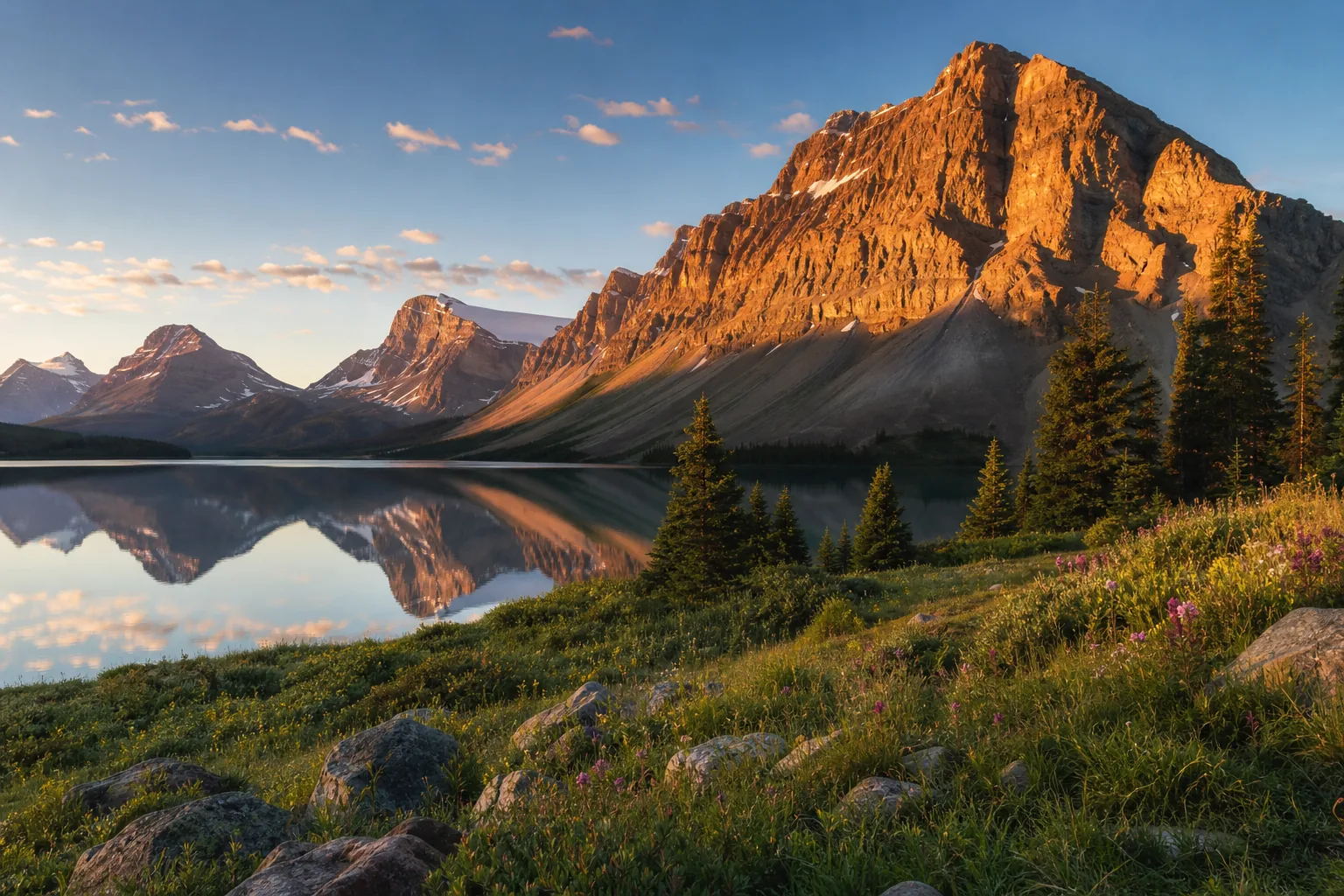
Montana is best for big national parks, wildlife and wide-open road trips. Start with Glacier National Park in the northwest, add Yellowstone through Gardiner or West Yellowstone, and stay in Bozeman, Missoula or Whitefish. This Montana travel guide sorts Big Sky Country by region. It also covers the free official road trip pack, getting around, the best season and a 7-day route.
How to Get the Free Montana Road Trip Pack and Regional Guides
Visit Montana, the state tourism office, mails a free Road Trip Pack that includes the Montana Highway Map. Orders usually arrive within three to four weeks.
- By mail: fill in the form on the Order Montana Guidebooks page. Choose the Road Trip Pack with the highway map, or Eastern Montana Road Trips, made in partnership with Outside.
- Regional guides: the same page links to travel guides for Glacier Country, Yellowstone Country, Southwest Montana, Central Montana, Missouri River Country, Southeast Montana and Indian Country.
- Online: the Montana Guidebooks page has guidebooks to download, including a winter guidebook.
- By phone: Visit Montana lists (800) 847-4868 as its contact number. For extra copies of the Road Trip Pack or highway maps, the order page lists 406-841-2700.
The order page warns that high demand can slow Road Trip Pack orders, so order a month or more before the trip.
Best Places to Visit in Montana: The Regions at a Glance
Montana is a very large state, so most trips focus on one or two regions. Mountains fill the west, and plains spread across the east. The table matches each area with the trip it suits.
| Area | Best for | Main stops |
|---|---|---|
| Northwest (Glacier Country) | Mountain parks, lakes, skiing, a college town | Glacier National Park, Whitefish, Kalispell, Flathead Lake, Missoula |
| South-central (Yellowstone Country) | Yellowstone gateways, wildlife, ski resorts, alpine drives | Gardiner, West Yellowstone, Bozeman, Big Sky, Red Lodge, Beartooth Highway |
| Southwest Montana | Mining history, ghost towns, hot springs, fly-fishing | Helena, Butte, Bannack, Virginia City, Philipsburg |
| Billings and Southeast Montana | Frontier history, badlands, rodeos, dinosaur fossils | Billings, Pompeys Pillar, Little Bighorn Battlefield |
| Central Montana and Missouri River Country | Wheat fields, the Hi-Line, open space | Great Falls, the Hi-Line, the Great Plains |
Glacier National Park and Northwest Montana
Glacier anchors most first trips to Montana, with carved peaks, clear lakes and the famous Going-to-the-Sun Road. The road runs about 50 miles and takes roughly 2 hours to drive without stops. Its highest point is Logan Pass, at 6,646 feet.
The alpine section has no set opening date, but it has typically been fully open by early July. It typically stays fully open until the third Monday of October, weather permitting. Between Avalanche Creek and Rising Sun, vehicles must be no longer than 21 feet and no wider than 8 feet.
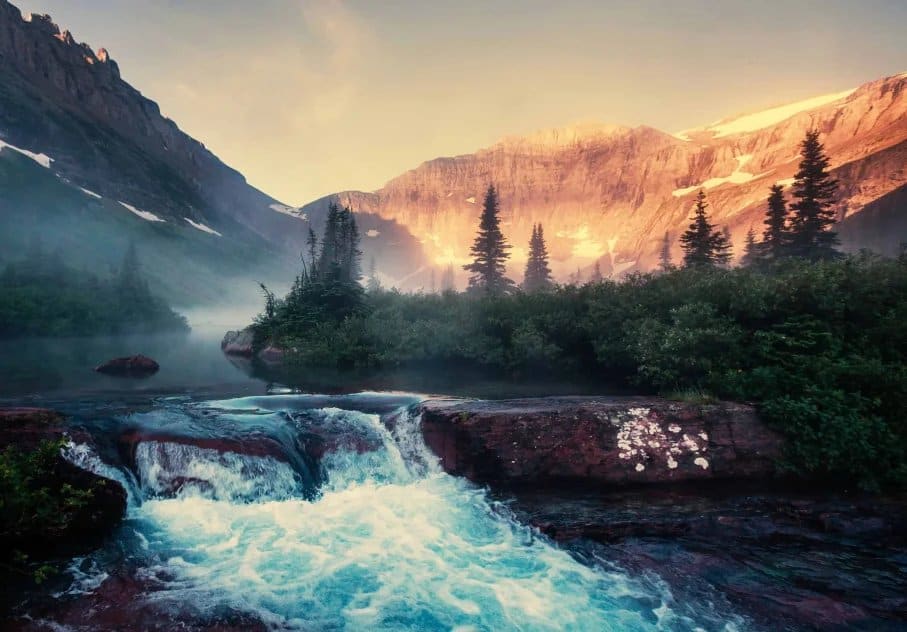
Reservations and the Logan Pass Shuttle: Glacier did not require vehicle reservations in 2026, after using them from 2021 to 2025. Instead, day hikers bound for Logan Pass booked a ticketed shuttle on Recreation.gov. It boarded at Apgar Visitor Center, Lake McDonald Lodge, St. Mary Visitor Center and Rising Sun Picnic Area. From July 1 to September 7, 2026, private vehicles at Logan Pass had a 3-hour parking limit. An entrance pass is still required, and the rules can change each year.
- Drive Going-to-the-Sun Road: go early in the day for easier parking at the pullouts.
- Ride the Logan Pass Shuttle: book tickets ahead and arrive at least 30 minutes early.
- Watch for wildlife: Glacier is bear country. Keep a safe distance from all animals and carry bear spray on trails.
Visit: PO Box 128, West Glacier, MT 59936 (mailing address) | 406-888-7800 | nps.gov/glac
Whitefish and Flathead Lake
The Flathead Valley pairs the resort town of Whitefish with Flathead Lake. Montana State Parks calls the lake the largest natural body of freshwater, by surface area, in the western U.S.
- Whitefish: a year-round base for Glacier trips and for skiing at Whitefish Mountain Resort. Plan with the official Explore Whitefish site.
- Flathead Lake State Park: six units on and around the lake: Wayfarers near Bigfork, Big Arm, Finley Point, West Shore, Yellow Bay and Wild Horse Island. See the Flathead Lake State Park page for camping and boat rentals.
- Kalispell: the town nearest Glacier Park International Airport, and a handy first-night stop.
Missoula
Missoula is a college town, home to the University of Montana, with river trails and a walkable downtown. For events and outfitters, see Destination Missoula, the city's official visitor site.
Yellowstone Country: Gardiner, Bozeman, Big Sky and the Beartooth Highway
Only 3% of Yellowstone National Park lies in Montana, but the state holds several of its gateways. The road from the North Entrance at Gardiner runs through the park to Cooke City. It is the only park road generally open to regular vehicles all year.
- Gardiner: the town at the North Entrance, best for a winter visit or a quick day in the park's northern range.
- West Yellowstone: the gateway to the West Entrance, with an airport served from early May to mid-October.
- Cooke City: the far end of the year-round road and the western start of the Beartooth Highway.
Most other park roads are closed to regular vehicles from early November to late April. Check the park's road page before any spring or fall visit.
Visit: PO Box 168, Yellowstone National Park, WY 82190 (mailing address) | 307-344-7381 | nps.gov/yell
Bozeman and Big Sky
Bozeman blends a lively downtown with quick access to mountains, rivers and ski slopes. Big Sky Resort and Bridger Bowl are two of Montana's best-known ski areas.
The Museum of the Rockies is the top rainy-day stop. It sits on the Montana State University campus at 600 W. Kagy Blvd. Its dinosaur collection includes the "Big Mike" Tyrannosaurus rex skeleton, and the Taylor Planetarium runs sky shows. Check the official site for hours and tickets.
Beartooth Highway and Red Lodge
The Beartooth Highway is a National Scenic Byway and All-American Road on US 212 between Red Lodge and Cooke City. It climbs to Beartooth Pass at 10,947 feet, past many lakes and pullouts. It is typically open from the Friday of Memorial Day weekend to mid-October. Red Lodge, at the eastern end, makes a good overnight stop before or after the drive.
Southwest Montana: Helena, Butte and Gold Rush Towns
Southwest Montana sits between Yellowstone and Glacier. It is the place for mining history, ghost towns, hot springs and fly-fishing waters.
- Helena: the state capital.
- Butte: a historic mining city.
- Virginia City: a preserved gold-rush town.
- Philipsburg: a historic mining town whose brewery fills an old bank building. See the Montana breweries guide.
Bannack State Park
Montana's first major gold discovery came on July 28, 1862, at Bannack, and the town later became Montana's first territorial capital. Today it is a ghost town state park and a National Historic Landmark, with over 50 buildings along Main Street. Bannack Days is held each year on the third weekend in July. Nonresidents pay a day-use fee; check the official page for current prices.
Visit: 721 Bannack Rd, Dillon, MT 59725 | 406-834-3413 | fwp.mt.gov
Billings and Southeast Montana: Pompeys Pillar and Little Bighorn
Billings, Montana's largest city, is the base for two of the state's best-known history stops. Both make easy day trips. Farther out, Southeast Montana is known for badlands, rodeos and dinosaur fossils. Plan a stay with Visit Billings, the city's official visitor site.
Pompeys Pillar National Monument
Pompeys Pillar sits 25 miles east of Billings. A boardwalk leads up the sandstone pillar to Captain William Clark's signature, carved during the Lewis and Clark expedition. It is near the first landing, about 100 steps up, and another 100 steps reach the top. Check the official page for hours and fees.
Visit: 3039 US Highway 312, Pompeys Pillar, MT 59064 | 406-896-5013 | blm.gov
Little Bighorn Battlefield National Monument
This monument marks the 1876 Battle of the Little Bighorn. Last Stand Hill holds the 7th Cavalry Monument and the Indian Memorial, and Custer National Cemetery is also on the grounds. A driving tour road leads 4.5 miles out to the Reno-Benteen Entrenchment. From Memorial Day to Labor Day, Apsáalooke Tours offers paid guided tours.
- Getting there: take I-90 to exit 510 at the US 212 junction, then follow Battlefield Tour Road.
- Timing: hours change by season, and winter visitors should arrive by 2 p.m. to drive the full tour road.
- Good to know: the park takes card and electronic payments only, and pets must stay in vehicles.
Visit: 756 Battlefield Tour Road, Crow Agency, MT 59022 | 406-924-9167 | nps.gov/libi
Central Montana, the Plains and Indian Country
Central and eastern Montana are the open-space side of the state, a good fit for road trippers who like quiet roads and wide skies.
- Central Montana: history, wheat fields and the Hi-Line across the north.
- Missouri River Country: Great Plains, open space and unusual landforms.
- Indian Country: the languages, traditions and heritage of the twelve tribes in Montana.
Outdoor Adventures, Food and Culture in Montana
Montana's outdoor list is long, and most of it is easy to reach from the main towns.
- Fly-fishing: the Yellowstone and Bighorn rivers are classic trout waters.
- Skiing: Big Sky, Bridger Bowl and Whitefish Mountain Resort lead the ski areas.
- Hiking: Glacier's trails are the headline.
- Scenic drives: Going-to-the-Sun Road and the Beartooth Highway top the list.
Food leans hearty. Look for huckleberry treats and Montana beef on menus, and craft breweries in Missoula, Bozeman and Billings. Ranching, rodeos and tribal heritage shape the state's story.
Getting There and Getting Around Montana
Most Montana trips start at a regional airport with a rental car. Towns and parks sit hours apart, so a car is the practical choice for almost every route.
- By air: for Glacier, Glacier Park International near Kalispell is about 30 miles from the West Entrance; Missoula is about 150 miles away. For Yellowstone, the Park Service lists the Bozeman and Billings airports. Bozeman Yellowstone International calls itself Montana's busiest airport.
- By train: Amtrak's Empire Builder crosses northern Montana between Chicago and Portland or Seattle. It stops year-round at West Glacier and Essex, and seasonally at East Glacier Park.
- By car: I-90 links Missoula, Butte, Bozeman and Billings. US 2 reaches West Glacier from Kalispell, and US 89 reaches Glacier's east side from Great Falls.
| Leg | Main road | Good to know |
|---|---|---|
| Kalispell to West Glacier | US 2 east (about 33 miles) | The west-side route into Glacier |
| Great Falls to Glacier's east side | US 89 north through Browning (about 125 miles) | For St. Mary, Two Medicine and Many Glacier |
| Gardiner to Cooke City | Yellowstone's northern road | The only park road generally open to cars all year |
| Cooke City to Red Lodge | Beartooth Highway (US 212) | Typically late May to mid-October |
| Billings to Little Bighorn | I-90 to exit 510 | Pompeys Pillar is a separate trip, 25 miles east of Billings |
Fill the tank before long empty stretches, and expect patchy cell service in the mountains and parks. Drive slowly at dawn and dusk, when wildlife is on the roads.
Planning a Montana Trip on a Budget
Montana rewards planning more than spending. These steps keep costs down without skipping the big sights.
- Start with the free material: the Road Trip Pack, the highway map and the regional guides cost nothing.
- Pick one region: long drives add fuel and hotel nights, so pair Glacier with the Flathead Valley, or Bozeman with Yellowstone.
- Travel in June or September: the parks are quieter than in July and August. Check which high roads are open first.
- Use state parks: Bannack and the Flathead Lake units offer camping. Check the official pages for current fees.
Best Time to Visit Montana
Summer is the best time for Glacier, Yellowstone and hiking, because the high roads open. Spring and fall are quieter but bring closures, and winter is ski season.
| Season | What to expect | Best for |
|---|---|---|
| Spring (April to May) | Yellowstone roads start to open from late April; high mountain roads still closed | Quiet Yellowstone visits, valley towns, rivers |
| Summer (June to August) | Beartooth Highway open from late May; Going-to-the-Sun Road typically fully open by early July | Glacier, Yellowstone, lakes, hiking |
| Fall (September to October) | Fewer crowds; Going-to-the-Sun Road typically open to the third Monday of October; Beartooth closes mid-October | Hiking, scenic drives, wildlife watching |
| Winter (November to March) | Snow; only Yellowstone's Gardiner to Cooke City road open to regular vehicles | Skiing at Big Sky, Bridger Bowl and Whitefish |
A 7-Day Montana Itinerary
This summer route links Glacier, Missoula, Bozeman and Yellowstone Country in one week, with add-ons for history lovers.
- Day 1, Flathead Valley: fly into Glacier Park International, then spend the afternoon in Whitefish or at a Flathead Lake State Park unit.
- Day 2, Going-to-the-Sun Road: drive the road or ride the Logan Pass Shuttle, then walk a trail near Logan Pass.
- Day 3, Glacier's east side: St. Mary or Many Glacier, then back west for the night.
- Day 4, Missoula: a downtown afternoon and a walk by the river, then drive I-90 east.
- Day 5, Bozeman: the Museum of the Rockies in the morning and Main Street in the evening.
- Day 6, Yellowstone from Gardiner: enter at the North Entrance for a day in the park's northern range, ending in Cooke City.
- Day 7, Beartooth Highway: cross from Cooke City to Red Lodge (late May to mid-October), then continue to Billings to fly home.
History add-on, 2 to 3 days: Pompeys Pillar and Little Bighorn from Billings, or Bannack and Virginia City in the southwest.
Montana Guides on This Site
These pages go deeper on Montana places named above.
- Montana breweries guide: taprooms in Philipsburg, Missoula, Bozeman, Red Lodge and Billings.
- Best fishing trips in the USA: the Yellowstone River and the Bighorn River.
- Best picture-taking trips: Glacier National Park.
- Best trips for introverts: Glacier National Park.
Neighboring state guides
- Wyoming travel guide: most of Yellowstone lies in Wyoming, just south of Gardiner.
- Idaho travel guide: mountain towns and lakes across the western border.
- North Dakota travel guide: badlands and prairie to the east.
- South Dakota travel guide: the Black Hills and the Badlands to the southeast.
Frequently Asked Questions About Montana
What is Montana best known for?
Montana is best known as Big Sky Country, home to Glacier National Park and the northern gateways to Yellowstone. Visitors also come for Flathead Lake, trout rivers, ski areas such as Big Sky and Whitefish, and frontier history at Little Bighorn and Bannack.
What is the best time to visit Montana?
July to mid-September is best for park travel and hiking, since Going-to-the-Sun Road in Glacier is typically fully open by early July. June and late September are quieter, though some high roads may still be closed in June. Winter is ski season at Big Sky, Bridger Bowl and Whitefish.
How many days do you need in Montana?
A long weekend suits one region, such as Glacier or the Bozeman area. A week allows a loop that links Glacier, Flathead Lake, Bozeman and the Yellowstone gateways. Distances are long, so plan a car and a set route.
Do you need a reservation for Glacier National Park?
Glacier National Park did not require vehicle reservations in 2026, after using them from 2021 to 2025. Instead, it ran a ticketed Logan Pass Shuttle booked on Recreation.gov and a 3-hour parking limit at Logan Pass. An entrance pass is still needed. Rules change each year, so check the park's official site before the trip.
What outdoor activities are popular in Montana?
Fly-fishing, hiking, skiing and scenic drives top the list. Anglers fish the Yellowstone and Bighorn rivers, hikers head to Glacier, and skiers go to Big Sky, Bridger Bowl and Whitefish. The Beartooth Highway and Going-to-the-Sun Road add high-mountain views.
How do you get a free Montana travel guide?
Order the free Road Trip Pack with the Montana Highway Map on the Order Montana Guidebooks page at VisitMT.com. It usually arrives within three to four weeks. The same page links to the regional travel guides, and Visit Montana also offers guidebooks to download.
Which airport is best for Glacier and Yellowstone?
For Glacier, Glacier Park International Airport near Kalispell is about 30 miles from the West Entrance. For Yellowstone, the Park Service lists the Bozeman and Billings airports, plus a seasonal airport in West Yellowstone.
Planning your next U.S. getaway? Explore more destination guides, road trips, and travel tips at Vacation Getaways US. Have a question or a spot we should cover? Email us at [email protected].