
South Carolina is best for a trip that mixes a historic city with beach time: Charleston first, then a beach town or a quiet sea island. Travelers with a week can add the swamp forest of Congaree National Park and the Blue Ridge Mountains around Greenville. This South Carolina travel guide lays out each region, the free state guide, how to get around, the best seasons and a 7-day route.
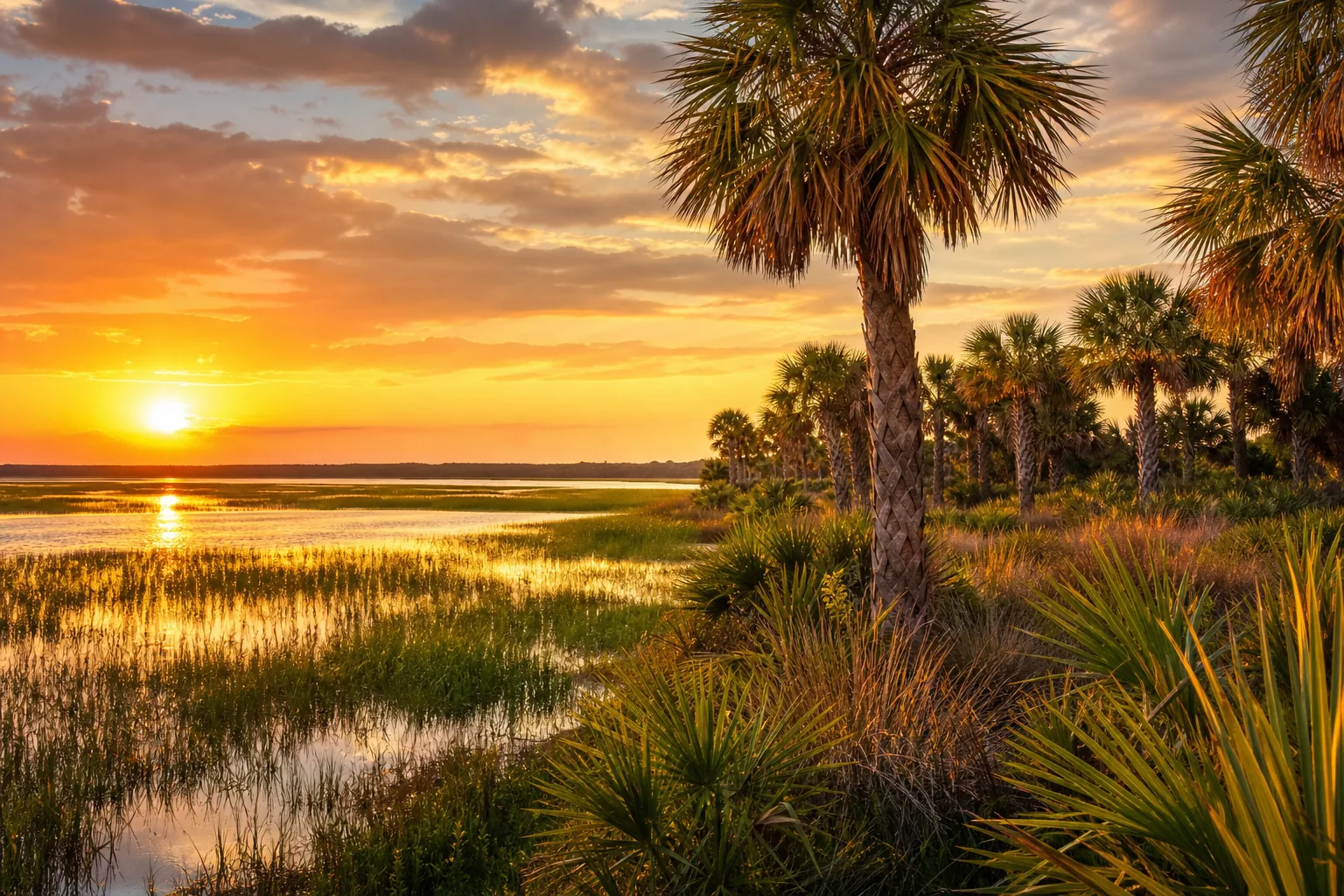
Get the Free South Carolina Vacation Guide
The state tourism office gives away its official South Carolina Vacation Guide, and there are three ways to get it. All three start on the Vacation Guides page at DiscoverSouthCarolina.com.
- By mail: use the Request by Mail link and fill in the form.
- Online: use the View Online link to read it in a browser.
- As a file: use the Download Now link for a PDF.
Driving in? The state also runs nine South Carolina Welcome Centers on the main highways into the state, with free travel counselors, maps and help booking a room.
Best Places to Visit in South Carolina, by Region
The state tourism site groups South Carolina into three broad areas: the Coast, the Midlands and the Mountains. It also lists 11 smaller tourism regions. The table shows the ones most first trips use.
| Area | Tourism region | Best for | Main stops |
|---|---|---|---|
| Coast | Historic Charleston and Resort Islands | History, food, a walkable city | Charleston, Fort Sumter |
| Coast | Myrtle Beach and Grand Strand | Family beach vacations | Myrtle Beach and its neighbor towns |
| Coast | Lowcountry and Resort Islands | Sea islands, Gullah Geechee heritage, quiet beaches | Beaufort, Hilton Head Island |
| Midlands | Capital City and Lake Murray Country | The state capital, a national park day trip | Columbia, Congaree National Park |
| Mountains | The Upcountry | Waterfalls, hiking, a lively small city | Greenville, Table Rock State Park |
Charleston: History on the Harbor
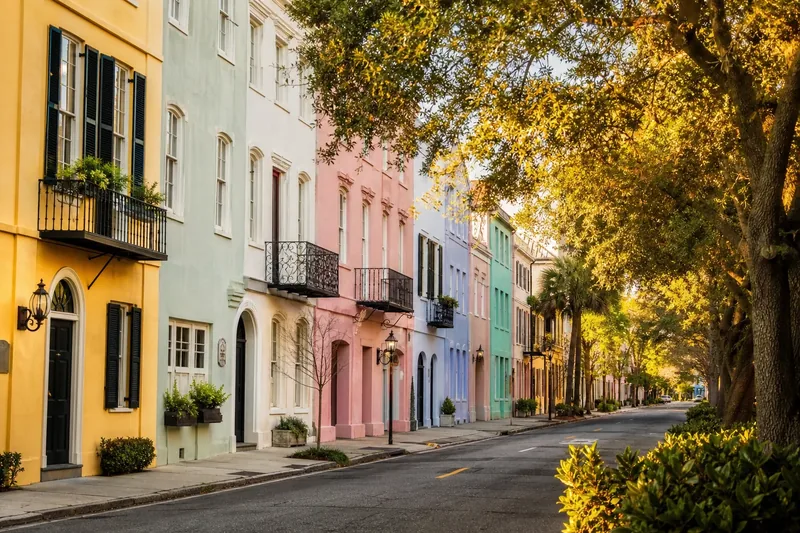
Charleston is the place most South Carolina trips begin. The historic district is compact and walkable, and the city's biggest story sits out in the harbor.
Fort Sumter and Fort Moultrie
Confederate guns fired on the U.S. garrison at Fort Sumter on April 12, 1861, opening the Civil War. Today the fort is part of a national historical park, and it can be reached only by boat. Ferries run by Fort Sumter Tours leave from two places:
- The Fort Sumter Visitor Center at Liberty Square in downtown Charleston.
- Patriots Point in Mount Pleasant, 40 Patriots Point Rd.
Fort Moultrie, on Sullivan's Island, belongs to the same park and is reached by car. Its story starts with a 1776 victory over the Royal Navy. Check the official site for ferry times and ticket prices.
Visit: Fort Sumter Visitor Center, 340 Concord St., Charleston, SC 29401 | 843-883-3123 | nps.gov/fosu
More Charleston Ideas on This Site
- Best couples weekend trips in the USA: Charleston is on the list for carriage rides and Lowcountry dining.
- Scariest places in the USA: includes the Old Charleston Jail.
- Best food challenges in the USA: includes a burger challenge in Charleston.
- Best restaurant road trips: includes a Lowcountry food route from South Carolina to Georgia.
South Carolina Beach Towns: Myrtle Beach and Hilton Head
The coast has two very different beach bases. Myrtle Beach is busy and built for families. Hilton Head Island is quieter and greener.
- Myrtle Beach and the Grand Strand: the area's tourism office describes 60 miles of sandy shores and 14 communities, each with its own personality. Start with Visit Myrtle Beach. For an honest look at summer crowds and calmer times to go, see this site's list of vacation spots that can disappoint.
- Hilton Head Island: a resort island known for miles of wide beaches and golf. Plan with the official Hilton Head Island site.
The Lowcountry: Beaufort and Gullah Geechee Heritage
South of Charleston, the Lowcountry is the heart of Gullah Geechee heritage in South Carolina. Gullah Geechee culture is a unique African American cultural heritage that grew up in the coastal regions and sea islands of the Southeast.
Congress set up the Gullah Geechee Cultural Heritage Corridor, a National Heritage Area that runs through North Carolina, South Carolina, Georgia and Florida. The corridor does not run tours itself. Its site has an online map of historic places that visitors can see on their own.
Reconstruction Era National Historical Park, Beaufort
This park in Beaufort County tells the story of the years after slavery ended, when millions of newly freed African Americans entered the country's social, political and working life. It has three main places to see:
- The Old Beaufort Firehouse: the park headquarters and visitor center, in downtown Beaufort.
- Penn Center National Historic Landmark District: home to Darrah Hall and to Brick Baptist Church, where the Penn School met from 1862 to 1865.
- Camp Saxton: where, in the park's words, Black soldiers during the Civil War took their first steps toward citizenship.
Visit: 706 Craven St., Beaufort, SC 29902 | 843-962-0039 | nps.gov/reer
Gullah Heritage on Hilton Head Island
The Gullah neighborhoods of north Hilton Head trace back to the late 1860s. The island's tourism site has a Gullah culture page that lists Historic Mitchelville Freedom Park, the Gullah Museum, heritage trail tours and the yearly Gullah Celebration.
The Midlands: Columbia and Congaree National Park
Columbia, the state capital, sits in the middle of the state. The main reason to stop is a short drive away in Hopkins. Congaree National Park holds the largest remaining section of old-growth bottomland forest in the United States.
Visitors see the park's wilderness, more than 20,000 acres, on foot or by kayak or canoe. Cedar Creek and the Congaree River can flood with little warning, so check water levels on the park site before a paddle.
Visit: 100 National Park Rd., Hopkins, SC 29061 | 803-776-4396 | nps.gov/cong
The Upstate: Greenville and the Blue Ridge
The Upstate, which the state calls the Upcountry, is the mountain corner of South Carolina. It makes a cool, green contrast to the coast and is easy to miss on a beach trip.
Falls Park on the Reedy, Greenville
Falls Park puts a waterfall in the middle of downtown Greenville. The Liberty Bridge, a 345-foot footbridge with a curved deck held by a single suspension cable, was built to show off the falls. See the Visit Greenville page for Falls Park.
Table Rock State Park
Table Rock State Park covers 3,083 acres of the Blue Ridge Mountains along scenic Highway 11. The park is a good fit for hikers and for families who want a cabin by a lake.
- Trails: routes pass mountain streams and waterfalls, climb Pinnacle and Table Rock mountains, and link to the 76-mile Foothills Trail.
- Water: two lakes, Pinnacle Lake and Lake Oolenoy, plus a swimming hole open in summer.
- Stays: 14 cabins, 9 of them built by the Civilian Conservation Corps.
- Music: a monthly bluegrass jam called Music on the Mountain at the Table Rock Lodge.
Visit: 158 Ellison Ln., Pickens, SC 29671 | 864-878-9813 | southcarolinaparks.com/table-rock
Events Worth Planning Around
A few yearly events can shape the dates of a trip, and they also fill hotels. Spoleto Festival USA fills Charleston with opera, theater, dance and music for 17 days and nights each spring. Its 2026 dates were May 22 to June 7. See spoletousa.org for the next season. In the Upstate, the monthly Music on the Mountain jam at Table Rock is an easy add to a hiking day. The free state guide lists more events by region.
Getting There and Getting Around South Carolina
Most South Carolina trips need a car. Charleston's historic district is walkable, but the beaches, sea islands and parks are spread out. Pick the airport nearest the first stop.
- Charleston International Airport (CHS): 5500 International Blvd., North Charleston, SC 29418 | 843-767-7000 | iflychs.com. Best for Charleston, Beaufort and Hilton Head.
- Greenville-Spartanburg International Airport (GSP): 2000 GSP Dr., Greer, SC 29651 | 864-877-7426 | gspairport.com. Best for Greenville and the mountain parks.
- Myrtle Beach International Airport (MYR): best for the Grand Strand. See flymyrtlebeach.com.
- By road: the state Welcome Centers show the main ways in: I-95, I-85, I-26, I-77, I-20 and U.S. 17 along the coast.
| If you have | Fly into | Cover |
|---|---|---|
| A long weekend of history | Charleston (CHS) | Charleston, Fort Sumter, Fort Moultrie |
| A beach week | Myrtle Beach (MYR) or Charleston (CHS) | The Grand Strand, or Hilton Head Island |
| A mountain weekend | Greenville-Spartanburg (GSP) | Greenville, Table Rock State Park |
| A full week | CHS in, GSP out (or the reverse) | The 7-day route below |
Best Time to Visit South Carolina
Late spring and early fall are the most comfortable times for most trips. Summer is peak season on the coast and is hot and humid.
| Season | What to expect | Best for |
|---|---|---|
| Spring (March to May) | Mild to warm days; Charleston's busiest season | Charleston, Beaufort, Spoleto Festival USA at the end of May |
| Summer (June to August) | Hot, humid, crowded beaches | Beach towns, lake days in the Upstate |
| Fall (September to November) | Cooler air, leaf color in the mountains | Greenville, Table Rock, quieter beaches |
| Winter (December to February) | The quiet season | Charleston and Beaufort history without the crowds |
A 7-Day South Carolina Itinerary
This route runs from the coast to the mountains, so it works with a flight into Charleston and out of Greenville-Spartanburg.
- Day 1, Charleston: a walking day in the historic district.
- Day 2, Charleston Harbor: the ferry to Fort Sumter, then Fort Moultrie on Sullivan's Island by car.
- Day 3, Beaufort: the Old Beaufort Firehouse visitor center and the Penn Center district of Reconstruction Era National Historical Park.
- Day 4, Hilton Head Island: a beach day, with a stop at one of the island's Gullah heritage sites.
- Day 5, Congaree National Park: a walk or paddle in the old-growth forest, then a night in Columbia.
- Day 6, Greenville: Falls Park on the Reedy and the Liberty Bridge, then an evening downtown.
- Day 7, Table Rock State Park: a morning hike before the flight home from GSP.
Beach lovers can swap days 5 to 7 for the Grand Strand and fly home from Myrtle Beach.
More South Carolina Guides on Vacation Getaways US
These pages add detail for South Carolina trips and nearby states.
- Best couples weekend trips in the USA: Charleston for a romantic weekend.
- Scariest places in the USA: the Old Charleston Jail.
- Best food challenges in the USA: a Charleston burger challenge.
- Best restaurant road trips: a Lowcountry food route into Georgia.
- Vacation spots that can disappoint: what to know about Myrtle Beach in peak season.
- Georgia travel guide: the next state down the coast.
- North Carolina travel guide: the Blue Ridge continues north.
- Tennessee travel guide: more mountains and music to the west.
Frequently Asked Questions About South Carolina
What is South Carolina best known for?
South Carolina is best known for historic Charleston, where the Civil War began at Fort Sumter, and for its coast: the 60 miles of sand around Myrtle Beach and the resort island of Hilton Head. It is also known for Gullah Geechee heritage in the Lowcountry and for the Blue Ridge Mountains in the Upstate.
How do you get the free South Carolina vacation guide?
Go to the Vacation Guides page at DiscoverSouthCarolina.com, the state tourism site. It offers three ways to get the free guide: request a copy by mail, view it online, or download a PDF.
What is the best time to visit South Carolina?
Late spring and early fall are the most comfortable times for most trips. Summer is peak beach season and is hot and humid. Fall brings leaf color to the mountains around Greenville, and winter is the quiet season.
How many days do you need in South Carolina?
A long weekend covers Charleston or one beach town. A week links Charleston, Beaufort and Hilton Head with Congaree National Park, Greenville and the mountain parks of the Upstate.
Do you need a car in South Carolina?
Yes, for most trips. Charleston's historic district is walkable, but the beaches, the sea islands, Congaree National Park and the Upstate parks are spread out and are easiest to reach by car.
What is Gullah Geechee culture?
Gullah Geechee culture is a unique African American cultural heritage that developed in the coastal regions and sea islands of the southeastern United States. Congress set up the Gullah Geechee Cultural Heritage Corridor, a National Heritage Area that runs through North Carolina, South Carolina, Georgia and Florida, to recognize it.
Planning your next U.S. getaway? Explore more destination guides, road trips, and travel tips at Vacation Getaways US. Have a question or a spot we should cover? Email us at [email protected].