
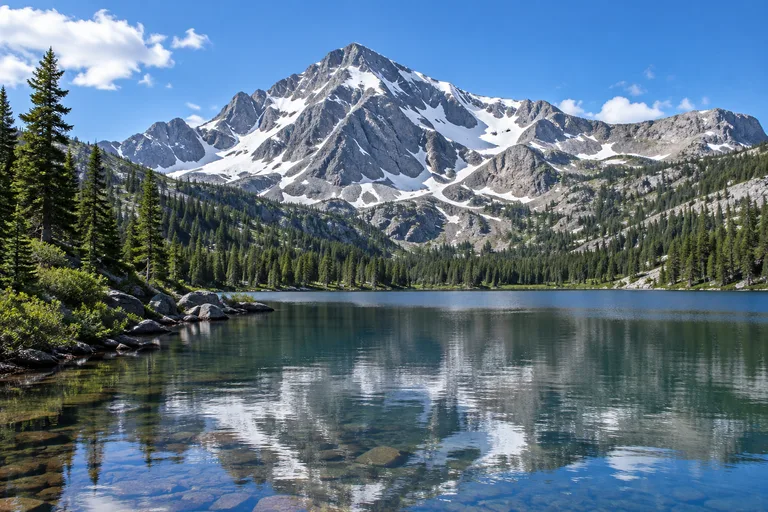
Great Basin National Park is a free national park in eastern Nevada, about 5 miles west of the small town of Baker. It protects Lehman Caves, Wheeler Peak, ancient bristlecone pines and night skies dark enough to earn Gold Tier International Dark Sky Park status. Lehman Caves is seen only on ranger-led tours, and every visitor needs a ticket, best booked ahead on Recreation.gov. The 12-mile Wheeler Peak Scenic Drive is usually open by Memorial Day weekend and closes partway up in winter. For most families and couples, the best time to visit Great Basin National Park is summer into early fall.
This guide covers the Lehman Caves tour in the park's own words and the scenic drive season. It also covers the Wheeler Peak hike, the shorter trails near it and Great Basin stargazing. It ends with itineraries, hidden gems and insider tips. Every fact comes from National Park Service (NPS) pages checked in November 2026. For the rest of the state, see the Nevada travel guide.
Great Basin National Park at a Glance
| Question | Short answer |
|---|---|
| Where is it? | Eastern Nevada, 5 miles west of Baker on Nevada Highway 488 |
| When was it created? | October 27, 1986, by an act of Congress; it covers over 77,000 acres |
| Entrance fee | None. Cave tours and developed campgrounds charge fees |
| Park hours | Grounds open 24 hours a day, all year, for hiking, stargazing and camping |
| Lehman Caves | Ranger-led, ticketed tours of up to 20 people; book on Recreation.gov |
| Scenic drive | 12 miles, paved, out and back; usually open by Memorial Day weekend; closed in winter at Upper Lehman Creek Campground |
| Dark skies | Gold Tier International Dark Sky Park since 2016 |
| Nearest major airports | Salt Lake City (234 miles) and Las Vegas (286 miles), according to the NPS |
Visit: Great Basin National Park, 100 Great Basin National Park, Baker, NV 89311 (mailing address) | 775-234-7331 | nps.gov/grba
The phone line is staffed from 8 a.m. to 4 p.m., Monday through Friday. It is closed on Thanksgiving, Christmas and New Year's Day.
Lehman Caves Tour: How Tickets Work
The Lehman Caves tour is the one thing most visitors plan around. The cave is open only on ranger-led tours, and each tour needs a ticket. The NPS Lehman Caves tour page, last updated November 9, 2026, lists four tours. Prices below are as listed in November 2026; fees change, so check the official site.
| Tour | Length | Walking and stairs | NPS rating | Adult (16+) | Youth (5 to 15) | Under 5 |
|---|---|---|---|---|---|---|
| Accessible Gothic Palace | 30 minutes | 0.3 mile, no stairs | Easy | $8 | $4 | Free |
| Lodge Room | 60 minutes | 0.4 mile, 69 stairs | Easy | $12 | $6 | Free |
| Grand Palace | 90 minutes | 0.6 mile, 69 stairs | Moderate | $15 | $8 | Free |
| Introduction to Wild Caving | 180 minutes | 1.5 miles, climbing and scrambling | Strenuous | $40 | Not permitted | Not permitted |
Access Pass and Senior Pass holders get 50 percent off, but the NPS is clear that the discount covers the cardholder only, not the whole group.
Booking, Check-In and Refunds
- Where to book: Recreation.gov or 877-444-6777. The NPS tour page links to the right ticket page.
- Who needs a ticket: every visitor, including infants.
- Group size: up to 20 people per tour, and tours often sell out.
- How far ahead: the park's conditions page says reservations open up to 30 days ahead. The tour page suggests checking two to four weeks out in summer.
- Payment: the park has gone cashless, so tickets need a card.
- Walk-up tickets: sold at the Lehman Caves Visitor Center desk when it opens on the tour day. They often sell out within the first hour, and walk-up tours depend on staffing.
- Check-in: arrive 15 minutes early at the visitor center front desk. Tickets are forfeited if the group has not checked in at least five minutes before the tour time.
- Refunds: available up to one day before, minus $1 per ticket. There are no refunds on the tour day or for late arrivals.
- School groups: the NPS asks schools to contact the park at least 30 days ahead.
Winter Tour Schedule for 2026
Times change with the season. For October 30 through December 31, 2026, the NPS lists this schedule:
- Grand Palace: 9:30 a.m. daily, plus 1:30 p.m. on Saturday and Sunday.
- Lodge Room: 2:30 p.m. daily, plus 11:30 a.m. on Saturday and Sunday.
- Accessible Gothic Palace: 10 a.m. on Saturday and Sunday, as a walk-up tour.
- Introduction to Wild Caving: 10 a.m. on Saturday, staffing permitting.
There are no tours on Thanksgiving, Christmas or New Year's Day. Other seasons carry more tours each day, so check the tour page for the dates of a trip.
Lehman Caves Rules
The rules protect a fragile cave, and rangers enforce them. No bags of any kind go into the cave. These are the main rules on the NPS tour page:
- Bags: no backpacks, purses, fanny packs or camera bags.
- Food and drink: no food, liquids, water, gum, tobacco or vapes.
- Touching: the cave may not be touched.
- Photos: flash is allowed, but never on cave life.
- Movement: regular crouching is needed, but no crawling. Walking sticks and canes are fine.
- Firearms: not allowed, even with a concealed carry permit.
White-Nose Syndrome Screening
The park screens every cave visitor for white-nose syndrome at the visitor center, to protect the cave and its bats. The screening is mandatory. Families who toured another cave earlier in the trip should pack fresh clothes and shoes for Lehman Caves, and ask a ranger about anything that has been underground before.
Tips for Families and Visitors with Limited Mobility
- Under 5 tour free, but every child still needs a ticket.
- Baby carriers: front carriers are allowed, and a few are available to borrow at the visitor center. Back carriers are not allowed.
- Toddlers: allowed on the Grand Palace Tour only from November 1 to March 5.
- Supervision: anyone 15 or younger must stay with an adult at all times.
- Accessible tour: the Gothic Palace route has no stairs and can take a wheelchair with assistance. Rangers cannot move mobility devices.
- Dress warmly: the cave stays about 52°F and very humid all year, so bring a light jacket or long sleeves.
What Is Inside Lehman Caves
Lehman Caves runs over 2 miles, which the NPS says makes it the longest cave in Nevada. Tours have run here since 1885, and today park rangers lead them. The NPS reports over 30,000 visitors to Lehman Caves in a year. Tours enter through the Entrance Tunnel. On the Grand Palace route, look for the Parachute shield, a formation the NPS pictures on its cave page.
The cave is also home to living things. Many bat species use the park's caves. The Great Basin pseudoscorpion is the largest invertebrate hunter underground. The park's cave page reports that over 10 species new to science have turned up in park caves. Lehman Caves is one of 40 known caves in the park, spread across more than 41,000 acres of cave-forming rock. All the others are closed, except to experienced cavers with a Wild Cave Permit.
The cave had a quiet spring in 2026. A news release dated April 20, 2026 says tours paused while contractors replaced the cave's electric lighting. A 30-minute lantern tour reopened on May 22, 2026, and the longer tours were to return once the work was done. The NPS tour page now lists all four tours again.
Wheeler Peak Scenic Drive: Season and Stops
The Wheeler Peak Scenic Drive is a paved, 12-mile, out-and-back road that starts at the park boundary on Nevada Highway 488. It climbs from about 6,700 feet to over 10,000 feet. Without stops, the NPS says it takes about 30 minutes each way.
The season is short. Here is what the NPS says about it:
- Opening: the road is usually open by Memorial Day weekend.
- Winter: the road is closed in winter and after snowfall, to vehicles, at Upper Lehman Creek Campground.
- Today: on November 18, 2026, the NPS conditions page listed the drive as closed at Upper Lehman Creek Campground.
- Vehicle limit: vehicles and trailers over 24 feet may not go beyond Upper Lehman Creek Campground, at mile 3.
- Parking: stop only at pullouts and marked spaces. On busy and holiday weekends, trailhead lots may fill.
- Water: there is no drinking water along the scenic drive.
Stops Along the Drive
- Park boundary, Highway 488: the start of the drive, at about 6,700 feet.
- Upper Lehman Creek Campground, about mile 3: home of the Lehman Creek Trailhead. Longer vehicles stop here, and so does all traffic in winter.
- Osceola Ditch Trailhead, about mile 5: the trailhead for the Osceola Ditch, one of the routes the NPS lists along the drive.
- Summit Trailhead, about mile 11: the start of the Wheeler Peak hike.
- Bristlecone Trailhead, mile 12: the end of the road, and the start of the Alpine Lakes, Bristlecone and Glacier trails.
Pullouts along the way look out to Mount Moriah, Lehman Creek, Wheeler Peak, Doso Doyabi Peak and Snake Valley. The NPS warns that altitude sickness is a danger here, even for visitors who live at high altitude, so take the climb slowly. The drive itself is a good outing for anyone who cannot hike far.
Wheeler Peak Hike and Other Trails
Most of the park's famous hikes start near the top of the scenic drive, so they share its season. The NPS gives these figures on its trail pages:
| Trail | Trailhead | Distance | Climb | NPS rating | Time |
|---|---|---|---|---|---|
| Alpine Lakes Loop | Bristlecone | 2.7 mi loop | 440 ft | Easy | 1.5 to 3 hours |
| Bristlecone Trail | Bristlecone | 2.8 mi round trip | About 600 ft | Moderate | 1.5 to 3 hours |
| Bristlecone and Alpine Lakes combined | Bristlecone | 4.1 mi | Not listed | Not listed | Not listed |
| Glacier Trail | Bristlecone | 4.8 mi total, including the Bristlecone Trail | 1,040 ft | Moderate | 2 to 4 hours |
| Wheeler Peak Summit | Summit | 8.6 mi | 3,100 ft | Strenuous | 4 to 10 hours |
The NPS asks hikers in this area to stay on the trail and to respect how remote these mountains are. Pets are not allowed on park trails, though trained service animals are.
The Wheeler Peak Hike
Wheeler Peak is the second highest peak in Nevada, and the NPS says its summit trail is "considered one of the hardest in the park." It starts at the Summit Trailhead at 10,160 feet. After about 2.5 miles, it rises above treeline, where hikers are fully exposed. It ends with the steepest section of trail in the park.
- Season: summer and fall. Snow may still cover the upper trail in summer.
- Start time: at or before dawn, with a plan to be back by late morning or early afternoon. Thunderstorms and high winds are common.
- What to carry: about one gallon of water per person per day, plus salty snacks.
- When to turn back: at the first signs of altitude sickness, or when storms build.
- Reservations: none needed for the hike.
Two NPS pages give different numbers. The trail page lists 8.6 miles and 3,100 feet of climbing. An older NPS place page lists 8.2 miles and 2,900 feet, and suggests setting aside 6 to 8 hours. Plan for the longer figures.
Bristlecone Trail
The Bristlecone Trail leads to the Wheeler Peak Bristlecone Grove, which the NPS calls the easiest grove in the park to reach. Signs on an interpretive loop at the end explain how these trees live for thousands of years. The Glacier Trail continues past the loop. Families can link the Bristlecone Trail with the Alpine Lakes Loop, since the two share their early sections.
Alpine Lakes Loop
The Alpine Lakes Loop is the gentlest of the high trails. It passes two mountain lakes, Teresa Lake and Stella Lake, with views up to Wheeler Peak. The NPS rates it easy, at 2.7 miles and 440 feet of climbing, and starts it at 9,890 feet. That height is still a lot for many visitors, so walk slowly and drink water.
Glacier Trail
The Glacier Trail continues past the bristlecones to the Wheeler Peak Glacier. The NPS calls it "the last surviving glacier in Nevada." Today it is referred to as a rock glacier, and the park notes it is shrinking. A ranger tip on the trail page warns that lingering snowfields are often mistaken for the glacier.
Lexington Arch
Lexington Arch is reached by its own road, away from the scenic drive. On November 18, 2026, the NPS listed the road as open but warned, "Hazardous conditions may be present, travel with caution." The road is severely washed out, and vehicles must park about 1 mile before the trailhead. Check the conditions page before trying it.
Great Basin Stargazing
Great Basin stargazing is a highlight for many visitors, and the park was recognized as a Gold Tier International Dark Sky Park in 2016. The grounds stay open 24 hours a day, so night visits are welcome all year. The NPS describes clear, moonless summer nights as the best conditions.
Ranger Astronomy Programs
- Season: roughly Memorial Day to Labor Day, Thursday through Sunday. After the September festival, fewer programs run until the season ends in October.
- Where: the Astronomy Amphitheater, by the Lehman Caves Visitor Center and picnic area.
- What happens: a 30-minute ranger talk, then about 1.5 hours of telescope viewing.
- Cost: free, with no reservation needed. Space is limited, and visitors are turned away once the visitor center parking lots fill.
- Times: they shift as sunset changes, so check the park calendar.
Daytime and In-Town Programs
On many clear summer afternoons, rangers set up solar telescopes behind the Lehman Caves Visitor Center. On summer Wednesday evenings, constellation talks meet on the Baker Access Trail, across from the Great Basin Visitor Center in Baker. There is no seating at those talks, so bring a jacket and something to sit on. The park also holds an Astronomy Festival every September; check the NPS site for the dates.
Stargazing on Your Own
- Use red light: the NPS encourages red flashlights and headlamps, and red filters for phone screens.
- No white light at the amphitheater: white lights are not allowed there after sundown.
- Pick a dark night: clear, moonless nights show the most stars.
- Know the road: in winter, the scenic drive is closed to cars past Upper Lehman Creek Campground, so plan to stargaze lower down.
The Lehman Caves Visitor Center has night sky exhibits that explain the park's dark skies and how to protect them. They make a good first stop before an evening program.
Visitor Centers
The park has two visitor centers, and each has something the other does not. Both have staffed desks, a park movie, exhibits and a park store run by Western National Parks Association.
- Lehman Caves Visitor Center: inside the park, at the end of the main entrance road. Cave tours check in here, and most programs start here. It has the Great Basin Cafe, a model cave with formations, and night sky exhibits. Water is available here all year.
- Great Basin Visitor Center: outside the park, north of Baker. It has a life zones exhibit and a model bristlecone pine. It also shows a piece of the Prometheus tree, which the NPS says was 4,862 years old, and the Forgotten Winchester rifle. The NPS pages checked for this guide do not list its hours, so check the park site before planning around it.
The NPS winter page notes there is no food service in the park in winter. Plan meals and snacks before the drive in.
Best Time to Visit Great Basin National Park
For most families and couples, the best time to visit is summer into early fall. The scenic drive is open, the high trails are in season, and ranger astronomy programs run. Winter is quiet and still worthwhile for cave tours and snowshoeing.
| Season | What the NPS says | Good to know |
|---|---|---|
| Late spring (May to mid-June) | Scenic drive usually open by Memorial Day weekend; astronomy programs begin around then | Snow may linger on the upper trails; cave tours often sell out |
| Summer (mid-June to August) | Wheeler Peak hike season; programs Thursday to Sunday | Thunderstorms and high winds are common up high; book tours two to four weeks out |
| Fall (September to October) | Astronomy Festival in September; programs taper off and end in October | Some campgrounds can close for winter weather as early as September |
| Winter (November to spring) | Scenic drive closed at Upper Lehman Creek Campground; cave tours run all year | Free snowshoe loans; avalanches are common up high; no food service in the park |
Getting to Great Basin National Park
Great Basin is remote, and the drive is part of the trip. The NPS gives these routes:
- From the east or west: take U.S. Highway 6 and 50 to Nevada Highway 487. Head south 5 miles to Baker, then west on Highway 488 for 5 miles to the park.
- From southern Nevada: take U.S. Highway 93 north to U.S. 6 and 50, then go east to Highway 487 and follow the same steps.
- From southern Utah: take Utah Highway 21 north through Milford and Garrison, where it becomes Nevada Highway 487. In Baker, turn west on Highway 488.
The NPS also lists these airports and distances:
| Airport | Distance to the park | NPS note |
|---|---|---|
| Cedar City Regional, Utah | 142 miles | Limited regional flights, no rental cars |
| St. George Regional, Utah | 207 miles | Limited regional flights, no rental cars |
| Salt Lake City, Utah | 234 miles | Full service, rental cars |
| Las Vegas, Nevada | 286 miles | Full service, rental cars |
Road Trip Basics
- Do not trust the app: of navigation apps, the NPS says, "Many will route you incorrectly to extremely remote locations within the park." Route to the Lehman Caves Visitor Center, the Great Basin Visitor Center or Baker instead.
- Fill up often: there are large stretches between gas and grocery stops.
- Expect no signal: the park has little to no cell coverage.
- Watch the clock: the route from Utah crosses into Pacific Time, so plan cave tour times in Pacific Time.
Camping at Great Basin
The park's campground page lists Lower Lehman Creek, Upper Lehman Creek, Wheeler Peak, Baker Creek, Grey Cliffs and the Snake Creek campgrounds. Here is what the NPS says about them:
- Year-round: Lower Lehman Creek is the only campground open all year. It has a limited number of pull-through sites for RVs and trailers.
- Seasonal: Wheeler Peak, Baker Creek, Upper Lehman Creek and Grey Cliffs can close for winter weather, possibly as early as September.
- Water: water is not available in the campgrounds. Fill up at the Lehman Caves Visitor Center, which has water all year.
- Groups: group sites are in the Grey Cliffs campground.
- Primitive sites: free, but with no water.
- Fires: never permitted above 10,000 feet. Only dead and down wood may be gathered, and no new fire rings may be built.
Fees and booking rules change, so check the NPS camping page and Recreation.gov before the trip. The NPS winter page adds that Wheeler Peak Campground can be used in winter at no charge, for those prepared for snow.
Great Basin in Winter
Winter brings snow, quiet trails and small cave tour groups. Lehman Caves tours run all year, except on Thanksgiving, Christmas and New Year's Day. The scenic drive closes to cars but opens to skiers and snowshoers from the winter closure at Upper Lehman Creek Campground.
The Lehman Caves Visitor Center lends snowshoes for free in adult and kid sizes, while supplies last. Skiers bring their own gear. Trails are not groomed, though some routes are flagged with tape. The NPS lists these winter routes:
- Upper Lehman Creek Campground loop: novice, up to 2 miles.
- Grey Cliffs Group Campground: novice to intermediate, up to 4 miles.
- Pole Canyon and Timber Creek Loop: novice to intermediate, 7.5 miles.
- Wheeler Peak Scenic Drive: novice to intermediate, up to 20 miles.
- Lehman Creek Trail to the Wheeler Peak parking lot: advanced to expert, 8 miles.
- Glacier, Bristlecone and Alpine Lake area: intermediate to expert, 5 miles.
The risks are real. The NPS warns of hypothermia, sudden weather changes, icy descents and frozen lakes. It also says avalanches are common at high altitude in the Snake Range in winter and spring. Register and check conditions at a visitor center before heading out.
Great Basin Itineraries
One Summer Day
- Morning: take a booked Lehman Caves tour, then browse the model cave and night sky exhibits.
- Late morning: drive the Wheeler Peak Scenic Drive, stopping at pullouts.
- Afternoon: walk the Alpine Lakes Loop past Teresa and Stella lakes, or add the Bristlecone Trail for 4.1 miles in all.
- Evening: catch a ranger astronomy program at the amphitheater, from Thursday to Sunday in summer.
Two Days for Hikers
- Day 1: cave tour, scenic drive and the Bristlecone and Glacier trails, then stargazing.
- Day 2: start the Wheeler Peak hike at or before dawn. In the afternoon, rest at the Great Basin Visitor Center in Baker, and check for a Wednesday constellation talk.
A Winter Day
- Morning: take the Grand Palace Tour at 9:30 a.m. (2026 winter schedule).
- Midday: borrow snowshoes and try the Upper Lehman Creek Campground loop.
- Evening: stargaze from a safe spot low in the park, with warm layers and a red light.
A Nevada and Utah Road Trip
Great Basin fits a longer loop through the region. The NPS puts Las Vegas 286 miles away and Salt Lake City 234 miles away, so a trip can start at one airport and end at the other. The Nevada travel guide covers Las Vegas, Reno, Lake Tahoe and the state's desert parks. To keep going east, the Utah travel guide covers the national parks across the state line.
Hidden Gems at Great Basin
Most visitors see the cave and the bristlecones. These quieter spots and programs reward a little extra time:
- The Prometheus tree display: a piece of the 4,862-year-old tree at the Great Basin Visitor Center.
- The Forgotten Winchester rifle: also shown at the Great Basin Visitor Center.
- Solar telescopes: rangers often show the sun through special scopes on clear summer afternoons.
- Constellation talks in Baker: summer Wednesday evenings on the Baker Access Trail.
- Osceola Ditch Trailhead: a quieter stop about 5 miles up the scenic drive.
- The rock glacier: Nevada's last surviving glacier, at the end of the Glacier Trail.
- Introduction to Wild Caving: a three-hour ranger tour with climbing and scrambling, for adults.
- Snowshoes on loan: free winter loans at the Lehman Caves Visitor Center.
Insider Tips for Visiting Great Basin
- Book the cave first. Reservations open up to 30 days ahead, and tours often sell out.
- Arrive early for walk-ups. Walk-up tickets go on sale when the visitor center opens and often sell out within an hour.
- Leave the bag in the car. No bags, water or food are allowed in the cave.
- Bring a card. The park has gone cashless for tour tickets.
- Pack clean clothes for the cave. Every visitor is screened for white-nose syndrome.
- Check the conditions page. It shows the scenic drive and road status, updated by the park.
- Carry all the water you need. Campgrounds and the scenic drive have no drinking water; refill at the Lehman Caves Visitor Center.
- Start high hikes early. Storms and high winds build above treeline later in the day.
- Set your clock to Pacific Time. Coming from Utah, the time changes at the state line.
- Fuel up and stock up. Gas and groceries are far apart, and there is no food in the park in winter.
Safety and Park Rules
- Altitude: the high trails start near 10,000 feet. Watch for altitude sickness, and turn back if symptoms appear.
- Weather: the NPS warns of rapidly changing weather and intense sun up high.
- Pets: not allowed on park trails; service animals are allowed.
- Fires: never above 10,000 feet, and only dead and down wood may be gathered. The park notes fire risk can be high even with no fire ban.
- Caves: do not touch formations, and follow the white-nose syndrome screening.
- Roads: stop only at pullouts on the scenic drive, and respect the 24-foot vehicle limit past mile 3.
Frequently Asked Questions About Great Basin National Park
Where is Great Basin National Park?
Great Basin National Park is in eastern Nevada near the Utah line. From U.S. Highway 6 and 50, take Nevada Highway 487 south 5 miles to Baker, then Highway 488 west 5 miles to the park. The NPS warns that navigation apps often send drivers to the wrong place and suggests routing to the Lehman Caves Visitor Center.
Is there an entrance fee at Great Basin National Park?
No. The National Park Service says Great Basin National Park has no entrance fee. Lehman Caves tours and developed campgrounds do charge fees. The park grounds are open 24 hours a day, all year.
How do you get Lehman Caves tour tickets?
Reserve on Recreation.gov or by phone at 877-444-6777. Every visitor needs a ticket, including infants, and tours hold up to 20 people. The NPS suggests checking availability two to four weeks ahead in summer. Walk-up tickets go on sale at the Lehman Caves Visitor Center when it opens and often sell out within an hour.
Which Lehman Caves tour is best for families?
The 60-minute Lodge Room Tour is rated easy, with 0.4 mile of walking and 69 stairs. The 30-minute Accessible Gothic Palace Tour has no stairs and is meant for visitors who need it. Children under 5 tour free, and anyone 15 or younger must stay with an adult.
When is the Wheeler Peak Scenic Drive open?
The NPS says the 12-mile road is usually open by Memorial Day weekend. In winter and after snowfall, it closes to vehicles at Upper Lehman Creek Campground, about 3 miles up. On November 18, 2026, the park listed it as closed at that campground. Vehicles over 24 feet may not go past mile 3.
How hard is the Wheeler Peak hike?
Hard. The NPS rates the summit trail strenuous: 8.6 miles with 3,100 feet of climbing, starting at 10,160 feet. Plan 4 to 10 hours. Start at or before dawn, because thunderstorms and high winds are common above treeline, and turn back if altitude sickness or storms appear.
Is Great Basin good for stargazing?
Yes. Great Basin was recognized as a Gold Tier International Dark Sky Park in 2016. Free ranger telescope programs run from about Memorial Day to Labor Day, Thursday through Sunday, at the Astronomy Amphitheater. An Astronomy Festival is held every September.
What is the best time to visit Great Basin National Park?
Summer into early fall suits most families and couples. The scenic drive is usually open by Memorial Day weekend, and ranger astronomy programs run through the summer. The NPS lists the Wheeler Peak hike for summer and fall. Book cave tours early, since they often sell out.
Can you visit Great Basin National Park in winter?
Yes. Lehman Caves tours run all year, except on Thanksgiving, Christmas and New Year's Day. Lower Lehman Creek Campground stays open, and the Lehman Caves Visitor Center lends snowshoes for free while supplies last. The scenic drive is closed to cars past Upper Lehman Creek Campground, and there is no food service in the park in winter.
How far is Great Basin from Las Vegas and Salt Lake City?
The NPS lists Salt Lake City airport at 234 miles and Las Vegas at 286 miles from the park. Smaller regional airports are closer, at Cedar City (142 miles) and St. George (207 miles), but the NPS notes they have no rental cars.
Ready to plan the rest of the trip? Start with the Nevada travel guide for Las Vegas, Lake Tahoe, Hoover Dam and the long desert drives between them.
Planning your next U.S. getaway? Explore more destination guides, road trips, and travel tips at Vacation Getaways US. Have a question or a spot we should cover? Email us at [email protected].