
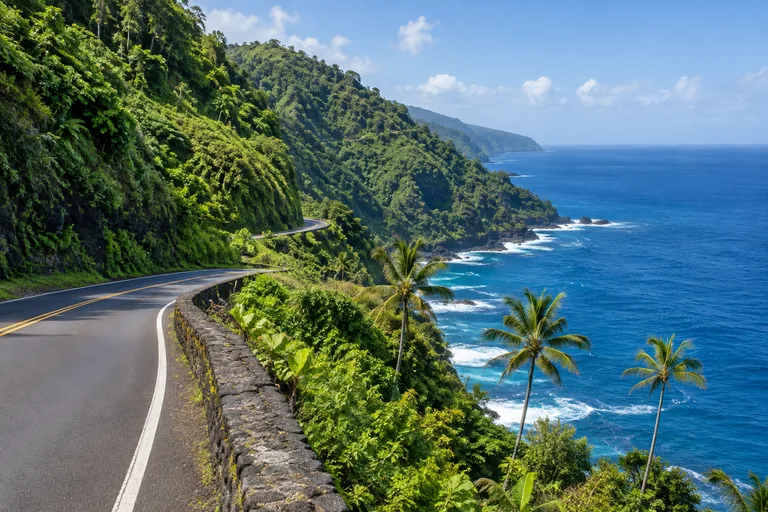
This Maui travel guide starts with the short answer: Maui is open and welcoming visitors. Its three big draws are the Road to Hana, Haleakala National Park and the beaches. The Road to Hana runs 52 miles from Kahului to Hana. Haleakala sunrise needs a reservation from the National Park Service. The best beaches sit on the sunny south and west shores. Four to five days covers the highlights at an easy pace.
This guide covers Road to Hana stops, Haleakala sunrise, the best beaches in Maui and a 5-day itinerary. It also explains how to visit West Maui with respect after the August 2023 wildfire. To compare Maui with the other islands, see the Hawaii travel guide.
Maui at a Glance
| Question | Short answer |
|---|---|
| Nickname | The Valley Isle |
| Main airport | Kahului Airport (OGG), the primary airport on Maui |
| Regions | West Maui, South Maui, Central Maui, Upcountry and East Maui |
| Book ahead | Haleakala sunrise, Waianapanapa State Park and Iao Valley (non-residents) |
| Road to Hana | 52 miles from Kahului, 620 curves, 59 bridges, two to four hours one way |
| Haleakala summit | 10,023 feet above sea level |
| Whale season | November through April, peak January through March |
| Lahaina | Visitors welcome as businesses reopen; follow signs and avoid restricted areas |
Visiting Maui Today: West Maui and Lahaina
Maui is open to visitors. The August 2023 wildfire changed Lahaina deeply, and the town is still rebuilding. Visitors can help by following the official guidance, which is short and clear.
Hawaii's official tourism site, gohawaii.com, says Lahaina is moving forward, guided by the families, cultural leaders and community members who call it home. It reports that major cleanup has been completed and many beloved Lahaina businesses have reopened. It asks every visitor to:
- Respect all posted signs.
- Avoid restricted areas.
- Refrain from photographing fire-impacted sites.
For the latest on recovery and community news, the state tourism site points to MauiRecovers.org. Check it before any visit to Lahaina, since open and restricted areas can change.
The rest of West Maui welcomes visitors as well. The state tourism site highlights the Kaanapali Beachwalk and the Kaanapali resort area. It also names Kapalua, known for championship golf and quiet getaways, and Honolua Bay, a favorite of experienced surfers. Supporting reopened local businesses is one of the kindest ways to visit.
Maui's Regions: Where Everything Is
The state tourism site splits Maui into five regions. Grouping sights by region saves hours of driving.
| Region | Highlights named by the state tourism site | Best for |
|---|---|---|
| West Maui | Kaanapali Beach and resorts, Kapalua, Honolua Bay, historic Lahaina | Resort stays and sunsets |
| South Maui | Kihei, Wailea's five crescent beaches, Makena Beach, Maui Ocean Center at Maalaea Bay | Beach days, families, couples |
| Central Maui | Kahului, Wailuku's Market Street, Iao Valley State Monument | Arrival day, history, shopping |
| Upcountry | Haleakala National Park, Makawao, Kula, farms | Sunrise, cool air, farm visits |
| East Maui | The Road to Hana, Waianapanapa State Park, Hana | Rainforest, waterfalls, a slower pace |
Getting to Maui and Getting Around
Most visitors arrive at Kahului Airport (OGG) in Central Maui. It is the island's primary airport and receives both overseas and interisland flights. The state tourism site adds that commuter flights serve the small Kapalua (JHM) and Hana (HNM) airports, and that a ferry links Maui with Lanai. Kahului itself is a shopping hub with Maui's largest mall, so it is an easy place to stock up on day one.
Visit: Kahului Airport, 1 Kahului Airport Road, Kahului, HI 96732 | (808) 872-3830 | airports.hawaii.gov/ogg
The airport lists the Maui Bus, shuttles, taxis and rental cars for ground transport. A rental car makes it easiest to explore Maui, since the main sights are spread across the island. The National Park Service notes that no public transport reaches either district of Haleakala National Park.
Maui Drive Times: A Getting There Table
Maui looks small on a map, but mountain roads and the curves of the Hana Highway make drives long. These times come from official sources, so plans can be built around them.
| From | To | Time or distance | Source |
|---|---|---|---|
| Kahului | Haleakala summit | 2.5 hours | National Park Service |
| Wailea | Haleakala summit | 3 hours | National Park Service |
| Lahaina | Haleakala summit | 3.5 hours | National Park Service |
| Park entrance gate | Haleakala summit | About 30 minutes | National Park Service |
| Kahului | Hana | 52 miles, two to four hours | State tourism site |
| Kahului | Kipahulu District | About 4 hours | National Park Service |
| Hana | Kipahulu District | 12 miles past Hana | National Park Service |
The state tourism site gives a shorter figure for the summit, an average of 2 hours from Kaanapali and Wailea. For a sunrise trip, plan with the park's longer times. A few more planning notes:
- Gas for the summit: the park says the last gas before the Summit District is in Pukalani.
- Gas for Hana: the last gas stop on the way toward Hana is in Paia.
- Electric cars: the park has no charging, and it warns that even fully charged electric vehicles have failed to reach the summit.
- Two separate drives: the Summit and Kipahulu districts of the park are not linked by a road.
- Road to Hana: the state tourism site suggests a permitted guided tour, so the driver can enjoy the road instead of watching every curve.
The Road to Hana: What to Know Before You Drive
The Road to Hana is Maui's most famous drive. Hawaii's official tourism site says Hana is only 52 miles from Kahului. The Hana Highway (HI-360) has 620 curves and 59 bridges, many of them narrow and one lane. The drive can take two to four hours one way, before stops.
That is why the best plan is an early start and a short list of stops. Trying to see everything in one day leads to rushed driving on a slow road.
Road to Hana Stops
These stops are listed by Hawaii State Parks, the National Park Service or the state tourism site, in the order most drivers reach them:
- Paia: the historic north coast town where, the state tourism site says, the Road to Hana begins. A natural first stop, and the last place for gas.
- Kaumahina State Wayside: a forested rest stop with exotic plants, picnic spots and a scenic view of the northeast Maui coastline. Open daily during daylight hours, with no entrance fee and no drinking water.
- Puaa Kaa State Wayside: a rest stop in the rain forest with small scenic waterfalls and pools. Open daily during daylight hours, with no entrance fee.
- Waianapanapa State Park: known for Pailoa, its famous black sand beach, plus a natural stone arch, sea stacks, blow holes, a heiau (temple) and an old Hawaiian coastal trail. Reservations required.
- Hana town: the end of the classic drive. The state tourism site points to Hasegawa General Store and the Hana Ranch Store for souvenirs.
- Kipahulu District, Haleakala National Park: 12 miles past Hana, with the Pipiwai Trail and views of the Pools of Oheo.
Waianapanapa State Park Reservations
Hawaii State Parks requires reservations at Waianapanapa, and parking reservations include a time slot to spread visits across the day. The park is open 7 am to 6 pm daily. Hawaii residents enter and park free with ID. Non-residents pay entry and parking fees, so check the official site for current prices.
As of November 2026, State Parks says the eastern parking lot is closed for facility improvements, and beach access is through the western entrance. Book and check notices on the Waianapanapa State Park page.
Kipahulu: Pipiwai Trail and the Pools of Oheo
The Kipahulu District is the coastal part of Haleakala National Park. The National Park Service lists these highlights:
- Pipiwai Trail: 4 miles round trip with an 800-foot climb, through a bamboo forest to the viewing area for 400-foot Waimoku Falls.
- Kuloa Point Trail: a 0.5-mile walk with an 80-foot climb that leads to ocean views and safe views of the Pools of Oheo.
- Pools of Oheo: not open for entry because of safety concerns. View them from the Kuloa Point Trail.
Flash floods and sudden rock falls can happen at any time, the park warns. Entering or wading in the streams is not recommended, and emergency medical help is at least one hour away. Neither gas nor food is sold here. A Haleakala park pass is needed, and the private vehicle pass covers both the Summit and Kipahulu districts.
Road to Hana Driving Tips
- Park only in marked stalls. Cars that stick out onto the highway may be towed.
- Stay off private property. The state tourism site asks visitors to avoid sites on or beyond private land.
- Stay out of streams in heavy rain. Flash floods rise fast.
- Take the one-lane bridges slowly and let faster local traffic pass when it is safe.
- Bring water and snacks. Kaumahina has no drinking water.
- Consider a permitted tour if no one in the group wants to drive the curves.
Haleakala National Park and Haleakala Sunrise
Haleakala means "house of the sun" in Hawaiian. In legend, the demigod Maui lassoed the sun here to slow it down and make the day longer. The summit rises 10,023 feet above sea level. The state tourism site notes that many visitors get up early to reach it for sunrise.
Visit: Haleakala National Park, PO Box 369, Makawao, HI 96768 (mailing address) | 808-572-4400 | nps.gov/hale
Haleakala Sunrise Reservations: What the NPS Says
The park says a sunrise visit needs a reservation made ahead of time. Here are the rules from nps.gov/hale today:
- When it applies: a reservation is required for each vehicle entering the park from 3 am to 7 am.
- Where to book: online on Recreation.gov only. The park says calling or visiting in person will not result in a reservation.
- How far ahead: up to 60 days before the visit. A portion of each day's reservations is released 2 days (48 hours) ahead, at 7 am Hawaii time.
- Limit: one sunrise reservation per visitor per three-day period.
- At the gate: the reservation holder must be present with valid ID and the confirmation email.
- Entrance fee: separate from the reservation. Bring a park pass or a way to buy one.
- No cash: the park's entrance stations take credit or debit cards only.
- Fee-free days: they do not include sunrise reservations or entry between 3 am and 7 am.
- Weather: reservations are not refunded or exchanged for clouds or rain.
Recreation.gov charges a small fee for each sunrise reservation. Check the current amount, and the park entrance fee, on the Haleakala fees page. The full rules are on the park's sunrise page.
How to Plan a Haleakala Sunrise
- Book on Recreation.gov 60 days ahead, or try the 2-day release at 7 am Hawaii time.
- Buy the entrance pass online ahead, or have a card ready to pay at the gate.
- Fill the gas tank the day before. The park sells no gas, food or clothing.
- Leave early. Use the drive times in the table above, plus about 30 minutes from the gate to the summit.
- Dress for winter. The NPS says dawn is regularly wet, windy and below freezing.
- Drive slowly on the way down. The road has no streetlights or guardrails.
What to Expect at the Summit
Parking is limited to marked lots, and lots close when full. For a quieter view, the park suggests the Leleiwi or Kalahaku overlooks instead of the summit. Native Hawaiian cultural practices may be taking place at sunrise, and the park asks visitors to respect them.
Altitude matters. The NPS warns that altitude sickness is a concern, with symptoms such as nausea, headache, dizziness and shortness of breath. People who are pregnant or have heart or breathing conditions should talk to a doctor before the trip.
Short Hikes at the Summit
| Trail | Distance | Climb | Note |
|---|---|---|---|
| Pa Kaoao | 0.4 mile round trip | 100 feet | A short walk up a cinder hill next to the Haleakala Visitor Center |
| Hosmer Grove | 0.54-mile loop | 50 feet | A nature loop through native and non-native shrubland |
| Keoneheehee (Sliding Sands) to the first overlook | 0.5 mile round trip | 50 feet | Downhill first; the climb back out takes longer |
| Halemauu Trail to the crater viewpoint | 2.2 miles round trip | 400 feet | A rocky path to a view into the crater |
The NPS says hikes starting downhill take about twice as long to hike back out. Trails feel harder at this height because each breath holds less oxygen. Strong hikers with a full day can ask rangers about the 11-mile crossing of the crater floor.
Best Beaches in Maui
The best beaches in Maui sit mostly on the sunny south and west shores, with a striking black sand beach on the Road to Hana. Here is how they compare:
| Beach | Region | Good for | Keep in mind |
|---|---|---|---|
| Kaanapali Beach | West Maui | Three miles of white sand, the Beachwalk, sunsets | Busy resort area |
| Wailea's five crescent beaches | South Maui | Couples, resort beach days | Upscale dining and golf nearby |
| Kihei beaches | South Maui | Families, the sunniest and driest weather | Family-friendly places to stay |
| Big Beach (Oneloa), Makena State Park | South Maui | A wide beach called one of the island's best | Shore break can be very dangerous |
| Oneuli (Black Sand) Beach, Makena State Park | South Maui | A black sand beach in the same park as Puu Olai cinder cone | Non-resident entry and parking fees |
| Pailoa, Waianapanapa State Park | East Maui | Black sand and coastal views on the Road to Hana | Reservations required |
For family beach days, the state tourism site names the sandy shores of Kaanapali, Makena, Kamaole and Wailea.
Makena State Park
Makena State Park is in South Maui, with the Puu Olai cinder cone as its landmark. Big Beach and Black Sand Beach are open daily from 5 am to 7 pm, and to 7:45 pm in May, June and July. Non-residents pay entry and parking fees, payable at kiosks or online through ParkMobile. Check the official site for current prices. The park lists no drinking water, so bring plenty. State Parks warns that shore break can be very dangerous here, and it recommends swimming only in calm seas.
Snorkeling and Sea Life
From South Maui, visitors can see Lanai, Kahoolawe and Molokini, a small crescent-shaped islet. Molokini is a State Marine Life and Bird Conservation District. On any snorkel, keep at least 10 feet from sea turtles, as NOAA recommends, and never touch, chase or feed them.
Ocean Safety on Maui
Maui's water is beautiful and powerful. Hawaii's official tourism site gives these rules for every beach:
- Swim where a lifeguard is on duty, or go with professionals, and ask the lifeguard about hazards first.
- Never turn your back on the ocean. Waves are unpredictable.
- Heed all posted warning signs.
- Look for rip currents, rocks and shorebreak. Shorebreak can cause serious neck and spine injuries.
- If caught in a rip current, stay calm, go with the flow, then swim at an angle toward shore and signal for help.
- Know how to swim before snorkeling, and at least wear a flotation device.
- If in doubt, don't go out.
Check conditions on hioceansafety.com before each beach day.
Iao Valley and Central Maui
Iao Valley State Monument is one of Maui's most recognized landmarks. Its Iao Needle (Kukaemoku) rises 1,200 feet from the valley floor. The valley is also where Kamehameha I's forces defeated the Maui army at the Battle of Kepaniwai in 1790. A paved 0.6-mile walk leads to the lookout and loops through a garden of plants brought by the Hawaiians who settled the valley.
- Status: State Parks reports it reopened on November 1, 2026. Check park notices before you go.
- Reservations: required for out-of-state visitors, for entry and parking.
- Hours: 7 am to 6 pm daily.
Book through Hawaii State Parks. Details are on the Iao Valley State Monument page.
Nearby Wailuku has charming wooden storefronts around Market Street, many of them family businesses running for generations. It makes a pleasant lunch stop after Iao Valley.
Maui Ocean Center
At Maalaea Bay, the Maui Ocean Center is a strong pick for families and rainy days. Exhibits include living reefs, sharks, rays and sea turtles. A 3D Sphere show about humpback whales is included with admission and recommended for ages 4 and up. Paths are stroller friendly, and the aquarium suggests planning about 2 hours. Hours are listed as 9 am to 5 pm; check the official site.
Visit: Maui Ocean Center, 192 Maalaea Road, Wailuku, HI 96793 | (808) 270-7000 | mauioceancenter.com
Upcountry Maui
Upcountry spreads across the slopes of Haleakala, and it feels a world away from the beach resorts. Rolling hills and misty slopes sit between the beaches and the summit.
- Makawao: a town with roots in its plantation past and a thriving arts community.
- Kula: a quiet, rustic area where Hawaiians farmed the volcanic soil early on, growing taro and sweet potato.
- Paniolo heritage: Hawaiian cowboys, called paniolo, are part of Upcountry culture. The state tourism site traces them to the 1800s, when King Kamehameha III invited vaqueros from California to teach cattle handling.
- Farm visits: farm tours, a goat dairy and tastings of Maui-made wines and spirits.
Upcountry pairs well with a Haleakala sunrise. Come down the mountain, warm up with breakfast in Makawao and spend the morning on the slopes. One note: as of late October 2026, State Parks lists the Polipoli Spring State Recreation Area as closed due to downed trees.
Whale Watching on Maui
Winter brings humpback whales to Hawaii. NOAA says they are generally seen from November through April, with the peak from January through March. About half of the North Pacific's humpbacks visit Hawaii each winter and spring. The state tourism site says the whales favor shallow water, especially the Auau Channel between Maui, Molokai and Lanai.
- From shore: the state tourism site names the McGregor Point lookout, west of Maalaea, and the beaches of Kaanapali, Kihei and Wailea.
- From a boat: choose a permitted whale watching tour. Tours usually last 2 to 4 hours, and choices are widest from January to early April.
- Indoors: the humpback whale show at Maui Ocean Center is a good option for young children.
- The law: approaching within 100 yards of a humpback whale is prohibited in Hawaii.
For a low-key stop, the Hawaiian Islands Humpback Whale National Marine Sanctuary runs a visitor center on the Kihei shore. It has exhibits, family programs and beachfront views toward Kahoolawe, Lanai and West Maui. It keeps weekday hours and closes on federal holidays, so check the official site before going.
Visit: Sanctuary Visitor Center, 726 South Kihei Road, Kihei, HI 96753 | (808) 879-2818 | hawaiihumpbackwhale.noaa.gov
Maui for Families and Couples
Maui suits both family trips and romantic getaways, with different picks for each.
Maui With Kids
- Maui Ocean Center: indoor exhibits, stroller-friendly paths and a whale show for ages 4 and up.
- Kihei and Wailea beaches: the sunniest, driest side of the island. Choose a beach with a lifeguard.
- Iao Valley: a paved 0.6-mile walk that small legs can manage.
- Hosmer Grove: a 0.54-mile nature loop in the Summit District of Haleakala National Park.
- Sanctuary Visitor Center in Kihei: interactive displays and weekly family programs.
Maui for Couples
- Haleakala sunrise: a shared early start above the clouds, with a reservation.
- Wailea and Kapalua: resort areas with crescent beaches, golf and quiet evenings.
- A night in Hana: splits the Road to Hana into two calm days.
- Upcountry tastings: Maui-made wines and spirits in Kula and Makawao.
- Sunset on the Kaanapali Beachwalk: an easy stroll to end a beach day.
For more romantic ideas across the country, see the best couples weekend trips in the USA.
Where to Stay on Maui
Maui's regions feel very different, so the base shapes the whole trip.
| Base | Why stay there | Keep in mind |
|---|---|---|
| Kaanapali and Kapalua (West Maui) | Resorts, the Beachwalk, sunsets, golf | Far side of the island from Hana; follow Lahaina guidance |
| Wailea (South Maui) | Crescent beaches, upscale resorts and dining | About 3 hours to the Haleakala summit, by the park's figure |
| Kihei (South Maui) | Family-friendly stays, sunniest weather | Called beach-combing territory by the state tourism site |
| Hana (East Maui) | Breaks the Road to Hana into two calmer days | A small, remote town; plan lodging early |
| Upcountry | Cool air, farms, closest to Haleakala | Fewer beach options nearby |
For more tips on picking a hotel or rental, see the hotel and lodging guide.
Best Time to Visit Maui
Maui is warm all year, so the best time depends on the plan. The state tourism site suggests spring and fall, naming April, May, September and October. Whale season shapes winter, and long beach evenings shape summer.
| Season | What happens | Best for |
|---|---|---|
| Winter (December to February) | Whale season at its peak from January; cold, wet dawns at the summit | Whale watching, couples' getaways |
| Spring (March to May) | Whales through April; April and May named by the state tourism site | Beaches plus the last of whale season |
| Summer (June to August) | Makena State Park open until 7:45 pm in May, June and July | Family beach trips |
| Fall (September to November) | September and October named by the state tourism site; whales return in November | Beach days and the Road to Hana |
In any season, rain can bring flash floods on the Road to Hana and in Kipahulu. Check the weather and the park alerts the morning you drive.
Respecting Maui's Land, Culture and Communities
Respect is part of every good Maui trip. These habits come from official guidance:
- In Lahaina: respect posted signs, avoid restricted areas and do not photograph fire-impacted sites.
- On the Road to Hana: stay off private property and park only in marked stalls.
- At Haleakala: respect Native Hawaiian cultural practices, and camp only in designated campgrounds.
- At historic places: Waianapanapa holds a heiau, and Iao Valley was a battle site. Treat both with care.
- In the water: do not walk on the reef or take coral, and use reef-safe sunscreen. Keep 10 feet from turtles and 50 feet from monk seals.
- On trails: stay on marked paths and out of closed areas.
Maui Itineraries: 3 Days and 5 Days
These plans group stops by region and put the timed reservations first.
3 Days on Maui
- Day 1, Central and South Maui: Iao Valley, lunch in Wailuku, then the beach in Kihei or Wailea.
- Day 2, Haleakala sunrise and Upcountry: reserved sunrise, a short summit hike, then Makawao and Kula.
- Day 3, Road to Hana: early start in Paia, the state waysides, Waianapanapa (reserved) and Hana.
5 Days on Maui
- Day 1, arrive and settle in: Maui Ocean Center at Maalaea, then sunset on a south or west shore beach.
- Day 2, Haleakala sunrise: sunrise from the summit or the Leleiwi Overlook, the Pa Kaoao trail, then breakfast in Makawao and an Upcountry farm visit.
- Day 3, Road to Hana: Paia, Kaumahina, Puaa Kaa, Waianapanapa and Hana. Overnight in Hana if possible.
- Day 4, Kipahulu and the drive back: the Pipiwai Trail to Waimoku Falls and the Kuloa Point Trail, then the return drive.
- Day 5, beaches: Big Beach at Makena or the Wailea beaches, then the Kaanapali Beachwalk for sunset.
In winter, swap any afternoon for a whale watching tour. With only one or two days, pick either the Road to Hana or Haleakala, not both, and spend the rest of the time at the beach.
Hidden Gems on Maui
Past the famous names, these stops reward a little extra time:
- Puaa Kaa State Wayside: small waterfalls and pools in the rain forest, with no entrance fee.
- Leleiwi and Kalahaku overlooks: quieter sunrise spots than the summit, suggested by the park itself.
- Kuloa Point Trail: a short Kipahulu walk with safe views of the Pools of Oheo.
- Market Street in Wailuku: old wooden storefronts and family businesses.
- Oneuli (Black Sand) Beach: the black sand beach of Makena State Park, easy to add to a Big Beach day.
- McGregor Point lookout: a roadside whale watching spot west of Maalaea in winter.
- Makawao: plantation history and art in one small Upcountry town.
Insider Tips for Visiting Maui
- Set an alarm for 7 am Hawaii time. That is when Haleakala sunrise reservations are released.
- Check the day's park notices. Hawaii State Parks posts closures and reopenings for Waianapanapa, Iao Valley and others.
- Start the Road to Hana early and choose a few stops, not every one.
- Fill the tank in Paia or Pukalani. There is no gas on the way to Hana after Paia, or on the way to the summit after Pukalani.
- Bring layers for the summit. Beach clothes are not enough at dawn on Haleakala.
- Carry a card. Haleakala National Park does not take cash.
- Buy one Haleakala pass for the trip; the private vehicle pass is valid for three days and covers Kipahulu too.
- Swim only where it is safe. State Parks warns about shore break at Big Beach, and the NPS warns of flash floods in Kipahulu.
- Check MauiRecovers.org before any visit to Lahaina.
- Pack reef-safe sunscreen and keep a respectful distance from turtles.
For packing help, see the weekend getaway packing list. For airfare, see how to find cheap flights.
Frequently Asked Questions About Maui
Is Maui open to visitors, and can you visit Lahaina?
Yes. Hawaii's official tourism site says visitors are welcome in Lahaina as beloved businesses reopen and the community rebuilds after the August 2023 wildfire. It asks visitors to respect all posted signs, avoid restricted areas and not photograph fire-impacted sites. Check MauiRecovers.org for the latest before you go.
Do you need a reservation for Haleakala sunrise?
Yes. The National Park Service requires a reservation for each vehicle entering Haleakala National Park from 3 am to 7 am. Book it on Recreation.gov. The park entrance fee is separate, and the reservation holder must show valid ID at the gate.
How far ahead can you book a Haleakala sunrise reservation?
Up to 60 days ahead on Recreation.gov. The park also releases a portion of each day's reservations 2 days ahead, at 7 am Hawaii time. Each visitor may buy only one sunrise reservation per three-day period.
What if you cannot get a Haleakala sunrise reservation?
The park says calling or visiting in person will not get you a reservation. Try the 2-day release at 7 am Hawaii time. The reservation only covers 3 am to 7 am, so a visit after 7 am needs only the regular park entrance pass.
How long is the Road to Hana?
Hawaii's official tourism site says Hana is 52 miles from Kahului. The Hana Highway (HI-360) has 620 curves and 59 bridges, many of them narrow and one lane. The drive can take two to four hours one way before any stops.
What are the best Road to Hana stops?
Officially listed stops include Paia, Kaumahina State Wayside, Puaa Kaa State Wayside and Waianapanapa State Park with its black sand beach. Farther on are Hana town and the Kipahulu District of Haleakala National Park. Waianapanapa needs a reservation.
Can you swim at the Pools of Oheo?
No. The National Park Service says the Pools of Oheo are not open for entry because of safety concerns. They can be viewed safely from the Kuloa Point Trail. Flash floods and sudden rock falls can happen at any time.
Do you need a reservation for Waianapanapa State Park?
Yes. Hawaii State Parks requires reservations, with a time slot for parking. Hawaii residents enter and park free with ID, and non-residents pay entry and parking fees. The park is open 7 am to 6 pm daily.
What are the best beaches in Maui?
Top picks include Kaanapali Beach in West Maui and the five crescent beaches of Wailea. Kihei's sunny beaches and Big Beach (Oneloa) in Makena State Park are close behind. On the Road to Hana, Waianapanapa has a black sand beach. Shore break at Makena can be very dangerous.
When is whale season in Maui?
NOAA says humpback whales are generally seen in Hawaii from November through April, with the peak from January through March. Federal law prohibits approaching within 100 yards of a humpback whale in Hawaii.
Planning your next U.S. getaway? Explore more destination guides, road trips, and travel tips at Vacation Getaways US. Have a question or a spot we should cover? Email us at [email protected].