
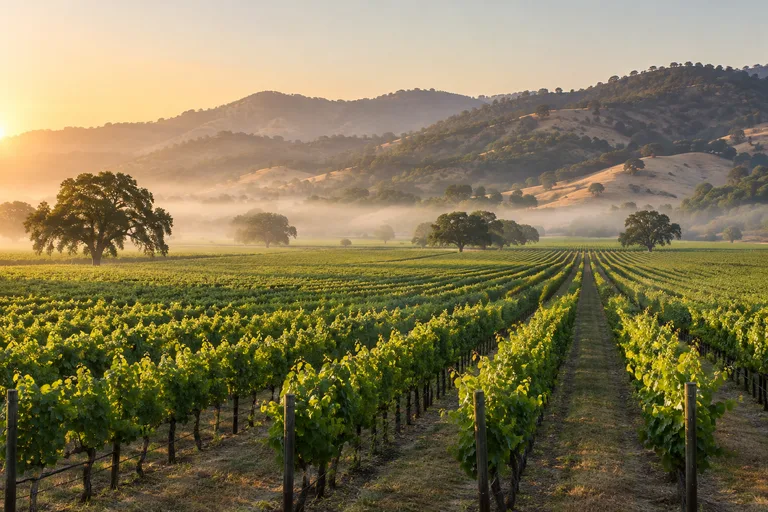
This Napa Valley travel guide starts with the short answer. Napa Valley is a small wine region in Northern California, about 50 miles northeast of San Francisco, and it is easy to see in a weekend. Five towns sit along one main road. More than 400 wineries are open for tastings, and there is plenty to do between glasses: hot air balloons at sunrise, a vintage dining train, hot springs, redwood trails and one of the best-known food markets in the state.
The guide below covers the towns, how wine tasting works, Napa vs Sonoma, the best time to visit Napa, how to get there and around, and a Napa Valley weekend itinerary. It is part of the California Travel Guide, which covers the rest of the state. Whether the trip is a couples getaway, a family stop on a longer California drive or a first taste of wine country, the planning steps are the same.
Napa Valley at a Glance
The numbers below come from Visit Napa Valley, the official tourism office, and they explain why the valley is so easy to plan.
| Question | Short answer |
|---|---|
| Where is it? | Northern California, about 50 miles northeast of San Francisco |
| How big is it? | The valley floor is about 35 miles long and about 5 miles wide at its widest point |
| Which towns? | American Canyon, Napa, Yountville, St. Helena and Calistoga |
| How many wineries? | More than 400 open for tastings, plus about 90 tasting rooms in the towns |
| Main roads | Highway 29 on the west side and the quieter Silverado Trail on the east side |
| How long to stay? | Two to three days for a first visit |
| Best seasons | Spring and fall, with a quiet winter and a warm, dry summer |
A few more facts help set the scene. The Vaca Range forms the east wall of the valley, and the Mayacamas Mountains on the west separate it from Sonoma County. Visit Napa Valley says 95 percent of the wineries are family owned. It also says Napa Valley produces only about 4 percent of California's wine, which surprises most first-time visitors. The valley is famous for quality, not volume.
A Short History of Napa Valley Wine
Napa Valley's wine story is short by world standards. According to Visit Napa Valley, George Yount planted the valley's first wine grapes in 1838. The town of Yountville carries his name today, and its tourism office describes it as the site of the valley's first planted grapevines.
The moment that put Napa on the world map came in 1976, at a blind tasting now called the Judgment of Paris. Two Napa wines came out on top against French wines: a 1973 Chardonnay from Chateau Montelena and a 1973 Cabernet Sauvignon from Stag's Leap Wine Cellars. Both wineries still pour for visitors.
The valley also protects its farmland. Visit Napa Valley calls it home to the country's first agricultural preserve. Only about 9 percent of Napa County, roughly 45,000 acres, is planted to grapes. That is why the drive between towns still looks like farm country and not a suburb.
The Towns of Napa Valley, South to North
Each of the five towns has its own feel, and all of them sit within the same short valley. Most visitors pick one as a base and day-trip to the others.
| Town | What it is like | Good base for |
|---|---|---|
| American Canyon | Casual and down to earth, at the south end | Travelers on a budget and late arrivals from the Bay Area |
| Napa | The largest town, with a riverfront downtown, tasting rooms and the market | First visits, car-free trips and nightlife |
| Yountville | Small, polished and walkable, known for its restaurants | Food lovers and couples |
| St. Helena | A historic Main Street lined with shops, with famous wineries nearby | Classic winery visits and shopping |
| Calistoga | Easygoing and outdoorsy, with hot springs and mud baths | Spa time, families and hikers |
Napa
The city of Napa is the natural first stop. Its downtown runs along the Napa River, and many tasting rooms, restaurants and hotels are within walking distance of each other. The Napa Valley Welcome Center is the place to pick up maps and ask questions on the first morning.
Contact: Napa Valley Welcome Center, 1300 1st Street, Suite 313, Napa, CA 94559. Phone: (707) 251-5895. Web: visitnapavalley.com.
Yountville
Yountville is the valley's food town. Its tourism office says Michelin-starred restaurants, tasting rooms, art and lodging are all within walking distance, which makes it one of the few places in wine country where a visitor can park once for a whole day. Restaurants named on the town's official site include Bouchon, Bistro Jeanty and Bottega. The town is also home to the Veterans Home of California, established in 1884.
Contact: Yountville Welcome Center, 6484 Washington Street, Suite F, Yountville, CA 94599. Phone: (707) 944-0904. Web: yountville.com.
Oakville and Rutherford
Between Yountville and St. Helena, Highway 29 passes through Oakville and Rutherford. They are small farming communities, not towns with a downtown, but their names are known to wine drinkers everywhere. Both are official grape-growing areas on the valley floor, and many of the valley's best-known Cabernet Sauvignon vineyards line the road here.
St. Helena
St. Helena calls itself "Napa Valley's Main Street," and the name fits. Its Main Street is a stretch of historic storefronts with bakeries, shops and tasting rooms. It makes a good lunch stop on a day of winery visits in the middle of the valley.
Contact: St. Helena visitor information, 1154 Main Street, St. Helena, CA 94574. Phone: (707) 963-4456. Web: sthelena.com.
Calistoga
Calistoga, at the north end, is the relaxed one. The town's tourism office says its mineral pools and spas are fed by natural hot springs, and it is known for its mud baths. It is also the closest town to the geyser, the Petrified Forest and the best hiking in the valley.
Contact: Calistoga Welcome Center, 1457 Lincoln Avenue, Calistoga, CA 94515. Phone: (707) 942-6333. Web: visitcalistoga.com.
Angwin and Lake Berryessa
Two more areas sit outside the valley floor. Angwin is a quiet community on Howell Mountain, above St. Helena. Lake Berryessa, in the hills to the east, is the valley's outdoor playground. Visit Napa Valley lists boating and paddle sports, fishing, hiking, picnicking, camping and swimming there.
Wine Tasting in Napa Valley: How It Works
Wine tasting in Napa is simple once the basics are clear: book ahead, keep the day short and plan the ride. First-time visitors often try to do too much.
The Wine Regions in Plain Words
Napa Valley is an official grape-growing region, called an American Viticultural Area or AVA. Inside it are 16 smaller AVAs, each with its own soil and weather. A label that names one of them says where the grapes grew.
- Valley floor: Calistoga, St. Helena, Rutherford, Oakville, Yountville, Stags Leap, Oak Knoll and Coombsville.
- Mountains: Howell Mountain, Spring Mountain, Diamond Mountain, Mount Veeder and Atlas Peak.
- Others: Los Carneros at the cool south end near the bay, plus Chiles Valley and Wild Horse Valley.
Cabernet Sauvignon is the grape the valley is best known for, and Chardonnay is its best-known white. Both were the winners in Paris in 1976.
Reservations, Fees and Tipping
- Reservations: many wineries host tastings by appointment. Castello di Amorosa, for example, lists itself as open by reservation. Book the wineries that matter most before the trip, mainly for weekends and harvest.
- Fees: Visit Napa Valley says most tasting rooms charge a fee, and some waive it with a wine purchase. Check each winery's official site for current prices.
- Tipping: the tourism office says tipping is not necessary at a tasting, but it is appreciated for great service.
- What to wear: jeans are fine all year. Dress in layers, because tours often pass through caves and cool cellars.
How Many Wineries in a Day?
Two or three tastings make a full, unhurried day. A seated tasting often lasts an hour or more, and the drive between wineries adds time. A good pattern is one tasting late in the morning, a long lunch and one or two tastings in the afternoon. Every tasting bar has a "dump bucket," and using it is normal. Nobody is expected to finish every pour.
Walk-In Tasting Rooms
Travelers who dislike fixed schedules can skip the estates for a day and visit the tasting rooms in the towns. Visit Napa Valley counts about 90 of them. Downtown Napa, Yountville, St. Helena and Calistoga all have clusters that can be reached on foot, so nobody has to drive between pours.
One Winery That Looks Like a Castle
Castello di Amorosa, south of Calistoga, describes itself as an authentically styled 14th-century Tuscan castle winery. It is one of the most photographed stops in the valley and a favorite with first-time visitors.
Contact: Castello di Amorosa, 4045 St. Helena Highway, Calistoga, CA 94515. Phone: (707) 967-6272. Web: castellodiamorosa.com.
Things to Do in Napa Valley Besides Wine Tasting
A good Napa trip mixes tastings with other things. These are the classics, and several work well for travelers who do not drink at all.
Float Over the Vineyards in a Hot Air Balloon
Balloon companies launch just after dawn, when the wind is calmest and the air is coolest. Visit Napa Valley says flights usually last about one hour, but the whole outing takes three to four hours with check-in, inflation, the flight and the ride back. Most baskets carry 8 to 20 passengers, and most companies also offer a private flight for two. Flights can be canceled for weather, so it is wise to book the balloon for the first morning and keep a second morning free.
Ride the Napa Valley Wine Train
The Napa Valley Wine Train is a historic train with restored railcars that runs through the heart of the valley from its station in downtown Napa. It is a meal with a view, not a way to get around. Journeys range from about two and a half hours to six hours:
- Lunch journeys: about three hours.
- Dinner journeys: about two and a half hours.
- The Legacy Experience: a six-hour trip with a four-course meal and winery stops.
Every journey includes a welcome glass of wine. Check the official site for dates and prices.
Contact: Napa Valley Wine Train, 1275 McKinstry Street, Napa, CA 94559. Phone: (707) 253-2111. Web: winetrain.com.
Eat Through Oxbow Public Market
Oxbow Public Market is downtown Napa's indoor food hall, a short walk from the Wine Train station. About 20 vendors sell oysters, cheese, coffee, baked goods, beer, wine and gifts. Names on the market's own list include Hog Island Oyster Bar, Gott's Roadside, Ritual Coffee Roasters and The Fatted Calf. It is an easy answer for a group that cannot agree on lunch.
Contact: Oxbow Public Market, 610 and 644 First Street, Napa, CA 94559. Phone: (707) 226-6529. Web: oxbowpublicmarket.com.
Take a Class at the CIA at Copia
Next door in the Oxbow District, the CIA at Copia is the Culinary Institute of America's public food center. The 80,000-square-foot building offers:
- hands-on cooking and beverage classes;
- a garden-to-table restaurant and a wine bar;
- a marketplace and the Chuck Williams Culinary Arts Museum;
- culinary gardens and an outdoor amphitheater above the Napa River.
Contact: CIA at Copia, 500 First Street, Napa, CA 94559. Phone: (707) 967-2500. Web: ciafoodies.com.
Walk or Bike the Napa Valley Vine Trail
The Napa Valley Vine Trail is a paved path for walkers and cyclists, built apart from car traffic. The goal is 47 miles, from the Vallejo ferry terminal to Calistoga. Visit Napa Valley lists a finished 12.5-mile stretch from the city of Napa north to Yountville. Many hotels rent bikes, and some bike shops deliver.
See Art at di Rosa
The di Rosa Center for Contemporary Art sits on a 217-acre campus in the Carneros area, southwest of Napa. It holds a large collection of Northern California art, with galleries, a sculpture meadow and a nature preserve. The center says to plan for an hour and a half to two hours. It is open only part of the week, so check the official site for days and hours.
Contact: di Rosa Center for Contemporary Art, 5200 Sonoma Highway, Napa, CA 94559. Phone: (707) 226-5991. Web: dirosaart.org.
Soak in Calistoga's Hot Springs
Calistoga's spas and mineral pools are fed by natural hot springs, and the town's mud baths are a local tradition. A soak pairs well with a slow afternoon after a morning hike. Spa menus, day-use rules and prices differ from one resort to the next, so check with the resort or the Calistoga Welcome Center.
Watch a Geyser and Meet the Goats
Old Faithful Geyser of California erupts about every 25 to 40 minutes, so nobody waits long. The grounds are built for a lazy hour or two: visitors can bring a picnic, play bocce on the lawn, look through a small geology museum and visit the fainting goats, horned sheep and alpacas. It is one of the best stops in the valley for children.
Contact: Old Faithful Geyser of California, 1299 Tubbs Lane, Calistoga, CA 94515. Phone: (707) 942-6463. Web: oldfaithfulgeyser.com.
Hike in the State Parks
The valley has three state parks close together at its north end:
- Bothe-Napa Valley State Park: between St. Helena and Calistoga on Highway 29, with more than 10 miles of trails, stands of coast redwoods, camping, restored historic cabins, yurts and a seasonal swimming pool.
- Bale Grist Mill State Historic Park: three miles north of St. Helena, a mill built in 1846 with a 36-foot water wheel. Milling demonstrations and tours are offered on weekends.
- Robert Louis Stevenson State Park: seven miles north of Calistoga, with a five-mile hike to the top of Mount St. Helena. The author of Treasure Island spent his honeymoon here in 1880.
Day-use fees and hours change, so check each park's official page before the drive.
Napa vs Sonoma: Which Wine Country Fits the Trip?
Napa is the better choice for a short, simple first trip, and Sonoma is the better choice for variety. The two counties sit side by side, split by the Mayacamas Mountains, and many travelers visit both. The figures in the table come from the two official tourism offices.
| Napa | Sonoma | |
|---|---|---|
| Size of the county | 789 square miles | 1,768 square miles, about twice the size |
| Wineries | More than 400 open for tastings | About 450 |
| Vineyard land | About 43,000 to 45,000 acres | More than 60,000 acres |
| Wine regions | 16 inside the Napa Valley AVA | 19 |
| Layout | One narrow valley, two parallel roads | Many valleys, a river and a coast |
| Ocean beaches | None | More than 55 miles of coast |
| Weather | Often 6 to 8 degrees warmer | Cooler, with more ocean influence |
| Best for | First trips, short stays, famous Cabernet, fine dining | Longer stays, road trips, redwoods and beaches |
In plain words: pick Napa when time is short and the goal is the classic wine country picture. Pick Sonoma when the trip also needs a beach day or a redwood grove. With four days or more, do both. The town of Sonoma is just over the hills from the city of Napa, and di Rosa sits on the highway that links them.
Best Time to Visit Napa
The best time to visit Napa is spring or fall, though the valley is open and pleasant all year. Each season changes the look of the vineyards and the size of the crowds. The temperatures and rainfall below are the seasonal averages published by Visit Napa Valley.
| Season | Average high and low | Average rain | What to expect |
|---|---|---|---|
| Spring (March to May) | 68°F and 47°F | 1.8 inches | Green hills, budding vines, mild days, lighter crowds |
| Summer (June to August) | 82°F and 55°F | 0.08 inches | Warm, dry days, outdoor dining, concerts, busy weekends |
| Fall (September to November) | 78°F and 49°F | 1.5 inches | Grape harvest, vineyard color, the biggest crowds |
| Winter (December to February) | 60°F and 42°F | 5.3 inches | Rain, green hills, fireside tasting rooms, the quietest roads |
Three local seasons are worth knowing by name:
- Harvest: early to mid fall. Hotels, roads and restaurants can be crowded, and the tourism office suggests a midweek trip for more elbow room.
- Cabernet Season: the local name for the quiet months from late fall through spring. Rain is most likely from November through April.
- Mustard season: February and March, when wild mustard turns the vineyard rows bright yellow.
Whatever the month, pack layers. Evenings can be up to 30 degrees cooler than the afternoon, and the north end of the valley can be 10 degrees different from the south end at the same hour. Big events such as the BottleRock music festival in late spring fill hotels early, so check the official seasons and events pages before choosing dates.
How to Get to Napa Valley
Most visitors fly into a Bay Area airport and drive. Downtown Napa is about 50 miles north of San Francisco. Visit Napa Valley says the drive usually takes about an hour on weekdays and up to two hours on weekends.
| Airport | Distance to Napa Valley | Drive time |
|---|---|---|
| Oakland (OAK) | 51 miles | About 1 to 2 hours |
| San Francisco (SFO) | 58 miles | About 1.5 to 3 hours |
| Sacramento (SMF) | 63 miles | About 1.5 hours |
| San Jose (SJC) | 83 miles | About 2 to 3 hours |
| Sonoma County (STS) | Closest to the north end | About 30 minutes to Calistoga |
From San Francisco, drivers can cross the Golden Gate Bridge for the scenic route or the Bay Bridge through the East Bay. Two options work without a car:
- Ferry and bus: the San Francisco Bay Ferry sails from the Ferry Building to the Vallejo Ferry Terminal. From there, Vine Transit buses continue to Napa.
- Train and bus: Amtrak's San Joaquins train stops in Martinez, where an Amtrak Thruway bus connects to the Soscol Gateway Transit Center near downtown Napa.
For more ways to save on the flight, see the site's guide to finding cheap flights and deals online.
Getting Around Wine Country Without Drinking and Driving
The safest plan is simple: whoever drives does not taste. Since that rule takes the fun out of a tasting for one person, most groups pick one of these instead.
- Hire a driver or join a tour: private car services and small-group tours pick up at hotels and handle the route.
- Rideshare: Uber and Lyft work across the valley, though waits are longer at remote wineries.
- Vine Transit: the county bus system runs along the valley, around the city of Napa and to the Vallejo ferry. All buses are wheelchair accessible.
- Town shuttles: the Yountville Trolley is free, and St. Helena and Calistoga each run an on-call shuttle.
- Walk: stay downtown in Napa, Yountville, St. Helena or Calistoga and spend a day in the tasting rooms on foot.
- Bike: the Vine Trail links Napa and Yountville on a path away from traffic.
Contact: Vine Transit, 625 Burnell Street, Napa, CA 94559. Phone: (707) 251-2800. Web: vinetransit.com.
Drivers have two roads to choose from. Highway 29 runs up the west side from Napa to Calistoga and passes through every town. The Silverado Trail runs up the east side with fewer stoplights and less traffic. A common trick is to drive north on one and south on the other.
A Napa Valley Weekend Itinerary
This Napa Valley weekend itinerary works from Friday afternoon to Sunday evening and moves north a little each day, so there is very little backtracking.
- Friday afternoon, downtown Napa: check in, stop at the Napa Valley Welcome Center for a map, then walk to Oxbow Public Market for an early dinner. Finish with a tasting room or two downtown, all on foot.
- Saturday morning, balloon or bike: early risers take the sunrise balloon flight. Everyone else rents bikes and rides the Vine Trail toward Yountville.
- Saturday midday, Yountville: a long lunch in Yountville, then a walk past the shops and tasting rooms on Washington Street.
- Saturday afternoon, Oakville and Rutherford: one or two booked winery tastings along Highway 29, with a hired driver or a non-tasting driver.
- Sunday morning, St. Helena: coffee and a stroll on Main Street, then a stop at Bale Grist Mill if the water wheel is turning.
- Sunday midday, Calistoga: Castello di Amorosa or Old Faithful Geyser, then lunch on Lincoln Avenue.
- Sunday afternoon: a hot springs soak in Calistoga, then the drive back south on the Silverado Trail.
With a third day, add the Wine Train, a class at the CIA at Copia or a morning hike on Mount St. Helena. For a shorter trip, the site's weekend getaway planning tips and weekend packing list help trim the plan.
Where to Stay in Napa Valley
Where to stay depends on the kind of trip. Visit Napa Valley counts more than 120 places to stay, from roadside motels to resorts.
- Downtown Napa: the widest choice and the easiest car-free base, close to the market, the Wine Train and the riverfront.
- Yountville: small inns and resorts within a walk of the restaurants. It is the pick for a food-focused couples trip.
- St. Helena: a mix of classic motels and high-end resorts. The town's official lodging list includes El Bonita Motel, Harvest Inn, the Wydown Hotel and Meadowood Napa Valley.
- Calistoga: hot springs resorts with mineral pools, a good fit for families and anyone who wants a slower pace.
- American Canyon: chain hotels at the south end, often a lower-cost choice.
- Camping and cabins: Bothe-Napa Valley State Park has campsites, yurts and restored cabins among the redwoods. For more ideas, see the site's cabin and camping guides.
Rates climb on weekends and during harvest. Sunday through Thursday stays are the simplest way to save.
Where to Eat in Napa Valley
Food is half the reason to come. Visit Napa Valley counts more than 150 restaurants in a valley that is only about 35 miles long.
- Casual and quick: Oxbow Public Market in Napa, for oysters, burgers, coffee and picnic supplies under one roof.
- Special occasion: Yountville, where the Michelin-starred restaurants are. Tables at the best-known ones book up far ahead, so reserve before booking flights.
- Cooking as an activity: a class or a garden-to-table meal at the CIA at Copia.
- Picnics: buy supplies at the market and eat at a park, or bring a picnic to Old Faithful Geyser, which welcomes them.
Restaurant servers are usually tipped 15 to 20 percent. For a food-first route that links Napa and Sonoma, see the site's list of the best restaurant road trips.
Napa Valley for Families and for Couples
Napa works for both, with different stops.
With Kids
- Old Faithful Geyser of California, for the eruptions and the animals.
- The Petrified Forest, for giant stone redwoods.
- Bothe-Napa Valley State Park, for easy trails and the summer pool.
- Bale Grist Mill, for the turning water wheel on weekends.
- Oxbow Public Market, where everyone picks their own lunch.
- Lake Berryessa, for swimming and paddling on hot days.
Winery rules on children differ, so check each winery's site before booking a family tasting.
For Couples
- A sunrise balloon flight, with a private basket for two if the budget allows.
- A dinner journey on the Wine Train.
- A mud bath and mineral pool afternoon in Calistoga.
- A long dinner in Yountville, reached on foot from the inn.
Napa Valley is also on the site's list of the best couples weekend trips in the USA.
Hidden Gems in Napa Valley
These quieter stops reward travelers who have already seen the famous names, or who want a break from tasting rooms.
- The Petrified Forest: a grove of petrified redwoods west of Calistoga. The site dates the trees to the Pliocene Epoch, 3.4 million years ago, and offers self-guided walks every day. Contact: 4100 Petrified Forest Road, Calistoga, CA 94515. Phone: (707) 942-6667.
- The summit of Mount St. Helena: the five-mile trail in Robert Louis Stevenson State Park climbs to views over Napa, Sonoma and Lake counties. California State Parks says that on clear days hikers can see much of the Bay Area and, far to the north, the top of Mount Shasta. Dogs are not allowed.
- The redwoods at Bothe-Napa Valley State Park: most visitors do not expect coast redwoods this far inland. The shaded trails are a cool escape on a hot afternoon.
- Skyline Wilderness Park: a hiking and camping park on the edge of the city of Napa, handy for a morning walk before the tasting rooms open. Contact: 2201 Imola Avenue, Napa, CA 94559. Phone: (707) 252-0481.
- The Silverado Trail at golden hour: the east-side road has the same vineyard views as Highway 29 with a fraction of the traffic.
- The Sculpture Meadow at di Rosa: outdoor art with a lake and vineyard backdrop, far from the crowds up the valley.
Insider Tips for a Smoother Napa Trip
- Go midweek. Tuesday through Thursday brings easier reservations, quieter roads and lower room rates than a weekend.
- Book the big three first. Lodging, the one restaurant that matters most and the one winery that matters most. Fill in the rest later.
- Start in the north. On a busy day, drive straight to Calistoga in the morning and work south, against the flow of traffic coming up from Napa.
- Leave San Francisco early or late. Weekend drives can take twice as long as weekday ones. The tourism office suggests driving after 8 p.m. to miss rush hour.
- Eat a real breakfast. Tastings start in the morning, and food makes the day last longer.
- Carry water and a cooler. A car parked in the summer sun gets hot enough to spoil wine. Keep bottles in a cooler or ask the winery about shipping.
- Bring a jacket to dinner. Even in summer, evenings cool off fast.
- Ask the pourer. Tasting room staff know which nearby wineries are small, friendly and not yet crowded. Their tips are often the best ones of the trip.
More Travel Tips


Frequently Asked Questions
Where is Napa Valley?
Napa Valley is in Northern California, about 50 miles northeast of San Francisco. The valley floor is about 35 miles long and about 5 miles wide at its widest point, with five towns: American Canyon, Napa, Yountville, St. Helena and Calistoga.
How many days do you need in Napa Valley?
Two to three days suit most first visits. One day covers downtown Napa and two or three tastings. A weekend adds Yountville, St. Helena and Calistoga, plus one activity such as a hot air balloon flight or the Napa Valley Wine Train.
What is the best time to visit Napa?
Spring and fall are the favorites. Spring brings green hills and budding vines, and fall brings the grape harvest and vineyard color. Harvest is also the most crowded time, so a midweek trip helps. Winter is the quiet, rainy season, with yellow mustard flowers in February and March.
Is Napa or Sonoma better for a first trip?
Napa suits a short first trip because the valley is compact and its towns sit along one main road. Sonoma County is about twice the size of Napa County and adds an ocean coast and redwoods, so it rewards travelers who want more variety and more driving.
Do you need reservations for Napa Valley wineries?
Plan on it. Many wineries host tastings by reservation, and popular ones fill up on weekends and during harvest. Downtown tasting rooms are the easier choice for a tasting without much planning. Check each winery's official site before the trip.
Is wine tasting free in Napa Valley?
No. Visit Napa Valley says most tasting rooms charge a fee, and some waive it with a wine purchase. Fees change, so check each winery's official site for current prices.
Can you visit Napa Valley without a car?
Yes, with planning. The San Francisco Bay Ferry runs to Vallejo, where Vine Transit buses continue to Napa. In the valley, Vine Transit buses, the Yountville Trolley, town shuttles, bikes, rideshare and hired drivers cover most trips.
Is Napa Valley good for families?
Yes. Kids enjoy Old Faithful Geyser of California and its farm animals, the Petrified Forest, the pool and redwoods at Bothe-Napa Valley State Park, the water wheel at Bale Grist Mill and the food stalls at Oxbow Public Market. Check each winery's own rules before bringing children to a tasting.
What is there to do in Napa Valley besides wine tasting?
Plenty. Popular choices are a sunrise hot air balloon flight, the Napa Valley Wine Train, the Napa Valley Vine Trail, Oxbow Public Market, cooking classes at the CIA at Copia, the di Rosa Center for Contemporary Art, hot springs and mud baths in Calistoga, and hiking in the state parks.
Planning your next U.S. getaway? Explore more destination guides, road trips, and travel tips at Vacation Getaways US. Have a question or a spot we should cover? Email us at [email protected].