
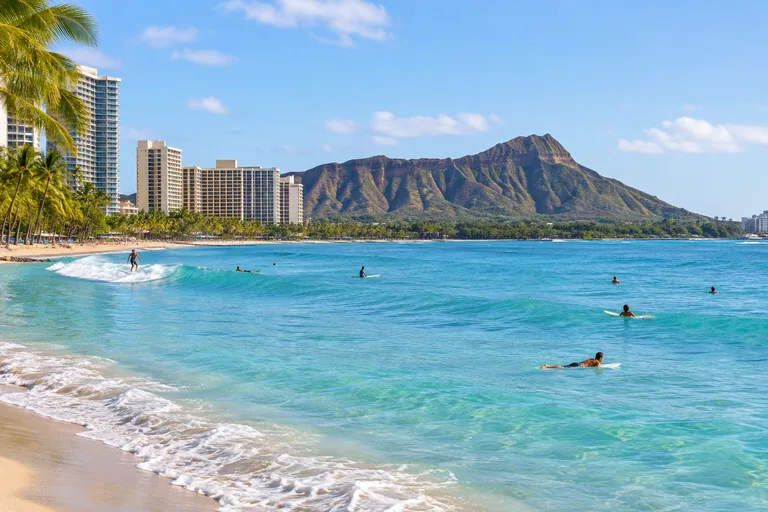
This Oahu travel guide starts with the short answer: Oahu is the Hawaiian island where beach time, history and city comforts sit close together. It is home to Honolulu, Waikiki Beach and Diamond Head. Pearl Harbor National Memorial is about a 45-minute drive from Waikiki, and the North Shore is about an hour away. Three to five days covers the highlights, as long as a few key reservations are made ahead.
This guide covers things to do in Waikiki, Pearl Harbor visit tips, the Oahu North Shore, Hanauma Bay, ocean safety and two easy itineraries. For the other islands and the big picture, see the Hawaii travel guide. Whether the trip is a family vacation, a couples escape or a first visit to the islands, the plan below keeps the days simple.
Oahu at a Glance
| Question | Short answer |
|---|---|
| Main city | Honolulu, which includes Waikiki |
| Main airport | Daniel K. Inouye International Airport (HNL), the largest airport in the state |
| Regions | Honolulu and Waikiki, Central Oahu, the North Shore, the Windward Coast and the Leeward Coast |
| Book ahead | USS Arizona Memorial program, Diamond Head (non-residents) and Hanauma Bay |
| Pearl Harbor from Waikiki | About a 45-minute drive, per the National Park Service |
| North Shore from Waikiki | About a one-hour drive, per Hawaii's official tourism site |
| Big wave season | November through February on the North Shore |
| Whale season | November through April, peak January through March |
Is Oahu the Right Island for the Trip?
Oahu suits travelers who want variety without long drives. Hawaii's official tourism site calls it the "Heart of Hawaii." The island packs a capital city, famous beaches, royal history and a major World War II memorial into one trip.
- Families: Waikiki Beach, the Honolulu Zoo, the Waikiki Aquarium, the Bishop Museum planetarium and calm summer days on the North Shore.
- Couples: sunset on Waikiki Beach, the Diamond Head summit view, a luau and the windward lookouts.
- History lovers: Pearl Harbor National Memorial, Iolani Palace and the King Kamehameha statue.
- Active travelers: snorkeling at Hanauma Bay, the Diamond Head trail, surf lessons in Waikiki and the hike to Makapuu Point Lighthouse.
Travelers who want the quietest, most rural Hawaii may prefer a neighbor island. Many still pair one with a few days on Oahu. Hawaii also appears on the site's list of the best couples trips in the USA.
Oahu's Regions: Where Everything Is
Hawaii's official tourism site divides Oahu into five regions. Knowing them makes it easier to group sights by day and cut down on driving.
| Region | Highlights named by the state tourism site | Best for |
|---|---|---|
| Honolulu (with Waikiki) | Waikiki Beach, Diamond Head, Iolani Palace, Bishop Museum, shopping and nightlife | First-time visitors, families, couples |
| Central Oahu | Pearl Harbor Historic Sites, Dole Plantation, Wahiawa Botanical Garden | History and a stop on the way north |
| North Shore | Haleiwa, Waimea Bay, Sunset Beach, Polynesian Cultural Center in Laie | Surf watching in winter, small-town pace |
| Windward Coast | Makapuu Point, Nuuanu Pali Lookout, Byodo-In Temple, Kualoa Ranch | Scenic drives and green mountain views |
| Leeward Coast | Ko Olina, Kapolei, waterparks and the state's only historic railroad | Resort stays and families |
What to Book Ahead on Oahu
Three of Oahu's most popular stops use timed reservations. Booking them first, then building the days around them, saves a lot of stress.
| Stop | When booking opens | Who needs it | Closed days |
|---|---|---|---|
| USS Arizona Memorial program | Daily at 3 pm Hawaii time, 8 weeks ahead and 24 hours ahead | Everyone, infants included | Thanksgiving, Christmas, New Year's Day |
| Diamond Head State Monument | Through Hawaii State Parks; check the official page | Non-residents | Christmas, New Year's Day |
| Hanauma Bay Nature Preserve | Two days ahead at 7 am Hawaii time | Most visitors; residents and children 12 and under enter free | Mondays, Tuesdays, Christmas, New Year's Day |
Rules change, so confirm each one on the official page linked in its section below.
Getting to Oahu and Getting Around
Most visitors arrive at Daniel K. Inouye International Airport (HNL) in Honolulu. The state calls it the largest airport in Hawaii. Flights to the other islands leave from here too.
Once on the island, the right way to get around depends on the plan:
- Staying in Waikiki: hotels sit two or three blocks from the ocean, so much of the trip can be done on foot. Free trolleys run between Waikiki and the Ala Moana shopping area.
- TheBus: Honolulu's public bus system, which the National Park Service lists for reaching Pearl Harbor. Check current routes, since one stop near Pearl Harbor is closed.
- Rental car: the easiest way to reach the North Shore, the windward coast and early trailheads in one day.
- Tours with transportation: Hanauma Bay tickets with a ride, authorized Pearl Harbor transportation providers and the Polynesian Cultural Center shuttle from Waikiki.
Plan for traffic. The National Park Service warns that traffic can add time to the Pearl Harbor drive, especially at peak hours. Leave early for any timed reservation. For fares to Honolulu, see how to find cheap flights.
Things to Do in Waikiki
Waikiki is where most Oahu trips begin. Its name means "spouting waters" in Hawaiian, and the area was once a playground for Hawaiian royalty. The state tourism site says Waikiki was introduced to the world in 1901, when its first hotel, the Moana Surfrider, opened on the shore.
The best things to do in Waikiki are easy and close together:
- Take a surf or canoe lesson. Instructors on Waikiki Beach carry on the legacy of Duke Kahanamoku, the Olympic swimming gold medalist known as the father of modern surfing.
- Visit the Duke Kahanamoku statue. It stands on Waikiki Beach and has become a symbol of Oahu's surf culture.
- Walk the Waikiki Historical Trail. Surfboard markers along the way tell the area's story.
- See the Honolulu Zoo and the Waikiki Aquarium. Both are easy family stops near the beach.
- Shop and eat. Kalakaua Avenue, the International Market Place and the Royal Hawaiian Center are the big gathering places. Ala Moana, a short free trolley ride away, has more than 290 shops and 80 places to eat.
- Watch the sunset from the sand. It costs nothing and is one of the simplest pleasures on the island.
Waikiki even has its own quirky food event. The Spam Jam festival makes the site's list of weird competitions and festivals in the USA.
Hike Diamond Head (Leahi)
The crater behind Waikiki is Diamond Head State Monument, known in Hawaiian as Leahi. Hawaii State Parks describes the 0.8-mile hike from trailhead to summit as steep and strenuous. It climbs 560 feet from the crater floor. The last tenth of a mile is all stairs. The trail also passes through a lighted 225-foot tunnel near the Fire Control Station at the top.
- Reservations: entry and parking reservations are required for non-residents. Hawaii residents with ID enter free.
- Hours: State Parks lists 6 am to 6 pm daily. The last hike reservation is at 4 pm, with last entry at 4:30 pm. The park is closed on Christmas and New Year's Day.
- Time: allow 1.5 to 2 hours for the hike.
- Bring: good walking shoes, water, a hat and sunscreen.
- Fees: entry and parking fees apply to non-residents, paid by credit card only. Check the official site for current prices.
Book through Hawaii State Parks. Details are on the Diamond Head State Monument page.
Beyond Waikiki: Historic Honolulu
Downtown Honolulu is a short drive from the beach and holds some of the most important sites in Hawaiian history.
Iolani Palace calls itself the only official royal residence in the United States. It was built in 1882, and the monarchy was overthrown in 1893. The palace has been a National Historic Landmark since 1962. Docent-led tours and self-led audio tours are offered. The palace is open Tuesday through Saturday, so plan around Sundays and Mondays.
Visit: Iolani Palace, corner of King Street and Richards Street, downtown Honolulu. Phone: (808) 522-0832 (tickets and reservations). Web: iolanipalace.org.
Across the street stands the King Kamehameha statue, honoring the ruler who unified the Hawaiian Islands. On the Friday closest to Kamehameha Day (June 11), it is draped with dozens of long fresh flower lei.
The Bishop Museum holds millions of artifacts. The state tourism site calls it the premier natural and cultural history institution in the Pacific. The museum also has the J. Watumull Planetarium. It is open daily, except a few holidays.
Visit: Bishop Museum, 1525 Bernice Street, Honolulu, HI 96817. Phone: (808) 847-3511. Web: bishopmuseum.org.
The state tourism site names more Honolulu stops for a longer stay:
- Chinatown and downtown Honolulu
- Kapiolani Park, next to Waikiki
- the National Memorial Cemetery of the Pacific
- Queen Emma Summer Palace
- the Honolulu Museum of Art
- Aloha Tower and Kawaiahao Church
Pearl Harbor Visit Tips
Pearl Harbor National Memorial is the most important history stop on Oahu, and a little planning makes the visit far smoother. Entry to the memorial is free, but the boat program to the USS Arizona Memorial is timed and limited. Here is what the National Park Service says today.
Visit: Pearl Harbor National Memorial, 1 Arizona Memorial Place, Honolulu, HI 96818. Phone: (808) 422-3399. Web: nps.gov/valr.
What Pearl Harbor National Memorial Includes
- The USS Arizona Memorial, reached by boat, which honors those lost in the December 7, 1941 attack.
- The Pearl Harbor Visitor Center, with museums, exhibits and grounds along the shoreline.
- A 23-minute park film, which can be seen apart from the boat program.
The NPS says there is no entrance fee for the memorial or the visitor center, including the museums and grounds. The visitor center is listed as open daily from 7 am to 5 pm, except Thanksgiving, Christmas and New Year's Day. Check the official site before going, since hours can change.
How USS Arizona Memorial Reservations Work
The NPS says reservations for the USS Arizona Memorial program are strongly recommended. The program is limited by time and capacity. Here is how booking works, according to the park's program page:
- Book on Recreation.gov. Reservations are released daily at 3 pm Hawaii time in two windows: 8 weeks ahead and 24 hours ahead.
- Count everyone. Up to 10 tickets per day can be reserved, and infants and small children must be included.
- Expect a small fee. The program is free, but Recreation.gov charges a small non-refundable fee per ticket.
- Know the rules. Reservations are final, cannot be changed or refunded, and cannot be transferred. Rangers cannot change them.
- Arrive early. The NPS asks reservation holders to arrive at least one hour before their program. Check in at the Ticket Validation Desk 10 minutes before the ticket time. Late arrivals may lose their seats to standby visitors.
The program runs daily, every 15 minutes from 8 am to 12 noon and from 1 pm to 3:30 pm, weather permitting. It includes a safety orientation, the boat ride and time on the memorial. There are no restrooms on the boats or at the memorial. Dock repairs can sometimes affect availability.
No reservation? The old same-day, first-come, first-served tickets have been discontinued. Limited standby seats may be available but are not guaranteed. The park's free Standby Callback system lets visitors wait for an open seat, though on busy days it can take several hours. Full details are on the USS Arizona Memorial programs page.
Bag Policy and What to Bring
For safety, bags are not permitted in the memorial or the visitor center. The park allows clear plastic bags and very small clutches or wallets. A bag storage facility near the visitor center entrance, run by the Pacific Fleet Submarine Museum, charges a fee for every size.
- Leave at the hotel: backpacks, purses, camera bags and large handbags.
- Not allowed: weapons of any kind, pepper spray, aerosol cans, alcohol, balloons and most glass containers.
- Allowed: food and water, as long as they are not hidden in a package.
- Strollers: allowed at the visitor center when they have a fixed pouch that cannot be removed. Ask a ranger about the rules for the boat.
- Pets: not allowed inside the visitor center or memorials. Service animals are welcome.
Getting to Pearl Harbor and Parking
From Waikiki, the NPS route follows H-1 West. Take exit 15A, marked "Arizona Mem./Stadium," and avoid the Hickam AFB exit. Continue on Kamehameha Highway (HI-99) and turn left at the fourth traffic light onto Arizona Memorial Place.
A daily parking fee applies. It is paid on the day by scanning a QR code on signs in the lot, and it cannot be paid ahead. On TheBus, the park points riders to the Kamehameha Highway and Kalaloa Street stop, since the westbound Arizona Memorial stop is closed until further notice. Authorized tour companies also offer transportation from Waikiki.
Battleship Missouri, the Aviation Museum and USS Bowfin
Three more Pearl Harbor historic sites sit nearby. They are run apart from the national memorial, so each has its own tickets and prices.
| Site | What it is | Ticket |
|---|---|---|
| Battleship Missouri Memorial | The battleship, on Ford Island; its site lists daily hours and closures on Thanksgiving, Christmas and New Year's Day | Its own admission |
| Pearl Harbor Aviation Museum | Aircraft and exhibits on Ford Island | Its own admission |
| USS Bowfin and the Pacific Fleet Submarine Museum | A submarine and museum; the museum also runs the bag storage near the visitor center entrance | Its own admission |
Families who want to see everything should plan a full day at Pearl Harbor. Those short on time can pair the free memorial with one paid site.
A Respectful Visit
The USS Arizona Memorial is a place of remembrance for those lost in the attack. Keep voices low on the memorial, follow ranger instructions and dress for a solemn visit. The NPS also notes that smoking is not allowed on the visitor center grounds or at the memorial.
Snorkeling at Hanauma Bay
Hanauma Bay Nature Preserve, east of Waikiki, is Oahu's best-known snorkeling spot. The bay and its coral reef sit inside an extinct volcano. The City and County of Honolulu runs it with strict limits, so a visit takes planning.
- Days open: Wednesday through Sunday. Closed Mondays, Tuesdays, Christmas Day and New Year's Day.
- Entry hours: the city lists 6:45 am to 1:30 pm. The beach is cleared at 3:30 pm and everyone must leave by 4 pm.
- Reservations: open two days before the visit at 7 am Hawaii time. Up to 10 people per booking.
- With a ride: admission with transportation through Roberts Hawaii can be booked up to a month ahead.
- Walk-ins: about 25 percent of access is first come, first served, handed out when the gate opens at 6:45 am. Everyone in the party must be present.
- Education video: every visitor must watch it on every visit.
- Rules: feeding fish is banned. A reservation does not include a parking stall, and parking is cash only.
Hawaii residents with photo ID and children 12 and under enter free. Fees apply to other visitors, so check the official site for current prices. Booking details are on the city's Hanauma Bay page.
Oahu North Shore
The Oahu North Shore is about a one-hour drive from Waikiki, and it feels like a different island. The pace is slower, the towns are small and the beaches are famous across the surfing world.
Haleiwa Town
Haleiwa is the North Shore's main town. The state tourism site describes it as a laid-back surfer town with beaches, local restaurants, food trucks, shave ice and shops. It makes an easy base for lunch between beach stops.
North Shore Beaches and Big Waves
The surf here changes completely with the season. The state tourism site says November through February brings the big waves, with winter swells that can reach 30 feet or more. From May through September the waves subside, and the water is calmer for swimming.
- Waimea Bay: an influential big-wave spot when surfing took off in the 1950s.
- Ehukai Beach (Banzai Pipeline): a famous break for experts only, and one of the better places to watch surfing.
- Sunset Beach: good for strolling and sunbathing, with huge winter waves best left to professionals.
On big surf days, watch from a safe distance on the beach and obey every warning sign. Winter waves here are dangerous even for experienced surfers.
Waimea Valley
Waimea Valley calls itself a wahi pana, a storied and sacred place. A fully paved path leads through 60 themed botanical gardens and past a traditional Hawaiian kauhale (living complex) to Waimea Falls. Visitors can end with a swim at the falls, where lifeguards are on duty.
Visit: Waimea Valley, 59-864 Kamehameha Hwy, Haleiwa, HI 96712. Phone: (808) 638-7766. Web: waimeavalley.net.
Polynesian Cultural Center
In Laie, the Polynesian Cultural Center spreads six island villages over 42 acres. They represent Hawaii, Tonga, Samoa, Fiji, Tahiti and Aotearoa. Evenings bring the Ali'i Luau and the show "HA: Breath of Life." The center opens at noon, is closed on Sundays and is closed most Wednesdays, so check the official site before planning. A shuttle from Waikiki is offered for an added fee.
Visit: Polynesian Cultural Center, 55-370 Kamehameha Hwy, Laie, HI 96762. Phone: (808) 293-3333. Web: polynesia.com.
The Windward Coast and East Oahu
The windward side has green cliffs, quiet bays and some of the best drives on the island.
- Makapuu Point Lighthouse Trail: on Oahu's easternmost tip, with wide views and winter whale watching. Check the Hawaii State Parks notices page before going, since the lookout has had repair closures.
- Nuuanu Pali Lookout: one of Oahu's most popular scenic spots, with a panoramic view of the windward coast and the Koolau Mountains.
- Byodo-In Temple: a replica of a Japanese Buddhist temple in the Valley of the Temples Memorial Park.
- Kualoa Ranch: a 4,000-acre private nature reserve. Tours visit spots where well-known movies and TV shows were filmed, and they are popular, so book early.
- Hoomaluhia Botanical Garden: a 400-acre garden first created by the U.S. Army Corps of Engineers for flood protection in Kaneohe.
- Sea Life Park Hawaii: a marine park with animal programs, popular with families.
Film fans may know that Hawaii stars on the site's list of movie film locations in the USA.
Central and Leeward Oahu
Central Oahu sits between Honolulu and the North Shore. The state tourism site lists the Pearl Harbor Historic Sites, Dole Plantation and Wahiawa Botanical Garden here. Dole Plantation makes a natural stop on the drive north.
The Leeward Coast on the west side holds the resort area of Ko Olina, plus Kapolei and Hoopili. Families will find the Wai Kai and Wet 'n' Wild waterparks and the state's only historic railroad. It makes a quieter, resort-style base than Waikiki.
Where to Stay on Oahu
Waikiki is the classic first-time base, but the right choice depends on the trip.
| Base | Why stay there | Keep in mind |
|---|---|---|
| Waikiki | Hotels two or three blocks from the ocean, near restaurants, Diamond Head and tours | Busy; many days can be done without a car |
| Ko Olina and the Leeward Coast | Resort stays and waterparks | Longer drives to the North Shore and windward side |
| North Shore | Slower pace, surf watching, Haleiwa town | Small towns; about an hour from Waikiki |
A popular plan for families and couples is to stay in Waikiki and take day trips. Resort fees are common in Hawaii, and the hotel and lodging guide explains how they work.
Best Time to Visit Oahu
Oahu is a year-round destination, so the best time depends on the plan. Big surf and whales come in winter. Calmer North Shore water comes in summer.
| Season | What happens | Best for |
|---|---|---|
| Winter (December to February) | Big wave season on the North Shore; whale season at its peak from January | Surf watching, whale watching |
| Spring (March to May) | Whales still around through April; North Shore waves subside from May | Whales plus beach days |
| Summer (June to August) | North Shore usually calmer, from May through September | Family beach trips, snorkeling on calm days |
| Fall (September to November) | Calm water into September; big waves and whales return in November | A mix of beaches and the first winter swells |
Whatever the season, conditions change daily. Check the ocean report each morning before heading to the beach.
Ocean Safety on Oahu
The ocean is the best part of Oahu, and it deserves respect. Hawaii's official tourism site gives these rules:
- Swim where a lifeguard is on duty, or go with certified professionals. Ask the lifeguard about the day's hazards before going in.
- Never turn your back on the ocean. Waves are hard to predict.
- Obey every warning sign. Some signs ban swimming or bodyboarding for good reason.
- Watch for rip currents, rocks and shorebreak.
- If caught in a rip current, stay calm and do not fight it. Once it lets go, swim at an angle toward shore and signal for help.
- Know how to swim before snorkeling, and at least wear a flotation device.
- Swim with a partner and stay within personal limits.
- If in doubt, don't go out.
The full list is on the state's ocean safety page, which also points to a site with current beach conditions.
Respecting Wildlife, the Reef and Sacred Places
Many places on Oahu are fragile or sacred. A few simple habits help protect them:
- Give sea turtles space. NOAA recommends staying at least 10 feet from turtles and at least 50 feet from Hawaiian monk seals, on land and in water.
- Stay at least 100 yards from humpback whales. Federal law prohibits a closer approach in Hawaii.
- Keep 50 yards from spinner dolphins. Federal law also bans swimming with them in Hawaii.
- Protect the reef. Do not walk on the reef or take coral, and do not drag kayaks or boards over it. Use reef-safe sunscreen.
- Stay on marked trails. Edges can collapse, and no photo is worth the risk.
- Honor posted signs at places like Waimea Valley, which describes itself as a sacred place.
Oahu Itineraries: 3 Days and 5 Days
These plans group sights by area to keep drive times short. Book the timed stops first, then build the days around them.
3 Days on Oahu
- Day 1, Waikiki: surf or canoe lesson, the Duke Kahanamoku statue, the Waikiki Historical Trail and sunset on the beach.
- Day 2, Pearl Harbor and downtown: a morning USS Arizona Memorial program, then Iolani Palace (Tuesday to Saturday) or the Bishop Museum.
- Day 3, North Shore: Haleiwa, Waimea Valley, Waimea Bay, Ehukai Beach and Sunset Beach.
5 Days on Oahu
- Day 1, settle into Waikiki: beach time, the Honolulu Zoo or Waikiki Aquarium, dinner near the sand.
- Day 2, Pearl Harbor: arrive an hour before the program, then add the Battleship Missouri or the aviation museum.
- Day 3, Diamond Head and Hanauma Bay: an early Diamond Head hike, then snorkeling (Wednesday to Sunday only).
- Day 4, North Shore: Haleiwa, Waimea Valley and the beaches, then the Polynesian Cultural Center in the evening.
- Day 5, windward drive: Nuuanu Pali Lookout, Byodo-In Temple, a Kualoa Ranch tour and the Makapuu Point Lighthouse Trail.
Adding a second island? The Hawaii travel guide compares the islands and helps choose the next stop.
Hidden Gems on Oahu
Past the famous names, these spots reward a little extra time:
- The Waikiki Historical Trail: a free walk past surfboard markers that most beachgoers never notice.
- Byodo-In Temple: a peaceful temple replica set against the windward mountains.
- Hoomaluhia Botanical Garden: a quiet green space on the windward side, suited to slow walks.
- Koko Crater Botanical Garden: a 60-acre dryland garden inside a dormant crater on the east side.
- The King Kamehameha statue on lei day: the Friday closest to June 11 brings long flower lei.
- Wahiawa Botanical Garden: a Central Oahu garden on the way to the North Shore.
- The North Shore in summer: calmer water and a slower pace than the winter surf season.
Insider Tips for Visiting Oahu
- Set alarms for reservation releases. USS Arizona tickets release at 3 pm Hawaii time; Hanauma Bay at 7 am two days ahead.
- Book Diamond Head early in the day. The first slots are cooler for the climb.
- Check the day of the week. Hanauma Bay closes Mondays and Tuesdays, Iolani Palace closes Sundays and Mondays, and the Polynesian Cultural Center closes Sundays and most Wednesdays.
- Travel light to Pearl Harbor. Bring a clear bag or none at all to skip the paid storage.
- Leave early for anything timed. Honolulu traffic can stretch the 45-minute Pearl Harbor drive.
- Bring cash for Hanauma Bay parking. The city says parking there is cash only.
- Watch winter surf from the sand. The North Shore show is best from a safe distance.
- Look for whales at Makapuu Point between January and March.
- Pack reef-safe sunscreen, water and a hat. State Parks asks Diamond Head hikers to bring water, a hat and sunscreen.
For packing help, see the weekend getaway packing list and adapt it for beach days.
Frequently Asked Questions About Oahu
Is Oahu a good island for a first trip to Hawaii?
Yes, for many travelers. Oahu is home to Honolulu, Waikiki Beach, Diamond Head and Pearl Harbor National Memorial, so city comforts, history and beaches sit close together. The North Shore is about a one-hour drive from Waikiki, which makes it an easy day trip.
Do you need a reservation to visit Pearl Harbor?
There is no entrance fee for Pearl Harbor National Memorial or its visitor center, museums and grounds. For the USS Arizona Memorial program, the National Park Service says reservations are strongly recommended. They are made on Recreation.gov and released daily at 3 pm Hawaii time, 8 weeks and 24 hours ahead. Standby seats are limited and not guaranteed.
How far is Pearl Harbor from Waikiki?
The National Park Service says the Pearl Harbor Visitor Center is about a 45-minute drive from Waikiki, and traffic can add time at peak hours. Reservation holders should arrive at least one hour before their program time.
Can you bring a bag to Pearl Harbor?
Bags are not permitted in the memorial or visitor center. Clear bags and very small clutches or wallets are allowed. A bag storage facility near the entrance charges a fee.
Do you need a reservation to hike Diamond Head?
Yes, for visitors who are not Hawaii residents. Hawaii State Parks requires entry and parking reservations for non-residents at Diamond Head State Monument. The park lists daily hours of 6 am to 6 pm, with the last hike reservation at 4 pm.
Do you need a reservation for Hanauma Bay?
Most visitors book ahead. Reservations open two days before the visit at 7 am Hawaii time. A limited number of walk-in entries are given out when the gate opens at 6:45 am. The preserve is open Wednesday through Sunday and closed Mondays and Tuesdays.
When are the big waves on Oahu's North Shore?
Hawaii's official tourism site says November through February is the time for big waves on the North Shore. From May through September the waves subside, which makes swimming easier on calm days.
When can you see whales from Oahu?
NOAA says humpback whales are generally seen in Hawaii from November through April, with the peak from January through March. Makapuu Point on the east tip of Oahu is a known winter whale watching spot.
Is it safe to swim at Oahu beaches?
It can be, with care. Swim where a lifeguard is on duty, obey every posted warning sign and ask the lifeguard about the day's hazards. Waves are hard to predict, so never turn your back on the ocean. If in doubt, don't go out.
How many days do you need on Oahu?
Three days covers Waikiki, Pearl Harbor and the North Shore. Five days adds Diamond Head, Hanauma Bay and a drive along the windward coast, with time for a museum.
Planning your next U.S. getaway? Explore more destination guides, road trips, and travel tips at Vacation Getaways US. Have a question or a spot we should cover? Email us at [email protected].