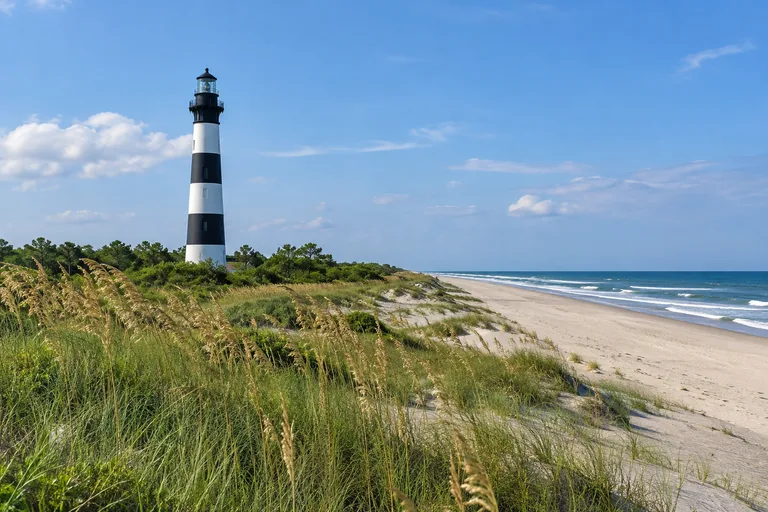
An Outer Banks vacation means wide Atlantic beaches along a chain of barrier islands off North Carolina. The first choice is the base town. Kill Devil Hills and Nags Head sit closest to the big sights, Duck and Southern Shores are quieter, and Hatteras Island trades crowds for space. From there, the must-see stops are the Wright Brothers National Memorial, a lighthouse climb, the dunes at Jockey's Ridge and the free ferry to Ocracoke. Above all, swim near a lifeguard and check the rip current forecast every day.
This guide compares the best Outer Banks towns side by side and lists every lighthouse with its 2026 climbing status. It covers the ferries, ocean safety, where to stay and an Outer Banks itinerary built for families, couples and solo travelers. For the rest of the state, see the North Carolina travel guide.
Outer Banks at a Glance
| Question | Short answer |
|---|---|
| What is it? | A chain of barrier islands off the North Carolina coast, often called the OBX |
| National park lands | Cape Hatteras National Seashore on Bodie, Hatteras and Ocracoke islands; no entrance fee |
| Top sights | Wright Brothers National Memorial, Bodie Island Lighthouse, Jockey's Ridge, Fort Raleigh |
| Busiest season | Summer; many locals prefer fall |
| Nearest big airport | Norfolk International, 82 miles north of the northern beaches |
| Ocracoke | Reached by ferry; the Hatteras route is free |
| Time needed | A long weekend for one area; a week to add Hatteras Island and Ocracoke |
Visit: Cape Hatteras National Seashore, 1401 National Park Drive, Manteo, NC 27954 (park mailing address) | 252-473-2111 | nps.gov/caha
The Outer Banks Visitors Bureau runs the official visitor site for Dare County's Outer Banks at outerbanks.org. It is the place to check for events, rentals and town details.
Best Outer Banks Towns, Side by Side
The best Outer Banks towns depend on what the trip is for. The Visitors Bureau describes each one, and the table below sums them up from north to south. Picking a base near the activities that matter most cuts down on driving.
| Town or village | Area | Known for | Best for |
|---|---|---|---|
| Corolla | Far north, Currituck County | Wild horses on the beaches to the north | Family rental homes and wild horse viewing |
| Duck | North | The newest town, incorporated in 2002; beaches, water sports, dining and shopping | Families and couples who want a walkable village |
| Southern Shores | North | Private beach access only and mid-century architecture | A quiet, relaxed stay |
| Kitty Hawk | Central | Year-round surfing, boating and kayaking | Active families |
| Kill Devil Hills | Central | The Wright Brothers memorial, surfing, a skate park and a fishing pier | First visits and kids |
| Nags Head | Central | Beach houses, seaside lodging and Jockey's Ridge | A central base for everything |
| Manteo | Roanoke Island | A marina, waterfront and replica lighthouse | History, the aquarium and Fort Raleigh |
| Wanchese | Roanoke Island | A working fishing village | A quiet side trip |
| Rodanthe, Waves and Salvo | Hatteras Island | The Tri-Villages: kiteboarding, windsurfing, surfing and a wooden fishing pier | Water sports and space |
| Avon | Hatteras Island | Rental cottages in a former fishing village | Families who want a calmer week |
| Buxton | Hatteras Island | The Cape Hatteras Lighthouse, fishing and camping | Lighthouse fans and anglers |
| Frisco | Hatteras Island | Seclusion close to services | Couples who want privacy |
| Hatteras Village | Hatteras Island | Sport fishing and the Ocracoke ferry | Fishing trips and ferry day trips |
| Ocracoke | Ocracoke Island | Reached by ferry; a lighthouse and a pony herd | A slower day or overnight |
The Northern Beaches: Corolla, Duck and Southern Shores
The Visitors Bureau describes Duck as known for its beaches, water sports, dining and shopping. Southern Shores sits between Kitty Hawk and Duck, and all of its beaches need private access. Corolla, in Currituck County, is the gateway to the wild horses that roam the northernmost beaches.
The Central Beaches: Kitty Hawk, Kill Devil Hills and Nags Head
The central towns hold most of the sights and services. Kill Devil Hills is home to the Wright Brothers National Memorial. Nags Head is among the most recognizable beach towns, with Jockey's Ridge State Park on its sound side. Kitty Hawk draws surfers, boaters and kayakers all year.
Roanoke Island: Manteo and Wanchese
Roanoke Island is home to two towns. Manteo is its heart, with a marina, a waterfront and a replica lighthouse. It is also home to Fort Raleigh National Historic Site and the North Carolina Aquarium on Roanoke Island. Wanchese, at the island's south end, is a fishing village that keeps its old-world feel.
Hatteras Island and Ocracoke
Farther south, the villages spread out along Hatteras Island. The Tri-Villages of Rodanthe, Waves and Salvo come first, known for wind and water sports. Then come Avon, Buxton, Frisco and Hatteras Village, where the ferry leaves for Ocracoke Island. Cape Hatteras National Seashore spans Bodie, Hatteras and Ocracoke islands.
Where to Stay on the Outer Banks
Where to stay comes down to the kind of week the group wants. The Visitors Bureau notes that rental houses, hotels and campgrounds all fill with families in summer, so the base town matters as much as the bed.
- For a first visit: Kill Devil Hills or Nags Head. The memorial, the dunes and Roanoke Island are all a short drive away.
- For a quiet village week: Duck or Southern Shores in the north, or Avon on Hatteras Island.
- For history and the waterfront: Manteo on Roanoke Island.
- For fishing and the ferry: Hatteras Village, at the south end of Hatteras Island.
- For camping: the national seashore campgrounds at Oregon Inlet, Cape Point, Frisco and Ocracoke.
A stay on Hatteras Island means longer drives to the Wright Brothers memorial and Jockey's Ridge. A stay in the central towns means a day trip to reach Buxton and the Ocracoke ferry. Splitting a week between the two is a good answer for travelers who want both.
Outer Banks Lighthouses
The Outer Banks lighthouses are the region's best-known landmarks. The National Park Service says lighthouses can be found on all three islands of the national seashore. Only one park lighthouse opened for climbing in 2026, so plan around it.
| Lighthouse | Where | Climbing in 2026 | Good to know |
|---|---|---|---|
| Currituck Beach Light Station | Corolla | Not on the Park Service climbing page; check locally | Outside the national seashore |
| Bodie Island Lighthouse | Bodie Island, Cape Hatteras National Seashore | Yes, late April to early November 2026 | Just over 200 steps and 9 landings |
| Cape Hatteras Lighthouse | Buxton | No, closed for restoration all of 2026 | The tallest brick lighthouse in the United States, per the Park Service |
| Ocracoke Island Lighthouse | Ocracoke | Not open for climbing | View it from outside |
| Replica lighthouse | Manteo waterfront | Not listed for climbing | An easy stop on a Roanoke Island day |
Climbing the Bodie Island Lighthouse
The Park Service says the Bodie Island Lighthouse has "just over 200 steps from the ground to the top," with 9 landings on the way. In 2026 it was open for climbing from late April to early November. From October through early November, climbs ran only Tuesday through Thursday. These rules come from the park's lighthouse climbs page, updated October 19, 2026:
- Tickets: sold only on recreation.gov, first come, first served. They go on sale at 7 a.m. and are good only for that day's climbs.
- Price: in October 2026 the park listed $10 for adults. It listed $5 for seniors 62 and older, children 11 and under and people with disabilities. Check the official site for current fees.
- Height rule: every climber must be at least 42 inches tall and able to climb all the steps alone.
- Kids: children 11 and under must be with an adult who is 16 or older.
- Storms: climbs stop when lightning is within 10 miles or thunder is heard. They start again 30 minutes after the last strike.
- Wind and heat: the balcony closes in strong winds, and climbs pause when the heat index inside reaches 103 degrees.
The Cape Hatteras Lighthouse
The park is clear that the Cape Hatteras Lighthouse will not be open for climbing in 2026 while it is being restored. The outdoor areas nearby are open 24 hours a day, so the tower is still worth the drive to Buxton. When it was completed in 1870, it stood 1,500 feet from the ocean. As the shore wore away, it was moved 2,900 feet to the southwest, starting in June 1999.
Lighthouse plans change, so check the park's lighthouse climbs page before the trip.
Wright Brothers National Memorial
The Wright Brothers National Memorial in Kill Devil Hills marks the place where the first flights took off and landed on December 17, 1903. It is a natural first stop for families. The park lists these places to see:
- Visitor Center and Museum: interactive exhibits on the Wright brothers' story, plus a park store.
- First Flight Boulder and Flight Line: a boulder and a path of markers showing where the flights took off and landed.
- Reconstructed 1903 camp buildings: wooden replicas on the site where the brothers lived while they experimented.
- Wright Brothers Monument: on top of the historic Kill Devil Hill.
- 1903 Commemorative Sculpture: a metal sculpture of the moment of first flight, on the south side of Kill Devil Hill.
Rangers lead programs, and kids can earn a Junior Flight Ranger badge. The memorial is open every day except December 25.
Fees at the Memorial
In June 2026 the park listed the entrance fee at $10 per person for ages 16 and older. Children 15 and younger enter free. The fee is per person, not per vehicle. The park does not accept cash, so pay at the fee machines in the main parking lot or ahead on recreation.gov. The park also lists two free days of its own: August 19, National Aviation Day, and December 17, the anniversary of the first flight. Check the official site for current fees.
Visit: Wright Brothers National Memorial, 1401 National Park Drive, Manteo, NC 27954 (park mailing address; the memorial is in Kill Devil Hills) | 252-473-2111 | nps.gov/wrbr
Fort Raleigh and Roanoke Island
Roanoke Island holds the deepest history on the Outer Banks. It makes a good day away from the beach, especially on a windy or rainy day.
Fort Raleigh National Historic Site
Fort Raleigh protects earthworks that are among the remnants of the English attempts at a colony on Roanoke Island. The park shares the story of the Lost Colony, the settlers who vanished from the island in the 1580s. Visitors can see a reconstructed earthen fort in a star pattern and walk two trails with forest and shoreline views. The site also remembers the Roanoke Island Freedmen's Colony, set up after the Battle of Roanoke Island in 1862 for people who had been enslaved.
The park says its Waterside Theater has been home to The Lost Colony outdoor drama since 1937. The site is open every day except December 25.
Visit: Fort Raleigh National Historic Site, 1401 National Park Drive, Manteo, NC 27954 | 252-473-2111 | nps.gov/fora
North Carolina Aquarium on Roanoke Island
The aquarium is a strong rainy-day pick for kids. Its page highlights an alligator, touchable stingrays and river otters. It also runs the Sea Turtle Assistance and Rehabilitation (STAR) Center. Entry is timed and slots can sell out, so reserved tickets are recommended. In November 2026 it listed daily hours of 9 a.m. to 5 p.m., with the last entry at 4:30 p.m. It is closed on Thanksgiving and Christmas Day. Hours change, so check the official site.
Visit: North Carolina Aquarium on Roanoke Island, 374 Airport Road, Manteo, NC 27954 | 252-475-2300 | ncaquariums.com/roanoke-island
Jockey's Ridge State Park
Jockey's Ridge State Park in Nags Head is home to "the tallest living sand dune system on the Atlantic coast," according to North Carolina State Parks. Day use is free, and the dunes suit kids of all ages. Here is what the park offers:
- Kite flying and sunsets: the open dunes are a favorite place for both.
- Hang gliding: a hallmark activity, with registration required and lessons from a private concessionaire.
- Sandboarding: allowed at the Main Access with no permit, and a concessionaire in the park rents boards.
- Soundside Access: paddling, swimming, kiteboarding and windsurfing on the Roanoke Sound, plus a trail of 0.75 mile.
The park warns that sand can be as much as 30 degrees hotter than the air. Bring shoes for everyone and protect pets' paws.
Jockey's Ridge Hours
The Main Access opens at 8 a.m. every day except Christmas Day. In November 2026 the park listed these closing times. Check the official site before a sunset visit.
| Months | Main Access closes |
|---|---|
| November through February | 6 p.m. |
| March and April | 8 p.m. |
| May through September | 9 p.m. |
| October | 7 p.m. |
Visit: Jockey's Ridge State Park, 300 W. Carolista Drive, Nags Head, NC 27959 | 252-573-6108 | ncparks.gov
Wild Horses and Ponies
Two herds give the Outer Banks some of its most memorable wildlife moments. They are very different visits.
The Corolla Wild Horses
The Corolla wild horses roam freely on the northernmost Currituck Outer Banks. The Corolla Wild Horse Fund looks after the herd and runs a museum and gift shop in Corolla. In late 2026 its site listed museum hours of Tuesday through Saturday, 10 a.m. to 4 p.m. It also lists weekly events from Memorial Day week through Labor Day. Give the horses plenty of room, never feed or touch them, and follow the county rules posted on the Fund's site.
Visit: Corolla Wild Horse Fund, 1130E Corolla Village Road, Corolla, NC 27927 | 252-453-8002 | corollawildhorses.com
The Ocracoke Ponies
On Ocracoke Island, the National Park Service cares for a pony herd. The park says visitors can see the ponies from two viewing decks at the Pony Pen and its parking lot. It pairs well with a day trip on the free ferry.
Ferries to Ocracoke
Ocracoke is reached by ferry, and the ride is part of the fun. The NCDOT Ferry Division runs the routes below. Crossing times come from the Outer Banks Visitors Bureau.
| Route | Crossing | Fare | Reservations |
|---|---|---|---|
| Hatteras to Ocracoke (vehicle ferry) | About 60 minutes | Free | Not required or accepted; first come, first served |
| Cedar Island to Ocracoke | About 2.5 hours | Toll | Up to 90 days ahead |
| Swan Quarter to Ocracoke | About 2.5 hours | Toll | Up to 90 days ahead |
| Ocracoke Express (passenger ferry, Hatteras to Ocracoke Village) | Check the schedule | Fare charged | Up to 90 days ahead; highly recommended in summer |
NCDOT says any reservation "must be claimed at least 30 minutes prior to departure to avoid cancellation." Book or change by phone at 1-800-BY-FERRY.Schedules and fares change by season, so check the NCDOT Ferry Division before the trip.
Rip Currents and Ocean Safety
The ocean is the main event on an Outer Banks vacation, and it deserves respect. Rip currents are a serious danger for swimmers. The National Park Service explains that they form when a sand bar breaks and the trapped water funnels out to sea through the gap. The National Weather Service adds that rip currents often form on calm, sunny days.
Before Going In
- Check the forecast. The Park Service says to check the daily NOAA rip current forecast before heading to the beach.
- Swim near a lifeguard. Several national seashore beaches have lifeguards from Memorial Day weekend through Labor Day, 9 a.m. to 5 p.m., seven days a week.
- Talk to the lifeguard. The Weather Service suggests asking about conditions on arrival.
- Never turn your back on the ocean. The Weather Service warns that rip currents are not the only deadly beach hazard.
If Caught in a Rip Current
- Stay calm. Do not swim against the current.
- Swim across it, parallel to the shore.
- Head back to the beach at an angle once free of the pull.
- Signal for help if needed.
Erosion and Beach Closures
Some oceanfront houses on Hatteras Island have collapsed into the surf in recent years. After a collapse in Rodanthe in September 2024, the Park Service closed part of the beach. It urged swimmers to stay out of the water near the debris and walkers to wear hard-soled shoes. Obey any closure signs, and check the park's alerts before heading to Hatteras Island beaches.
Beach Driving and Camping
Some visitors like to drive on the beach. On the national seashore, that takes an off-road vehicle (ORV) permit. In January 2026 the park listed a 10-day permit at $50 and an annual permit at $120. Check the official site for current fees and the rules for each ramp.
The seashore also runs campgrounds at Oregon Inlet, Cape Point, Frisco and Ocracoke. Fees vary by site and hookups, so check the park's fees page before booking.
The Outer Banks With Kids
The Outer Banks with kids is easy to plan, with short drives and plenty of space to run. These picks come from the official sites above:
- Jockey's Ridge: kites, sandboarding and sunset on the dunes, with free day use.
- Wright Brothers National Memorial: the Junior Flight Ranger program, and free entry for visitors 15 and younger.
- North Carolina Aquarium on Roanoke Island: touchable stingrays, river otters and sea turtle care.
- Bodie Island Lighthouse: a big climb for kids at least 42 inches tall, with an adult along for those 11 and under.
- Lifeguarded beaches: the safest place to swim in summer.
- Kill Devil Hills: a skate park and a fishing pier.
- The free Ocracoke ferry: an hour on the water, then ponies at the Pony Pen.
Measure small children before promising the lighthouse. A child under 42 inches cannot climb, and every climber must manage all the steps alone. The Visitors Bureau also notes that rental houses, hotels and campgrounds fill up with families in summer, so book early.
Best Time for an Outer Banks Vacation
Summer is the classic beach season, but many locals say fall is the best time for an Outer Banks vacation. The Visitors Bureau describes each season this way:
| Season | Weather | Crowds and openings |
|---|---|---|
| Spring | Mid 60s to 70s | Shops and restaurants begin opening after Easter |
| Summer | Averages in the low 80s with very few bad weather days | By far the busiest; rentals fill with families |
| Fall | Upper 70s, with lows in the 60s and 50s; mild until late December | Fewer crowds; good fishing and wind for kiteboarding |
| Winter | Quiet, with no salt or snow on the roads | Many restaurants and small shops close; empty beaches for shell hunting |
The season also decides what is open. The Bodie Island Lighthouse climbs ran from late April to early November in 2026. Lifeguards work the seashore beaches only from Memorial Day weekend through Labor Day. Coastal storms can change beach plans in any season. Watch the forecast in the days before travel, and read the storm and refund terms of any rental before booking.
Getting to the Outer Banks and Getting Around
Most visitors drive to the Outer Banks. Once there, the Visitors Bureau says a couple of roads run north to south, which makes it almost impossible to get lost.
- Norfolk International Airport (ORF): 82 miles north, about an hour and a half from the northern beaches.
- Raleigh-Durham International Airport (RDU): 192 miles west.
- Coastal Carolina Airport: 138 miles southwest.
- From Virginia: the Visitors Bureau suggests Route 460 when possible, because I-64 on the Virginia Peninsula can get congested in summer. The free VA511 service has real-time traffic.
- From the south: the car ferries to Ocracoke are an option, though slower.
A car is the easiest way to reach the sights, which spread out over many miles of islands. Allow extra time on summer weekends. Travelers coming through Virginia can plan a stop with the Virginia travel guide.
Outer Banks Itinerary: Four Days
This four-day Outer Banks itinerary starts from a central base such as Kill Devil Hills or Nags Head. It works for families and couples alike.
Day 1: First Flight and the Dunes
- Morning: the Wright Brothers National Memorial, with the museum, the flight line and the monument on Kill Devil Hill.
- Afternoon: beach time at a lifeguarded beach.
- Evening: kites and sunset at Jockey's Ridge State Park.
Day 2: Roanoke Island
- Morning: the North Carolina Aquarium on Roanoke Island, with a timed ticket.
- Midday: lunch on the Manteo waterfront and a look at the replica lighthouse.
- Afternoon: Fort Raleigh's earthworks and trails.
- Evening: The Lost Colony at the Waterside Theater, if it is running. Check its season first.
Day 3: Hatteras Island Lighthouses
- 7 a.m.: buy same-day Bodie Island Lighthouse tickets on recreation.gov, in season.
- Morning: climb Bodie Island, then drive south through Rodanthe, Waves and Salvo.
- Afternoon: the Cape Hatteras Lighthouse grounds in Buxton and a swim near a lifeguard.
- Evening: stay on Hatteras Island or drive back north.
Day 4: Ocracoke Day Trip
- Morning: the free ferry from Hatteras Village, about 60 minutes.
- Midday: the Ocracoke Pony Pen and the Ocracoke Island Lighthouse from outside.
- Afternoon: the village, then the ferry back. Leave time for the line in summer.
With a fifth day, add the north: Duck's shops and the Corolla Wild Horse Fund museum in Corolla.
Hidden Gems on the Outer Banks
Once the headline stops are done, these quieter places reward a little extra time:
- Bodie Island Marsh Blind: open for wildlife viewing from April 1 through mid-November, with a few October exceptions.
- Full moon climbs: the Park Service offers summer and fall full moon climbs at the Bodie Island Lighthouse when scheduled.
- Jockey's Ridge Soundside Access: a 0.75-mile trail and calm water on the Roanoke Sound.
- Fort Raleigh's trails: forest and shoreline views, a quiet break from the beach.
- The Freedmen's Colony story: a lesser-known chapter of Roanoke Island history, told at Fort Raleigh.
- Wanchese: a working fishing village at the south end of Roanoke Island.
- Frisco: a secluded Hatteras Island village and a true hidden gem, still close to services.
- Birding: the Park Service says over 400 bird species have been recorded in and around the seashore.
Insider Tips for an Outer Banks Vacation
- Set an alarm for lighthouse tickets. Bodie Island tickets go on sale at 7 a.m. for that day only.
- Bring a card. The Wright Brothers memorial does not take cash.
- Check the rip current forecast daily, even on calm, sunny days.
- Pack shoes for the dunes. Sand at Jockey's Ridge can run 30 degrees hotter than the air.
- Arrive early for the free ferry. It takes no reservations.
- Claim ferry reservations 30 minutes early on the Cedar Island and Swan Quarter routes.
- Go in fall for space. Many locals call it the best season, and weather stays mild into December.
- Check winter openings. Many restaurants and small shops close for the season.
- Use Route 460 from Virginia when the I-64 corridor is busy.
Frequently Asked Questions About the Outer Banks
What is the best town for an Outer Banks vacation?
It depends on the trip. Kill Devil Hills and Nags Head put families close to the Wright Brothers memorial and Jockey's Ridge. Duck and Southern Shores are quieter. Hatteras Island villages such as Avon and Buxton suit travelers who want space, fishing and the Cape Hatteras Lighthouse.
Can you climb the Cape Hatteras Lighthouse?
Not in 2026. The National Park Service says the Cape Hatteras Lighthouse will not be open for climbing in 2026 because of restoration work. The outdoor areas around it stay open 24 hours a day. The Bodie Island Lighthouse is the one to climb instead.
Which Outer Banks lighthouses can you climb?
In the national seashore, the Bodie Island Lighthouse was open for climbing from late April to early November 2026. Tickets go on sale at 7 a.m. on recreation.gov for that day only. The Cape Hatteras Lighthouse is closed for restoration, and the Ocracoke Island Lighthouse is not open for climbing.
Is the Outer Banks good for kids?
Yes. Kids can fly kites and sandboard at Jockey's Ridge State Park and earn a Junior Flight Ranger badge at the Wright Brothers memorial. They can also touch stingrays at the aquarium on Roanoke Island. Several national seashore beaches have lifeguards from Memorial Day weekend through Labor Day.
When is the best time for an Outer Banks vacation?
Summer is the classic beach season and by far the busiest, with temperatures averaging in the low 80s. Many locals say fall is the best time, with mild weather until late December and fewer crowds. Shops and restaurants begin opening after Easter in spring.
Is the Hatteras to Ocracoke ferry free?
Yes. The NCDOT Ferry Division runs the Hatteras to Ocracoke vehicle ferry free, first come, first served, with no reservations. The crossing takes about 60 minutes. The Cedar Island and Swan Quarter routes charge a toll and take reservations up to 90 days ahead.
What should you do if caught in a rip current?
Stay calm and do not swim against the current. The National Park Service says to swim across it, parallel to the shore, then head back to the beach at an angle. Signal for help if needed. Swim near a lifeguard and check the rip current forecast before going in.
Is there an entrance fee for Cape Hatteras National Seashore?
No. The National Park Service says Cape Hatteras National Seashore does not charge an entrance fee. Fees apply to camping, lighthouse climbs and off-road vehicle permits. The Wright Brothers National Memorial charges its own per-person entrance fee.
Where can you see wild horses on the Outer Banks?
Wild horses roam the northernmost Currituck Outer Banks above Corolla, where the Corolla Wild Horse Fund looks after the herd. On Ocracoke Island, the National Park Service manages a pony herd that visitors can see from two viewing decks at the Pony Pen.
What is the closest airport to the Outer Banks?
The Outer Banks Visitors Bureau lists Norfolk International Airport 82 miles to the north, about an hour and a half from the northern beaches. Raleigh-Durham International Airport is 192 miles west, and Coastal Carolina Airport is 138 miles southwest.
Planning your next U.S. getaway? Explore more destination guides, road trips, and travel tips at Vacation Getaways US. Have a question or a spot we should cover? Email us at [email protected].