

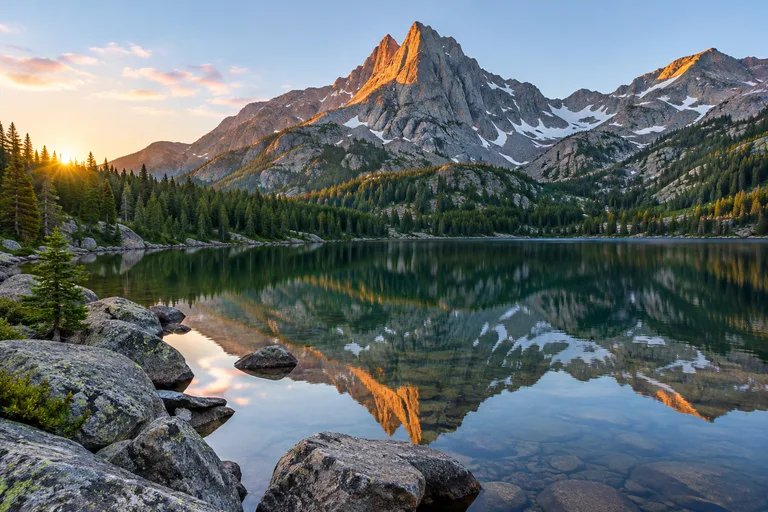
This Rocky Mountain National Park guide gives the plan first. Rocky Mountain National Park covers more than 415 square miles of northern Colorado, about an hour and a half to two hours from Denver. A first visit needs three things: a timed entry reservation in the busy season, an early start on Bear Lake Road, and half a day for Trail Ridge Road, which climbs to 12,183 feet. Estes Park is the base on the east side, and Grand Lake is the quiet base on the west side.
The sections below cover the timed entry system, park entrances, Trail Ridge Road, the best hikes with distances, wildlife, Estes Park things to do, camping and a three-day plan. The park is the first stop in the Colorado Travel Guide, which covers the rest of the state. Families, couples and solo hikers all use the same roads and trailheads, so the same planning steps work for every kind of trip.
Rocky Mountain National Park at a Glance
These facts come from the National Park Service unless another source is named.
| Question | Short answer |
|---|---|
| How big is it? | More than 415 square miles (265,807 acres) |
| Where is it? | Northern Colorado, between Estes Park on the east and Grand Lake on the west |
| How far from Denver? | 66 miles to Estes Park by U.S. 36, about 1.5 to 2 hours |
| How many trails? | More than 350 miles of hiking trails |
| Highest road | Trail Ridge Road, 12,183 feet at its high point |
| Highest peak | Longs Peak, 14,259 feet |
| Reservation needed? | Yes, a timed entry reservation for most daytime hours from late May into October |
| How long to stay? | Two to three days for a first visit |
The park rises from mountain meadows through subalpine forest to open alpine tundra. That range is the reason one day can hold a lakeside picnic at 8,700 feet and a windy walk above 12,000 feet. Grand County's tourism office notes that the area became a national park in 1915.
Contact: Rocky Mountain National Park, 1000 U.S. Highway 36, Estes Park, CO 80517. Phone: (970) 586-1206. Web: nps.gov/romo.
Rocky Mountain National Park Timed Entry: How It Works
Rocky Mountain National Park timed entry is the rule that surprises the most visitors. In the busy season, a park pass alone does not get a car through the gate during the middle of the day. Each car also needs a reservation for a two-hour entry window.
The details below are from the 2026 season, the most recent one on the official timed entry page. Dates and hours can change from year to year, so check that page before booking anything.
| Reservation type | Where it works | 2026 dates | Hours it was required |
|---|---|---|---|
| Timed Entry | All of the park except the Bear Lake Road corridor: Trail Ridge Road, the Alpine Visitor Center, the west side, Wild Basin | May 22 to October 12 | 9 a.m. to 2 p.m. |
| Timed Entry + Bear Lake Road | The whole park, including Moraine Park, Sprague Lake, the Park & Ride, Glacier Gorge and Bear Lake | May 22 to October 18 | 5 a.m. to 6 p.m. |
How to Book
- Where: only on Recreation.gov, in its app or by phone. Reservations are not sold at the gates or visitor centers.
- When: in 2026, each month's reservations opened on the first day of the month before, at 8 a.m. Mountain time. May 1 opened late May and June, June 1 opened July, and so on.
- Last-minute spots: about 40 percent of each day's reservations were held back and released at 7 p.m. the evening before. They go quickly.
- Cost: a small processing fee, on top of the park entrance fee or pass. Check the official site for current amounts.
- The window: a car must enter within its two-hour window. After that, visitors can stay as long as they like.
Ways In Without a Timed Entry Reservation
Travelers who miss out still have good options.
- Go early or late. Outside the reservation hours, no reservation is needed. In 2026 that meant before 9 a.m. or after 2 p.m. for most of the park, and before 5 a.m. or after 6 p.m. for Bear Lake Road.
- Camp in the park. A reservation at a park campground includes entry from 1 p.m. on the first day.
- Ride the Hiker Shuttle. A ticket on the shuttle from Estes Park covers the ride to the Bear Lake Road corridor, with a park pass.
- Ride a bike. Cyclists need an entrance pass but no reservation.
- Come in the off season. From late October to late May there is no reservation system.
Entrance fees are charged all year, and the park does not take cash. Pay by card at the gate or buy a pass ahead of time. Current prices are on the official fees page.
Getting There and Choosing an Entrance
Most visitors fly into Denver International Airport, the closest major airport, and drive to Estes Park. The National Park Service lists these routes.
| Route | Distance | Drive time |
|---|---|---|
| Denver to Estes Park by U.S. 36 through Boulder | 66 miles | 1.5 to 2 hours |
| Denver to Estes Park by Highway 66 | 71 miles | 1.5 to 2 hours |
| Denver to Estes Park by the Peak to Peak Scenic Byway | 108 miles | 2.5 to 3 hours |
| Interstate 70 (Empire exit) to Grand Lake by U.S. 40 and U.S. 34 | 61 miles | 1.5 to 2 hours |
No public transit runs from the airport to the park, though commercial shuttles run from the airport to Estes Park. In summer, the state's Bustang bus has offered limited service from Denver to the park's Park & Ride. Check the park's transit page for the current season.
The park has two sides, and the entrance decides the day:
- Beaver Meadows (east): the main entrance from Estes Park on U.S. 36, and the way to Bear Lake Road. The Beaver Meadows Visitor Center is 2.5 miles from the Estes Park Visitor Center.
- Fall River (east): the entrance on U.S. 34, closest to Sheep Lakes, Horseshoe Park and Old Fall River Road.
- Grand Lake (west): the only entrance on the west side, beside the Kawuneeche Visitor Center.
- Wild Basin and Longs Peak (southeast): smaller trailhead areas along Highway 7, south of Estes Park.
GPS directions are not always right inside the park. Pick up the free paper map at the gate or a visitor center.
Trail Ridge Road: The Drive Across the Top
Trail Ridge Road is the one thing every visitor should do when it is open. The road runs 48 miles between Estes Park and Grand Lake and tops out at 12,183 feet. Eleven of those miles are above treeline, which sits near 11,500 feet here. The National Park Service calls it a "highway to the sky," and it is a designated All-American Road.
Plan at least half a day. These are the stops most worth the time, listed from east to west with the heights the park publishes:
- Many Parks Curve (9,640 feet): the first big view back over the meadows on the east side.
- Rainbow Curve (10,829 feet): a wide view from the edge of the forest.
- Forest Canyon Overlook (11,716 feet): a short walk to a view into a deep glacial valley.
- Rock Cut and the Tundra Communities Trail (12,050 feet): a half-hour walk across open tundra, and a good place to listen for pikas.
- Gore Range Overlook (12,010 feet): views west to distant ranges.
- Alpine Visitor Center (11,796 feet): rangers, exhibits and a rest stop at Fall River Pass, 27.4 miles from Estes Park.
- Milner Pass (10,758 feet): the Continental Divide, beside Poudre Lake.
- Farview Curve (10,120 feet): the first look down into the Kawuneeche Valley on the west side.
Above treeline it is usually windy and 20 to 30 degrees colder than in Estes Park or Grand Lake, even in July. The sun is strong too. Bring a jacket, a hat and sunscreen for every stop.
The road closes for winter. The park says it is shut from about mid-October through late May, and the exact dates depend on snow. For current conditions, call the recorded road status line at (970) 586-1222, which runs 24 hours a day.
Old Fall River Road
For a slower way up, Old Fall River Road is the park's first auto route, opened in 1920. It is 11 miles long, mostly gravel and one way uphill, with switchbacks, no guard rails and a posted speed limit of 15 miles per hour. It starts in Horseshoe Park near the Fall River Entrance, passes Chasm Falls and ends at Fall River Pass beside the Alpine Visitor Center. Drivers then return on Trail Ridge Road. It opens later in summer than Trail Ridge Road, so check its status first.
Best Hikes in Rocky Mountain National Park
With more than 350 miles of trails, the hard part is choosing. Most first-time visitors hike from the Bear Lake Road corridor, where short trails reach a string of lakes. All distances below are one way unless marked as a loop, and they come from National Park Service trail tables.
Easy Hikes for Families
| Hike | Trailhead | Distance | Climb |
|---|---|---|---|
| Bear Lake Loop | Bear Lake | 0.6 miles (loop) | 71 feet |
| Sprague Lake Loop | Sprague Lake | 0.8 miles (loop) | Nearly flat, wheelchair and stroller accessible |
| Nymph Lake | Bear Lake | 0.5 miles | 231 feet |
| Alberta Falls | Glacier Gorge | 0.8 miles | 233 feet |
| Copeland Falls | Wild Basin | 0.3 miles | 15 feet |
| Adams Falls | East Inlet, Grand Lake | 0.3 miles | 79 feet |
Moderate Hikes
| Hike | Trailhead | Distance | Climb |
|---|---|---|---|
| Dream Lake | Bear Lake | 1.1 miles | 474 feet |
| Emerald Lake | Bear Lake | 1.7 miles | 771 feet |
| Bierstadt Lake | Bierstadt Lake | 1.5 miles | 500 feet |
| Cub Lake | Cub Lake | 2.4 miles | 540 feet |
| Mills Lake | Glacier Gorge | 2.7 miles | 816 feet |
| The Loch | Glacier Gorge | 3 miles | 1,046 feet |
| Gem Lake | Lumpy Ridge | 1.6 miles | 1,000 feet |
| Ouzel Falls | Wild Basin | 2.7 miles | 950 feet |
| Deer Mountain | Deer Ridge Junction | 3 miles | 1,083 feet |
The walk from Bear Lake past Nymph Lake and Dream Lake to Emerald Lake is the park's signature short hike: three lakes in 1.7 miles. Go at sunrise for calm water and open parking.
Hard Hikes
- Sky Pond: 4.2 miles one way from Glacier Gorge, with a climb of 1,726 feet, passing The Loch and Timberline Falls.
- Flattop Mountain: 4.2 miles one way from Bear Lake, with a climb of 2,866 feet to the Continental Divide.
- Chasm Lake: 4.2 miles one way from the Longs Peak Ranger Station, with a climb of 2,360 feet to a lake below the east face of Longs Peak.
- Twin Sisters Peak: 3.7 miles one way, with a climb of 2,338 feet.
A Word on Longs Peak
Longs Peak, at 14,259 feet, is the highest summit in the park. The National Park Service is blunt about its standard route: "The Keyhole Route is not a hike." It is a climb across steep, exposed rock, about 8 miles each way with a rise of 4,885 feet, and a fall could be fatal. For most of the year it is in winter condition. It is a goal for fit, experienced parties who have read the park's Longs Peak page, not a family outing.
Bear Lake Road and the Park Shuttles
Bear Lake Road is a paved, 9.2-mile road that climbs from 8,200 feet to the Bear Lake trailhead at 9,475 feet. It is the busiest part of the park, and its parking lots fill early. The free shuttles are the answer.
In the 2026 season the shuttles ran daily from May 22 to October 18:
- Bear Lake Route: from the Park & Ride to the Bierstadt Lake, Glacier Gorge and Bear Lake trailheads, every 10 to 15 minutes.
- Moraine Park Route: from the Park & Ride to Sprague Lake, the campgrounds, and the Cub Lake and Fern Lake trailheads, about once an hour.
- Hiker Shuttle: from the Estes Park Visitor Center to the Park & Ride, about 45 minutes to an hour each way. Every rider needs a ticket reserved on Recreation.gov, plus a park pass.
The Park & Ride is the largest parking area on Bear Lake Road, about 5.2 miles from the junction with Trail Ridge Road. Shuttles run only on the Bear Lake Road corridor. There is no shuttle over Trail Ridge Road or on the west side, and pets and bikes are not allowed on board. Next season's schedule is posted on the park's transit page each spring.
Wildlife: What to See and Where
Wildlife is the second reason people come, and sightings are close to certain for anyone who looks at the right time. The park counts 66 kinds of mammals and 280 kinds of birds.
- Elk: visible in any season. Look in meadows and where meadows meet forest, mainly early and late in the day. Visit Estes Park says about 3,000 elk live in the park and town combined.
- Bighorn sheep: often seen near Sheep Lakes and Horseshoe Park from May through mid-August.
- Moose: most often seen on the west side, in the Kawuneeche Valley past the Alpine Visitor Center.
- Mule deer: common near meadows and roadsides at lower heights.
- Marmots and pikas: on the rocks along Trail Ridge Road and Old Fall River Road. Pikas are often heard before they are seen.
- White-tailed ptarmigan: a tundra bird that stays very still and blends in. Spotting one takes patience.
The Fall Elk Rut
September and October bring the rut, the elk mating season. Bull elk bugle and gather herds in the meadows at dusk, and crowds gather on the roadsides to watch. It is one of the great wildlife shows in the Rockies and a top reason to plan a fall trip.
Keep Your Distance
The park sets clear limits: stay at least 75 feet from elk and bighorn sheep, and at least 120 feet from moose and bears. The park's memory aid is two bus lengths and three bus lengths. If an animal reacts, the viewer is too close. Feeding or bothering wildlife is against the law in every national park.
Estes Park Things to Do Outside the Park
Estes Park is more than a place to sleep. The town sits above 7,500 feet at the east gates, and it earns an afternoon or a rest day of its own. These are the Estes Park things to do that fit best around park days.
- Walk the Riverwalk: a path that follows the Big Thompson River and the Fall River through downtown, past shops and restaurants. The two rivers meet at Riverside Plaza.
- Circle Lake Estes: a shoreline trail loops the lake a few minutes from downtown, with paddleboarding and mountain views.
- Ride the Estes Park Aerial Tramway: a cable car to the top of Prospect Mountain that hangs on a free span of wire with no support towers. Visit Estes Park says it has carried more than 3 million people since 1955. It runs daily from the end of May to early September.
- Tour the Stanley Home Museum: guided tours of the Stanley family's 1904 home.
- Catch a show at Performance Park: an outdoor stage beside the Fall River with concerts in the warm months.
- Watch elk in town: elk live in the town as well as the park, and they are most active in fall. The same distance rules apply.
Start at the Estes Park Visitor Center for maps, the free town shuttles and the Hiker Shuttle stop. The town's Riverwalk parking structure has 415 free spaces.
Contact: Estes Park Visitor Center, 500 Big Thompson Avenue, Estes Park, CO 80517. Phone: (970) 577-9900. Web: visitestespark.com.
The Quiet West Side and Grand Lake
The west side sees far fewer visitors than the east side, and that is its charm. The Kawuneeche Valley runs north from Grand Lake, with the young Colorado River winding through its meadows. This is the park's best moose country.
- Holzwarth Historic Site: a 1917 homestead that became a guest ranch in the 1920s. Most of the cabins are a half-mile walk from the parking area, and the buildings are open in summer.
- Adams Falls: a 0.3-mile walk from the East Inlet trailhead at the edge of Grand Lake.
- Lulu City site: 3.1 miles one way along the Colorado River to the site of an old mining camp.
- Cascade Falls: 3.5 miles one way on the North Inlet trail, with a gentle climb of 300 feet.
- Grand Lake town: the west gateway, close to Shadow Mountain Lake and Lake Granby.
In summer, the best way to see the west side is to drive Trail Ridge Road across the park and spend a night in Grand Lake. In winter the two sides are cut off from each other, and the drive around takes several hours.
Best Time to Visit Rocky Mountain National Park
Late June through September is the best time for a first visit, because the trails are clear of snow and Trail Ridge Road is open. Every season has a reason to come, though.
| Season | What to expect | Best for |
|---|---|---|
| Summer (Memorial Day to Labor Day) | Warm days, afternoon thunderstorms, wildflowers, the biggest crowds, timed entry in force | Trail Ridge Road, high lakes, family trips |
| Fall (Labor Day to mid-October) | Gold aspens, crisp air, the elk rut, a chance of early snow | Wildlife, photos, couples trips |
| Winter | Snow, wind and quiet. Trail Ridge Road is closed across the top | Snowshoeing, cross-country skiing, solitude |
| Spring | Fewer people, newborn wildlife, snow and ice still on higher trails | Lower trails and wildlife watching |
In June, July and August, thunderstorms build on most afternoons. The safe habit is to start hikes at dawn and be back below treeline by midday.
Where to Stay: Campgrounds and Gateway Towns
There are no hotels inside the park. Visitors camp in the park or stay in one of the two gateway towns.
Camping in the Park
The park has five campgrounds. Four take reservations on Recreation.gov, which open six months ahead.
| Campground | Side | Good to know |
|---|---|---|
| Moraine Park | East | RVs up to 40 feet. The only campground open in winter, first come, first served |
| Glacier Basin | East | RVs up to 35 feet. On Bear Lake Road, with a shuttle stop |
| Aspenglen | East | RVs up to 30 feet. Near the Fall River Entrance |
| Timber Creek | West | RVs up to 30 feet. In the Kawuneeche Valley, the only campground on the west side |
| Longs Peak | Southeast | Tents only, no water, first come, first served, a short summer season |
Summer stays are limited to seven nights across the park. Nightly fees change, so check the official camping page. For cabins and campgrounds in other states, see the site's cabin and camping guides.
Estes Park or Grand Lake?
- Estes Park: the larger town, with the most hotels, cabins, restaurants and shops. It is minutes from the Beaver Meadows and Fall River entrances, and it suits first visits and families.
- Grand Lake: smaller and calmer, beside the west entrance and the lakes. It suits couples, repeat visitors and anyone who wants moose and quiet trails.
Both towns book up in summer and during the fall elk rut. Reserve lodging before trying for timed entry dates.
A Three-Day Rocky Mountain National Park Plan
This plan fits a long weekend based in Estes Park, with a Timed Entry + Bear Lake Road reservation for the first day.
- Day 1, morning, Bear Lake: arrive at sunrise. Walk the Bear Lake Loop, then hike to Nymph, Dream and Emerald lakes.
- Day 1, afternoon, Sprague Lake and Moraine Park: picnic at Sprague Lake and walk the flat loop. Watch for elk in Moraine Park at dusk.
- Day 2, Trail Ridge Road: enter before 9 a.m. and drive up with stops at Many Parks Curve, Rainbow Curve and Forest Canyon. Walk the Tundra Communities Trail at Rock Cut and visit the Alpine Visitor Center before the afternoon storms.
- Day 2, afternoon, the west side: continue over Milner Pass into the Kawuneeche Valley. Stop at Holzwarth Historic Site, look for moose, walk to Adams Falls, then drive back over the top or stay the night in Grand Lake.
- Day 3, morning, a quieter trail: choose Gem Lake at Lumpy Ridge, Ouzel Falls in Wild Basin or Alberta Falls and Mills Lake from Glacier Gorge.
- Day 3, afternoon, Estes Park: the Riverwalk, the Aerial Tramway in summer and an early dinner before the drive home.
With only one day, do the morning of Day 1 and then drive Trail Ridge Road as far as the Alpine Visitor Center. For packing help, see the weekend getaway packing list.
Altitude, Weather and Safety
The whole park is high. Estes Park sits at 7,522 feet, Bear Lake at 9,475 feet and the top of Trail Ridge Road above 12,000 feet. Visitors from sea level often feel it.
- Take the first day easy. Visit Estes Park advises time to adjust, short walks on day one and plenty of water.
- Know the cure. If someone feels unwell up high, the park's advice is simple: go down to a lower height.
- Beat the storms. Summer lightning is a real danger above treeline. Start early and turn around when clouds build.
- Dress in layers. It can be 20 to 30 degrees colder on the tundra than in town, with strong wind.
- Protect skin and eyes. Sunlight is much stronger at this height.
- Leave pets at the lodge. Pets are not allowed on any trail, on the tundra or in meadows. Leashed pets may be on roads and in parking areas, campgrounds and picnic areas only.
Hidden Gems in Rocky Mountain National Park
These spots see a fraction of the Bear Lake crowds, and several need only the basic Timed Entry reservation.
- Wild Basin: the park's southeast corner, where one trail passes Copeland Falls (0.3 miles), Calypso Cascades (1.8 miles) and Ouzel Falls (2.7 miles). It is a waterfall hike that grows with the group's energy.
- Gem Lake: a short, steep climb through the granite domes of Lumpy Ridge, just north of Estes Park, with views back over the town.
- Old Fall River Road: the slow gravel road to the top. Elk often feed in Willow Park along the way.
- The Tundra Communities Trail: most drivers only step out at Rock Cut for a photo. The half-hour walk leads into a world of tiny plants where the growing season may last only about 40 days.
- Holzwarth Historic Site: an easy half-mile walk to the old ranch cabins, in a valley known for moose.
- Sheep Lakes: a roadside meadow near the Fall River Entrance where bighorn sheep come down from May through mid-August.
Insider Tips for a Smoother Visit
- Set two alarms. One for the morning reservations open on Recreation.gov, and one for 7 p.m. the night before the visit, when the held-back spots are released.
- Book the Bear Lake Road reservation for one day only. The basic reservation is easier to get and covers Trail Ridge Road, Wild Basin and the west side.
- Enter before the window starts. A car that enters the main park before 9 a.m. needs no reservation and can stay all day.
- Park once and ride. Leave the car at the Park & Ride and take the shuttle to Bear Lake and Glacier Gorge.
- Drive Trail Ridge Road in the morning. Views are clearer, wildlife is out and storms have not built yet.
- Call the road line. (970) 586-1222 gives the current status of Trail Ridge Road, day or night.
- Bring a card. The gates do not take cash.
- Fill the tank in town. It is a long way between Estes Park and Grand Lake, with steep grades.
- Visit midweek in September. Aspens, bugling elk and thinner crowds than a summer weekend.
More Travel Tips


Frequently Asked Questions
Do you need a reservation to enter Rocky Mountain National Park?
In the busy season, yes, for most of the day. In 2026 the park required a timed entry reservation from May 22 into October: from 9 a.m. to 2 p.m. for most of the park, and from 5 a.m. to 6 p.m. for the Bear Lake Road corridor. Reservations are booked on Recreation.gov. Dates change each year, so check the National Park Service site.
Can you visit Rocky Mountain National Park without a timed entry reservation?
Yes. Enter outside the reservation hours, which in 2026 meant before 9 a.m. or after 2 p.m. for most of the park and before 5 a.m. or after 6 p.m. for Bear Lake Road. A campground reservation, a wilderness permit or a Hiker Shuttle ticket from Estes Park are other ways in. No reservation is needed in the off season.
When does Trail Ridge Road open and close?
The National Park Service says Trail Ridge Road is closed from about mid-October through late May. The exact dates depend on snow. Call the recorded road status line at (970) 586-1222 before driving.
How long does it take to drive Trail Ridge Road?
Set aside at least half a day. The road runs 48 miles between Estes Park and Grand Lake and tops out at 12,183 feet, and the overlooks, the short tundra walk and the Alpine Visitor Center all deserve a stop.
How many days do you need in Rocky Mountain National Park?
Two to three days suit most first visits. One day covers a Bear Lake hike and a drive up Trail Ridge Road to the Alpine Visitor Center. Three days add a longer hike, wildlife watching and the quieter west side near Grand Lake.
What is the best time to visit Rocky Mountain National Park?
Late June through September is best for snow-free trails and an open Trail Ridge Road. September and early October add golden aspens and the elk rut. Winter is quiet and good for snowshoeing, but the road across the park is closed.
What are the best easy hikes in Rocky Mountain National Park?
The Bear Lake Loop (0.6 miles), the Sprague Lake Loop (0.8 miles, wheelchair and stroller accessible), Alberta Falls (0.8 miles one way) and Nymph, Dream and Emerald lakes (1.7 miles one way to Emerald Lake) are the classics. On the west side, Adams Falls is 0.3 miles one way.
Are dogs allowed in Rocky Mountain National Park?
Only in limited places. Leashed pets may go along established roads, in parking areas and in campgrounds and picnic areas. Pets are not allowed on any park trail, on the tundra or in meadows.
Where should you stay to visit Rocky Mountain National Park?
Estes Park, on the east side, is the main base and the closest town to Bear Lake Road. Grand Lake, on the west side, is smaller and quieter. The park has no lodges, but it has five campgrounds, four of them reserved through Recreation.gov.
Planning your next U.S. getaway? Explore more destination guides, road trips, and travel tips at Vacation Getaways US. Have a question or a spot we should cover? Email us at [email protected].