

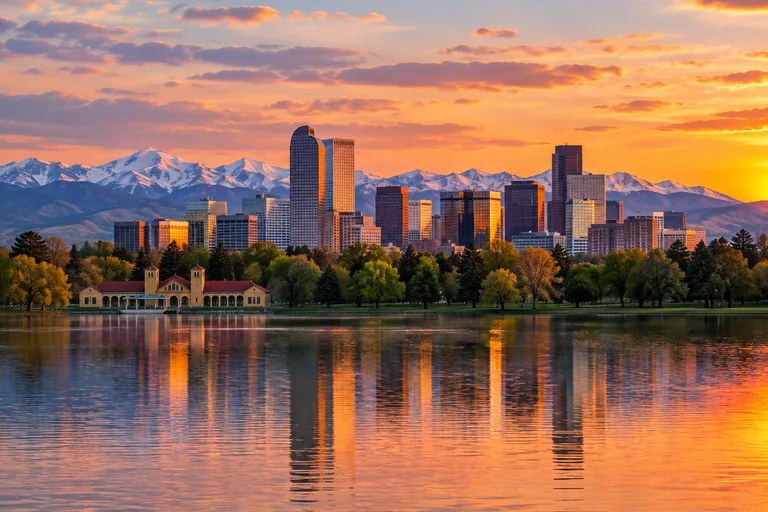
The best things to do in Denver fit into one long weekend: a morning at Red Rocks Amphitheatre, an afternoon in the museums of the Golden Triangle or City Park, an evening in Union Station and the brewery districts, and one day trip into the Rocky Mountains. Denver sits exactly one mile above sea level on the plains, about 12 miles east of the foothills, and it gets about 300 days of sunshine a year.
This guide lists the top sights with addresses, the neighborhoods worth a walk, free things to do, day trips from Denver with distances, and a Denver weekend itinerary. It is part of the Colorado Travel Guide, which covers the rest of the state. Whether the trip is a family vacation, a couples weekend or a stop on the way to the ski resorts, the city is easy to get around and easy to enjoy.
Denver at a Glance
These facts come from Visit Denver, the city's official tourism office.
| Question | Short answer |
|---|---|
| How high is it? | 5,280 feet above sea level, exactly one mile |
| How sunny? | About 300 days of sunshine a year |
| How far are the mountains? | The foothills start about 12 miles west of the city |
| How to get in from the airport? | The A Line train, about 37 minutes to Denver Union Station |
| Top sight | Red Rocks Park and Amphitheatre |
| How long to stay? | Two to three days, with one day trip |
| Best months | June through September for warm weather and concerts |
Denver began as a gold mining town during the Pikes Peak Gold Rush in 1858. Today the city has about 713,000 residents, and the metro area has nearly 3 million. On a clear day the mountain view from the city stretches 140 miles and takes in 200 named peaks.
Red Rocks Amphitheatre: Denver's Must-See
Red Rocks Amphitheatre is the one sight no visitor should skip. It is an open-air concert venue set between giant slabs of red sandstone in the foothills, about 15 miles west of downtown. The City and County of Denver owns and runs it.
The good news for travelers on a budget: the park is free on days without a show. Red Rocks says admission and parking are free for the park, the amphitheatre, the Visitor Center and the Trading Post.
- Walk the amphitheatre: climb the rows of seats for the view over the stage and the red rock walls on both sides.
- See the Visitor Center: it holds a free museum and a Performers Hall of Fame that lists the artists who have played here.
- Hike the Trading Post Trail: a 1.4-mile loop through the rock formations.
- See a concert: the season runs through the warm months. Tickets for popular shows sell out early.
The park opens one hour before sunrise and closes one hour after sunset. On event days the amphitheatre itself closes to visitors at about 2 p.m., so go in the morning. Closing times can change, and the venue's phone line gives the latest.
Contact: Red Rocks Park and Amphitheatre, 18300 W. Alameda Parkway, Morrison, CO 80465. Phone: (720) 865-2494. Web: redrocksonline.com.
Downtown Denver and LoDo
Downtown is compact and walkable, and most of its sights sit within about a mile of each other. Start at the train station and work southeast.
Denver Union Station
Denver Union Station opened in 1881, was rebuilt in 1914 and was reimagined in 2014. The Beaux-Arts building is now a transit hub with restaurants, shops and the Crawford Hotel on its upper floors. The Great Hall works as the city's living room, and the airport train stops right behind it.
Contact: Denver Union Station, 1701 Wynkoop Street, Denver, CO 80202. Phone: (833) 391-0338. Web: denverunionstation.com.
Larimer Square and LoDo
Lower Downtown, called LoDo, is the historic district around the station. Its brick warehouses now hold restaurants and rooftop bars. Larimer Square, on Larimer Street between 14th and 15th streets, is Denver's oldest block, with Victorian buildings, boutiques and strings of lights over the street. Nearby, the Dairy Block has a food market and a lively alley, and McGregor Square sits beside Coors Field, home of baseball's Colorado Rockies.
16th Street
The 16th Street promenade runs through the middle of downtown. It was recently rebuilt with more shade, seating and play areas. Free shuttle buses, called the FreeRide, stop at every corner and come about every five minutes. Two blocks away, at 14th and California streets, the 40-foot Big Blue Bear sculpture peers into the convention center. It is a favorite photo stop for kids.
The Brown Palace
The Brown Palace Hotel opened on August 12, 1892. Its stained-glass atrium lobby is worth a look even for travelers staying elsewhere, and the hotel offers history tours.
Museums in the Golden Triangle
The Golden Triangle Creative District, just south of downtown, packs several museums into a few blocks beside the State Capitol.
Denver Art Museum
The Denver Art Museum is known for its Indigenous art collection and for its buildings. The angular Hamilton Building was designed by Daniel Libeskind. The Martin Building, by Italian architect Gio Ponti, first opened in 1971. General admission is free every day for visitors 18 and under, which makes it one of the best family deals in the city. Check the official site for hours and free days.
Contact: Denver Art Museum, 100 W. 14th Avenue Parkway, Denver, CO 80204. Phone: (720) 865-5000. Web: denverartmuseum.org.
More Museums Nearby
- Clyfford Still Museum: the life's work of one abstract expressionist painter. His estate of 2,400 artworks was sealed from the public from 1980 until the museum opened.
- The state history museum: long known as the History Colorado Center, with hands-on exhibits such as a ski jump simulator and a virtual Model T ride.
- The Kirkland: fine and decorative art shown in room-like settings, now part of the Denver Art Museum.
- Molly Brown House Museum: the home of Margaret Brown, remembered as a heroine of the Titanic.
Contact: Molly Brown House Museum, 1340 Pennsylvania Street, Denver, CO 80203. Phone: (303) 832-4092. Web: mollybrown.org.
Colorado State Capitol
The gold-domed Capitol is modeled on the U.S. Capitol, and its dome holds more than 200 ounces of real gold. The 13th step on the west side is marked as exactly one mile above sea level, and standing on it is a Denver tradition. Free tours run Monday through Friday. A 99-step staircase leads to an open-air deck with views of the skyline and the mountains.
City Park: Zoo, Science Museum and Mountain Views
City Park, east of downtown, is Denver's largest green space. Two of the city's best family attractions sit inside it, so it makes an easy full day.
Denver Museum of Nature and Science
The Denver Museum of Nature and Science has halls on space, health, gems and minerals, Egyptian mummies and prehistoric life. It also has a planetarium and a giant-screen theater. The museum says it is open 363 days a year.
Contact: Denver Museum of Nature and Science, 2001 Colorado Boulevard, Denver, CO 80205. Phone: (303) 370-6000. Web: dmns.org.
Denver Zoo
The Denver Zoo covers more than 75 acres next to the museum and cares for more than 2,500 animals. Visit Denver points to the elephant habitat as one of the largest in the world, along with Amur tigers, okapi, orangutans and Komodo dragons.
Denver Botanic Gardens
A short drive south of City Park, the Denver Botanic Gardens on York Street fill 24 acres with themed gardens. Highlights include the Japanese Garden, the Rock Alpine Garden and the Mordecai Children's Garden, a play space for families in the warm months.
Contact: Denver Botanic Gardens, 1007 York Street, Denver, CO 80206. Phone: (720) 865-3500. Web: botanicgardens.org.
Art, Murals and Meow Wolf
Denver's art is not only in museums.
- RiNo murals: the River North Art District is covered in street art. Old warehouses hold studios, food halls such as The Source and Denver Central Market, and music venues.
- First Friday on Santa Fe: the Art District on Santa Fe opens its galleries and studios on the first Friday evening of the month, with music and food trucks.
- Museum of Contemporary Art Denver: the city's first museum devoted entirely to contemporary art, in LoDo.
Meow Wolf Denver
Meow Wolf's Convergence Station is part art show and part playground: more than 70 rooms and installations spread across four strange worlds. Children and adults both get lost in it for hours. Days and times vary, so book ahead on the official site.
Contact: Meow Wolf Denver, 1338 1st Street, Denver, CO 80204. Phone: (866) 636-9969. Web: meowwolf.com.
Denver Neighborhoods Worth a Walk
Each Denver neighborhood has its own mood. The table sums up the ones visitors use most, with drive times to the airport from Visit Denver.
| Neighborhood | Known for | To the airport |
|---|---|---|
| Downtown and LoDo | Union Station, Larimer Square, pro sports, theaters | 24 miles, about 30 minutes |
| RiNo | Murals, brewpubs, food halls, live music | 21 miles, about 23 minutes |
| Capitol Hill and Golden Triangle | The Capitol, Civic Center Park, museums | 25 miles, about 30 minutes |
| Cherry Creek | More than 300 stores, cafes and galleries | 23 miles, about 33 minutes |
| Highlands and LoHi | Victorian homes, restaurants, skyline views | 24 miles, about 26 minutes |
| Five Points | Jazz history, once called the "Harlem of the West" | 22 miles, about 27 minutes |
| South Broadway | Vintage shops, music clubs, Antique Row | 28 miles, about 32 minutes |
| Washington Park | A big neighborhood park, South Pearl Street shops | 30 miles, about 35 minutes |
First-time visitors usually stay downtown or in LoDo for the train and the walkable sights. Couples often like LoHi or RiNo for dinner and drinks. Families who want quiet evenings do well near Cherry Creek or Washington Park.
Breweries, Food Halls and Where to Eat
Denver takes beer seriously. Visit Denver says the city has more breweries than any other U.S. city, and it maps them by neighborhood on the Denver Beer Trail.
- Brewery districts: RiNo and LoDo both have brewpubs close enough together to visit on foot.
- Coors in Golden: the giant Coors Brewery, a short drive west, offers a guided tour by reservation for a fee.
- Food halls: the Denver Milk Market at the Dairy Block, Denver Central Market and The Source in RiNo, and the food hall at McGregor Square give a group many choices under one roof.
- Dinner streets: Larimer Square for a special night out, LoHi for newer restaurants with a view, South Broadway for casual spots and live music.
One caution: alcohol hits harder at a mile high. Visit Denver advises visitors to drink less than usual until they adjust, and to match it with water. For more food-focused routes, see the site's list of the best restaurant road trips.
Free Things to Do in Denver
Denver is kind to a tight budget. All of these are free, though some need a reservation.
- Red Rocks Park: free entry and parking on days without a show.
- State Capitol tour: weekdays, with the mile-high step outside.
- U.S. Mint tour: a free 45-minute guided tour, Monday through Thursday, for visitors 7 and older. Check the Mint's site for how to get tickets.
- 16th Street and the FreeRide: people-watching, public art and a free shuttle.
- City Park: lake and mountain views, and free City Park Jazz concerts in summer.
- Confluence Park: where kayakers play in the South Platte River near downtown.
- Hammond's Candies: a free factory tour at a company that has made candy in Denver since 1920, with samples.
- Denver Art Museum for kids: free general admission for everyone 18 and under.
- The bison herd: the city keeps a bison herd about 20 miles west of Denver beside Interstate 70, at Exit 254.
For more ways to stretch a travel budget, see the site's guide to low-cost vacations in the USA.
Day Trips from Denver
Day trips from Denver are half the reason to visit. The mountains start at the edge of the metro area, and a dozen good outings are within 75 miles. Distances are from Visit Denver.
| Day trip | Distance from Denver | Why go |
|---|---|---|
| Dinosaur Ridge, Morrison | 23 miles | Dinosaur bones and footprints in the rock, beside Red Rocks |
| Buffalo Bill Museum and Grave, Lookout Mountain | 25 miles | Wild West history and a view over the plains |
| Golden and the Coors Brewery | 29 miles | An Old West main street, museums and the brewery tour |
| Idaho Springs | 29 miles | A gold mill tour, a new cable car, rafting on Clear Creek |
| Central City | 39 miles | A Victorian mining town with casinos |
| Georgetown | 42 miles | 200 restored 1870s buildings and a steam train in summer |
| Mount Blue Sky Scenic Byway | 60 miles | A paved road to a 14,260-foot summit, summer only, by timed reservation |
| Colorado Springs | 60 miles | Pikes Peak, Garden of the Gods, the Air Force Academy |
| Winter Park | 65 miles | The closest big ski resort on this list |
| Rocky Mountain National Park | 71 miles | Trail Ridge Road, alpine lakes, elk |
| Summit County ski resorts | 75 miles | Breckenridge, Keystone and Copper Mountain |
A few planning notes:
- Closest and easiest: Red Rocks, Dinosaur Ridge, Lookout Mountain and Golden fit together in one day. The Lariat Loop, a 40-mile scenic drive, links them.
- Reservations: Mount Blue Sky and Rocky Mountain National Park both use timed entry reservations in the busy season. Book before leaving home.
- Traffic: Interstate 70 into the mountains is slow on weekend mornings and Sunday afternoons, in ski season and in summer. Leave early and come back late.
- Altitude: spend a day in Denver before going higher.
For day trips in other regions, see the site's day trips collection.
A Denver Weekend Itinerary
This Denver weekend itinerary covers the main sights in two days and saves the third for the mountains. It follows the same order as the official three-day plan from Visit Denver, trimmed for a relaxed pace.
- Friday evening, LoDo: take the train from the airport to Union Station. Drop the bags, walk to Larimer Square for dinner and end the night in the Great Hall.
- Saturday morning, downtown: ride the FreeRide up 16th Street, visit the Big Blue Bear, then stand on the mile-high step at the State Capitol.
- Saturday afternoon, Golden Triangle: the Denver Art Museum, then the Clyfford Still Museum or the Molly Brown House.
- Saturday evening, RiNo: murals before sunset, dinner in a food hall and a brewery or two.
- Sunday morning, Red Rocks: arrive early, climb the amphitheatre, tour the Visitor Center and walk the Trading Post Trail.
- Sunday afternoon, City Park: the Denver Museum of Nature and Science or the Denver Zoo, then the lake path for the skyline and mountain view.
- A third day: pick one day trip. Golden and Lookout Mountain are the easy choice, Georgetown and Idaho Springs the scenic one, and Rocky Mountain National Park the big one.
Families can swap the Saturday evening for Meow Wolf. For general planning help, see the site's weekend getaway planning tips and getaway ideas.
Best Time to Visit Denver
Summer is the most popular time, but Denver works in every season because of its dry, sunny climate. The numbers below are monthly averages from Visit Denver.
| Season | Average highs | Average lows | What to expect |
|---|---|---|---|
| Winter (December to February) | 46°F to 49°F | 16°F to 18°F | Cold nights, many sunny days, snow that melts fast, ski day trips |
| Spring (March to May) | 56°F to 72°F | 25°F to 42°F | Quick warming, the wettest months, fewer visitors |
| Summer (June to August) | 81°F to 88°F | 50°F to 56°F | Hot afternoons, low humidity, cool evenings, concerts and festivals |
| Fall (September to November) | 54°F to 78°F | 23°F to 44°F | Mild days, gold aspens in the mountains, thinner crowds |
The city gets only 8 to 15 inches of rain and melted snow a year. Visit Denver notes that winter days reaching 60°F are not unusual, so a January city break is more pleasant than most people expect. Pack layers in any month, because nights cool off quickly.
Getting to Denver and Getting Around
Denver International Airport is northeast of the city, and the trip downtown is simple.
- Airport train: the A Line runs 23 miles from the airport to Denver Union Station in about 37 minutes. Trains leave every 15 minutes for most of the day. Check the transit agency's site for the current fare.
- Downtown: walk, or ride the free 16th Street shuttle.
- Around the city: light rail and buses reach many neighborhoods. Rideshare covers the gaps.
- Red Rocks and day trips: a rental car gives the most freedom. Tours and shuttles also run to Red Rocks and the mountain towns.
- Trains: Amtrak stops at Union Station.
Travelers who plan to stay downtown for two days and take one day trip can rent a car for that single day and skip hotel parking fees. For flight savings, see the site's guide to finding cheap flights and deals online.
Altitude Tips for the Mile High City
Most visitors feel fine in Denver, but the air is thinner and drier than at sea level. Visit Denver gives this advice:
- Drink water. Plan on about twice as much as at home, starting before the trip.
- Go easy on alcohol. It hits harder and dries the body out.
- Wear sunscreen, sunglasses and lip balm. There is about 25 percent less protection from the sun at this height, even in winter.
- Eat foods rich in potassium. Bananas, avocados, potatoes and tomatoes help.
- Take exercise slowly. A workout feels harder for the first few days.
Hidden Gems in Denver
These spots get less attention than Red Rocks and the big museums, and they are worth the detour.
- The open-air deck in the Capitol dome: most visitors stop at the mile-high step. The climb up 99 steps inside leads to one of the best free views in the city.
- Antique Row on South Broadway: nearly 100 antique stores along 18 blocks.
- Rockmount Ranch Wear: the LoDo shop that introduced the Western shirt with snaps, in a 1909 landmark building.
- Rocky Mountain Arsenal National Wildlife Refuge: a place to see bison on the prairie, minutes from the city.
- The Clyfford Still Museum: a calm, single-artist museum next to the much busier art museum.
- Five Points: one of Denver's oldest neighborhoods, with a deep jazz history.
- The Pesman Trail on Mount Blue Sky: a wildflower walk among ancient bristlecone pines, kept by Denver Botanic Gardens.
- The Trading Post Trail before 8 a.m.: the park opens an hour before sunrise, and early morning is the quietest time on the trail.
Insider Tips for Visiting Denver
- Check the Red Rocks calendar first. On show days the amphitheatre closes to sightseers in the early afternoon. Visit in the morning or pick a day with no event.
- Use the train on arrival day. It is the simplest way into the city, and downtown needs no car.
- Bring the kids to the art museum. Free entry for everyone 18 and under adds up fast for a family.
- Look for free days. The art museum, the botanic gardens and the science museum each list free days on their sites.
- Book timed entries early. Mount Blue Sky and Rocky Mountain National Park both need them in summer.
- Beat mountain traffic. Leave for the mountains before 7 a.m. on weekends.
- Carry a water bottle and a jacket. The air is dry, the sun is strong and evenings are cool, even in July.
- Save the big hike for day three. A day or two in the city first makes the mountains feel much easier.
More Travel Tips


Frequently Asked Questions
What is Denver best known for?
Denver is known as the Mile High City because it sits 5,280 feet above sea level. It is also known for Red Rocks Amphitheatre, about 300 days of sunshine a year, craft breweries, museums and quick access to the Rocky Mountains.
How many days do you need in Denver?
Two to three days suit most first visits. Two days cover downtown, the museums, City Park and Red Rocks. A third day leaves time for a day trip to Golden, Rocky Mountain National Park, Colorado Springs or Georgetown.
Is Red Rocks Amphitheatre free to visit?
Yes. Red Rocks says admission and parking are free for the park, the amphitheatre, the Visitor Center and the Trading Post. Concerts need a ticket, and on event days the amphitheatre closes to visitors in the early afternoon.
What are the best free things to do in Denver?
Good free choices are Red Rocks Park, the weekday tour of the Colorado State Capitol with its mile-high step, a tour of the U.S. Mint, the 16th Street promenade and its free shuttle, City Park, Confluence Park and the First Friday art walk in the Art District on Santa Fe.
Do you need a car in Denver?
Not for downtown. The A Line train links the airport with Denver Union Station in about 37 minutes, and downtown is walkable with a free shuttle on 16th Street. A car, a tour or a rideshare helps for Red Rocks and is needed for most mountain day trips.
What is the best time to visit Denver?
June through September brings warm days, cool evenings and concert season at Red Rocks. Spring and fall are milder and less busy. Winter is cold at night but often sunny, and it is the season for ski day trips.
What are the best day trips from Denver?
Popular day trips are Golden and Lookout Mountain, Idaho Springs, Georgetown and its loop railroad, the Mount Blue Sky Scenic Byway in summer, Rocky Mountain National Park at 71 miles, and Colorado Springs with Pikes Peak and Garden of the Gods at 60 miles.
Is Denver good for families?
Yes. The Denver Zoo and the Denver Museum of Nature and Science sit together in City Park, the Denver Art Museum is free for visitors 18 and under, and Meow Wolf, the Downtown Aquarium, Dinosaur Ridge and a Colorado Rockies game all work well with children.
Does the altitude in Denver affect visitors?
Most people do not notice much, according to Visit Denver, but the air is thinner and drier. Drink plenty of water, go easy on alcohol and hard exercise at first, and wear sunscreen, because the sun is stronger at a mile high.
Planning your next U.S. getaway? Explore more destination guides, road trips, and travel tips at Vacation Getaways US. Have a question or a spot we should cover? Email us at [email protected].